
It’s that time of year; I just got back from the drug store with my brand new bottle of SPF 60 sunscreen, and as I do every spring training, I’ve purchased a new pair of overpriced sunglasses to wear at the parks in February and March. This is my annual spring training tradition, one I’ve maintained for decades, as the purchases are a signal to me that a new MLB season is upon us.
This spring training feels extra special, as we begin the season with so many new and engaging storylines. For instance, I can’t wait to see how the spring camps are run for the three franchises now being led by managers who have never managed — or even coached — professionally at any level. How will they set-up their camps?
I’m also keeping a close eye on the New York Mets as they introduce two significant offseason additions to defensive positions that neither has played in any meaningful way at the major-league level. How will Jorge Polanco and Bo Bichette take to their new spots at the corners of the Mets’ infield? And how will the Mets’ infield jell with new faces everywhere but at shortstop?
We also have the arrival of three new Japanese stars to watch, as well as a super team that is the favorite to accomplish a three-peat and a plethora of exciting new rookies poised to debut, including a teenager who could make his team’s Opening Day roster. And to top that all off, we have a World Baseball Classic set to feature both of last year’s league MVPs for the first time.
And that’s not all.
It isn’t just new players and coaches we have to look forward to this season. We are on the verge of the ABS challenge system being implemented in the regular season at the major-league level for the first time and it will be fascinating to see how that plays out. On a less upbeat note, there are already talks there could be a lockout come December. How will labor talk impact the coming season?
The sun is shining and the grass is green in Florida, the cactus and dry air are screaming for the players to arrive in Arizona and we’re all getting ready for what will be a banner spring training leading up to what should be a thrilling season that will also include fewer television blackouts for fans in several markets.
Without further ado, here is what I’m most excited about seeing in spring training:
How Tony Vitello, Craig Stammen and Kurt Suzuki run their first camps
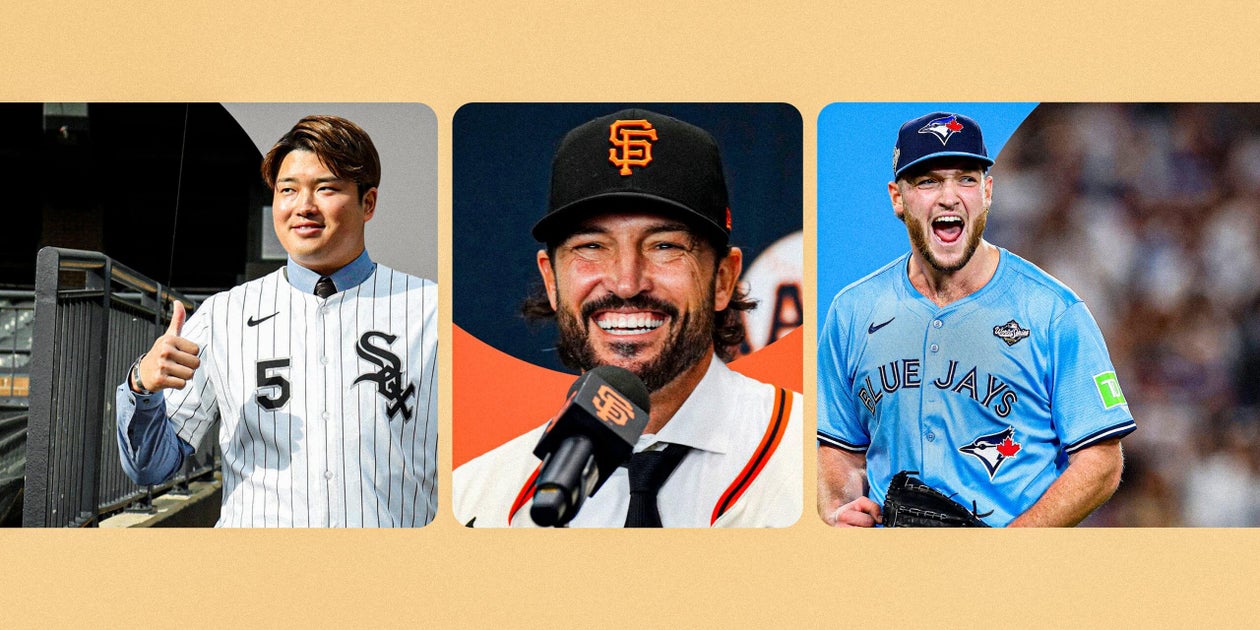
This turned out to be the offseason for teams to go outside the box when choosing their new managers. The Washington Nationals hired Blake Butera, who, at 33, is the youngest manager in MLB since 1972. Though compared to some of the other managers who were hired this offseason, Butera is a grizzled veteran, having managed for four seasons in the minor leagues. Three other teams hired managers with exactly zero games of experience managing or coaching at the professional level.
Early in the offseason, the San Francisco Giants replaced Bob Melvin — who has more than two decades of MLB managerial experience — with Tony Vitello, the former head coach at the University of Tennessee. Vitello is the first manager hired directly from a collegiate program without prior experience coaching professionally.
Vitello arrives in professional baseball with an impressive resume. He had eight highly successful seasons at Tennessee, including winning the 2024 NCAA Championship. However, he has never gone through a major-league spring training and has never experienced a 162-game schedule. How will he adjust to the professional game? Spring training will give us our first clues.
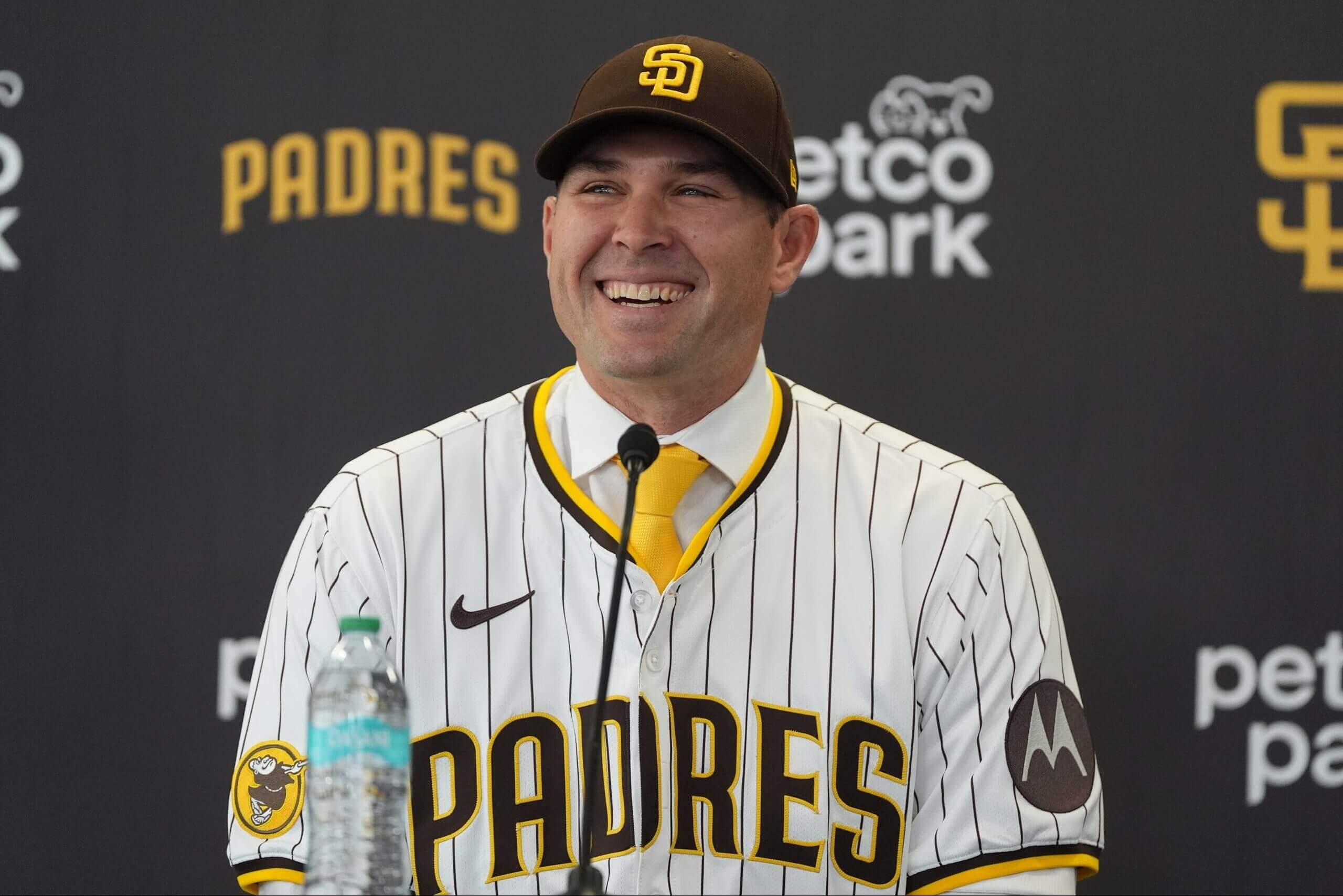
Craig Stammen had a long career as a major-league reliever. How will that experience translate in a managerial role? (Gregory Bull / Associated Press)
The Giants weren’t the only California franchise to go a different direction at the manager position this offseason. The San Diego Padres hired former major-league reliever Craig Stammen as their new manager, replacing Mike Shildt. Stammen, who retired from playing after the 2022 season, has never managed a team at any level. He does have 13 seasons of MLB experience as a player and recently served as special assistant to team president and GM A.J. Preller.
Stammen is respected as a leader, is a tremendous communicator and has the traits you look for in a manager, but again he has no experience managing or coaching. During his last season in the Padres’ bullpen, he was teammates with Manny Machado and Jake Cronenworth, among others. Now he’ll be their manager. It will be fascinating to see how that dynamic plays out.
Not to be out done, the Los Angeles Angels hired a manager with no previous managerial experience when they landed former major-league catcher Kurt Suzuki. What was even stranger is that they seemingly had so little confidence in the hire they gave him just a one-year deal. Like Stammen, Suzuki retired as a player after the 2022 season and he, too, will be managing former teammates. Suzuki was most recently a special assistant to GM Perry Minasian.
I find it striking to see three organizations seemingly not value prior managerial experience at all and think it is easy enough to learn on the job. There are several examples of managers having no prior experience managing professionally still working out, as we’ve seen with Lou Piniella, Aaron Boone and Alex Cora, though Piniella and Cora each had at least coached at the major-league level before becoming managers.
It’s going to be fascinating to watch how Vitello, Stammen and Suzuki navigate spring training and prepare their teams for Opening Day.
The Mets’ new infield, with Polanco and Bichette learning the corners
The Mets had an Amazin’ January, quickly rebuilding their team into legitimate contenders. In my opinion, they are now the favorites to win the NL East, if they can stay healthy. I loved their additions of infielders Bichette and Polanco, but it will be intriguing to watch them both this spring as they not only adjust to a new clubhouse but also move to new positions on the diamond.
A longtime shortstop, Bichette takes over at third base. He should be fine moving to the hot corner since the ball comes off the bat at the same angle at both shortstop and third base. The three major adjustments he’ll have to make are his positioning, his reaction to how quickly the ball comes off the bat and his body control on plays in front of him, like bunts and squibbers. Bichette demonstrated that he’s capable of making adjustments on the fly when he shifted over to second base during the most recent postseason. Now we’ll see if he can make a new home at third base.
Polanco is expected to be the Mets’ everyday first baseman. He has experience all around the infield, with the majority of his playing time coming at second base and shortstop, but he’s only played one inning at first base in his MLB career. Polanco should be an improvement at first over the departed Pete Alonso in terms of range on ground balls, but it remains to be seen if he can scoop and pick the ball at the elite level that Alonso was able to. He’ll also have to re-learn how to react on ground balls and adjust to getting back to first base to receive throws.
How well Bichette and Polanco adjust to their new positions during spring training could be important, especially for those early April games. A team never wants to lose games on defense, especially because the NL East race should be close all season.
Three Japanese stars adjusting to MLB
Once again, MLB is fortunate to welcome new talent from Japan. Three more Japanese stars will be making the transition to MLB from NPB, and for the first time in a while, none of them will be debuting with the Los Angeles Dodgers.
The Chicago White Sox signed Munetaka Murakami to a two-year, $34 million contract to play third base. The 26-year-old has legitimate upper-deck power — belting 265 homers in eight seasons for the Yakult Swallows — but strikeouts were a concern even in Japan, where he whiffed 1,068 times in 3,515 at-bats. Spring training — and the WBC — will give us our first clue as to whether Murakami will be able to make enough contact to allow his prodigious power to play in the U.S. like it did in Japan.
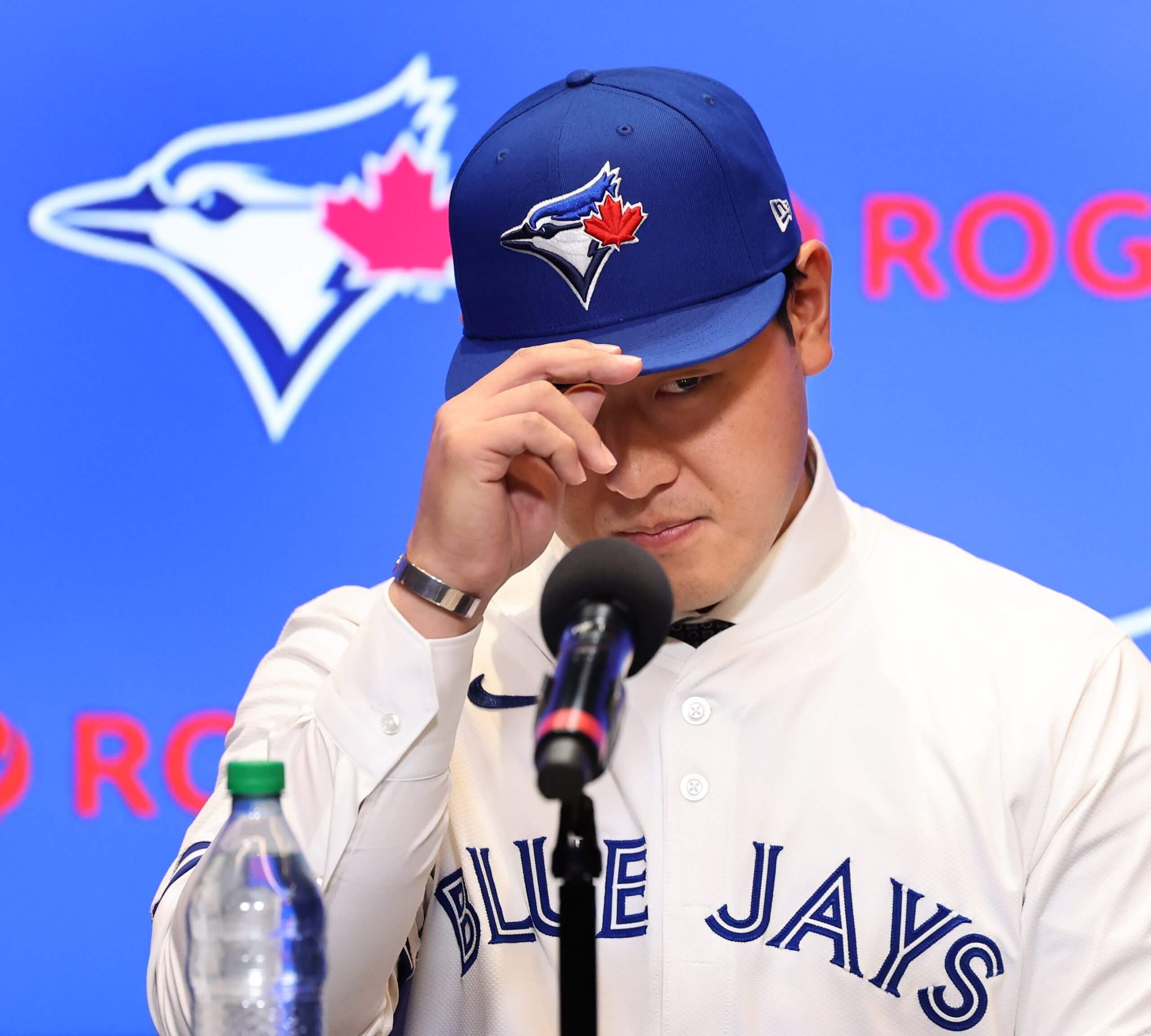
Kazuma Okamoto should make an impact on the Blue Jays’ lineup but will his glove hurt their plus team defense? (Richard Lautens / Toronto Star via Getty Images)
The Toronto Blue Jays also dipped into the Japanese market when they landed third baseman Kazuma Okamoto on a four-year, $60 million deal. The 29-year-old has a career slash line of .274/.355/.501 in 11 seasons with the Yomiuri Giants with 277 home runs. He is less risky than Murakami because of his hit tool and more patient approach, but he has less power.
As we see him in camp this spring, the biggest question will be how Okamoto looks defensively at third base. The Jays were arguably the best defensive team in baseball last year, and there are several scouts who believe Okamoto is a below-average defender at the hot corner. How will he handle third base in terms of range and first-step quickness? It also will be interesting to see who plays third base for Team Japan in the WBC — Murakami or Okamoto — as both are expected to participate in the tournament.
The Houston Astros cushioned the loss of Framber Valdez in free agency by signing Japanese right-hander Tatsuya Imai to a three-year, $54 million pact. The 27-year-old had tremendous success in Japan, posting a 1.92 ERA. Last season, he struck out 178 batters in 163 2/3 innings. Imai’s best two pitches are his four-seam fastball that sits in the mid-90s and a wipeout slider that generated a 46 percent whiff rate in Japan. He also has a change-up he calls a “Vulcan” for left-handed hitters, as well as a splitter and curveball.
That said, even with those promising pitches, Imai didn’t generate the bidding war that was expected when he was originally posted, leading to some speculation that teams were concerned with how he’d hold up against MLB hitters. Imai isn’t participating in the WBC, so we should get a long look at how his stuff translates in Florida this spring.
Team leaders in new places and how they’ll influence clubhouse culture
It’s not often that you see team leaders change uniforms but that’s what we got this winter when the Mets said goodbye to Pete Alonso and hello to Marcus Semien. Two strong clubhouse presences — one coming and one going. In addition, Alex Bregman moved from Boston — where he had played a significant leadership role — to the Chicago Cubs on a long-term deal.
With Semien joining Francisco Lindor, Juan Soto and Bichette, the Mets will have a strong, focused leadership group despite the major changes they made this offseason with the departure of several longtime fan-favorites. I think Semien will fit in really well in the Mets clubhouse, though it remains to be seen what his on-field contributions will look like.
While he can still play elite defense at second base, there is a question about how effective he can be at the plate after two straight seasons with Texas where his offensive output was down. He’s 35 and has 13 years in the big leagues (many of which he played in more than 155 games). Age may finally be catching up to Semien, at least at the plate. He’ll also be adjusting to a new double-play partner in Lindor. Semien has made similar adjustments before, however, even moving from shortstop to second base when he signed with the Blue Jays before the 2021 season.
The most positive clubhouse culture change though could be coming to the Baltimore Orioles with the addition of Alonso. He will be a strong veteran voice in a young clubhouse in Baltimore. He is a leader by example, playing every day regardless of how much he’s hurting, something that many of the Orioles’ young players can learn from. His positive vibes on a daily basis and commitment to fans and the media are also pluses that should rub off on the Orioles on and off the field.
Bregman’s impact in Chicago is likely to be significant, as well. Last season he was particularly impactful with the Red Sox’s young hitting stars, such as Roman Anthony and Marcelo Mayer. It will be interesting to see how that dynamic plays out in Chicago. Can he help young Cubs hitters such as Pete Crow-Armstrong, Moisés Ballesteros and Kevin Alcántara be the best versions of themselves at the plate?
Will Skubal’s impending free agency be a distraction for the Tigers?
Now that the Detroit Tigers have lost their arbitration case with Tarik Skubal and committed $115 million to Framber Valdez, Detroit will have two aces making more than $30 million at the top of their rotation. But for how long? With Skubal entering his walk year, everyone will be watching to see if the Tigers can extend him this spring. If they don’t, then the question will be whether they try to trade him before the Aug. 3 deadline or keep him for his entire walk year.
The Tigers currently intend to hold on to Skubal. They believe they are in a strong position to win the AL Central and now have a much improved chance of winning a short series in October with the one-two punch of Skubal and Valdez. However, if they get off to a slow start or another team makes them an overwhelming offer for Skubal, they could reconsider. How much of a distraction will Skubal’s long-term status be this season? Spring training could give us a little preview of what to expect during the regular season.
Once players are in camp, will any new trades materialize?
After an entire offseason of trade talks, the St. Louis Cardinals finally dealt Brendan Donovan to the Seattle Mariners in a three-team deal. Donovan may be off the market, but there are still several players who were rumored throughout the offseason to be trade targets who are still with their teams, such as Arizona Diamondbacks second baseman Ketel Marte and Miami Marlins right-hander Sandy Alcantara, among others. Could we still see another big trade between now and Opening Day?
I’ve always enjoyed trade talk that goes on during spring training and the drama that takes place behind home plate when scouts are sent in to watch players who could be dealt before Opening Day. It’s one of my favorite parts of spring training, chatting with scouts and hearing the scuttlebutt on what players are available.
How will teams approach the ABS challenge system this spring?
It’s finally here. The Automated Ball-Strike (ABS) challenge system has officially arrived and will make its regular-season debut on Opening Day 2026. This will allow pitchers, catchers and hitters to challenge ball and strike calls using Hawk-Eye technology. Each team will be given two challenges per game (a challenge is retained if successful). Teams have experimented with the system during spring training before and we all got an up-close look at it at last year’s All-Star Game. It’s also been utilized in the minor leagues, so younger players are familiar with how games are impacted by the technology.
That said, the ABS challenge system has never been used during an MLB regular-season game and some teams elected not to use it in spring training previously since they weren’t going to have it during the regular season. With the official rollout coming, teams are likely to start practicing their ABS strategies this spring.
What I’m most curious about is whether catchers will adjust their pitch-framing techniques. It will also be interesting to see which players are allowed by their managers to challenge calls. All of them? Some of them? Both pitchers and catchers? Or just certain pitchers, catchers and batters?
Let’s be realistic, some players really know the strike zone, like Soto, who I’m sure will have carte blanche to challenge, but several other players really aren’t good at it — I won’t name names. How managers administer the power of the challenge will be interesting.
Teams also will have to decide at what point in the game it makes the most sense to challenge a pitch. If you only get two challenges, are you saving them for the late innings of the game, or in the middle of an early-game rally? Or are you just using it whenever you’re 99 percent sure the challenge will succeed?
A preview of a potentially loaded 2026 rookie class
Last season, the Athletics’ Nick Kurtz was the best rookie in the sport but the A’s didn’t get an extra draft pick for him winning AL Rookie of the Year because he wasn’t on their Opening Day roster. On the flip side, the Atlanta Braves did net a draft pick when rookie catcher Drake Baldwin won the NL Rookie of the Year because he was on their Opening Day roster. Several GMs told me this winter that if it’s close, they’ll lean towards letting highly regarded rookies make their teams out of spring training because of the possibility of winning an extra draft pick and then option them out in May if they find they are not major-league ready.
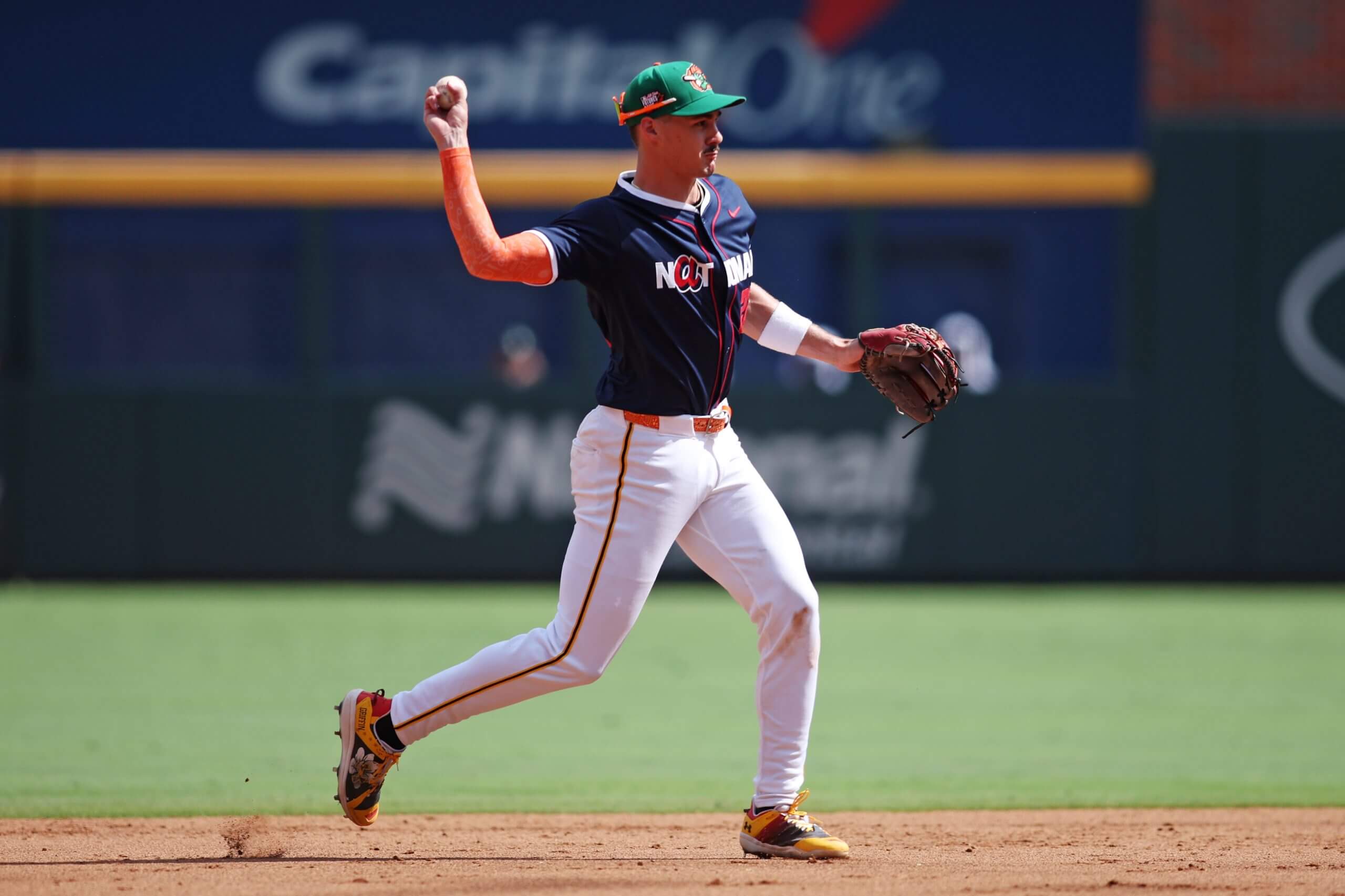
Can 19-year-old Konnor Griffin make the Pirates’ Opening Day roster? (Brett Davis / Imagn Images)
This year’s potential rookie class is loaded with high-end talent and it starts with the Pirates’ Konnor Griffin, who could end up as the best rookie of this generation. Griffin is only 19, but he has the talent and hit tool to play in the majors right now. Last year, he slashed a staggering .333/.415/.527 with 23 doubles, four triples, 21 homers and 94 RBIs while stealing 65 bases between three minor-league levels, finishing his season in Double A. Like his Pittsburgh teammate Paul Skenes, Griffin profiles as a generational talent.
The rest of the rookie class also has the potential to be elite. It is led by young starting pitchers such as Nolan McLean of the Mets and Trey Yesavage of the Blue Jays, both of whom got their feet wet in the big leagues in meaningful ways at the end of last season. There are also two catchers with big offensive potential in Carter Jensen of the Royals and Samuel Basallo of the Orioles. There’s also one of the best young hitting prospects in the sport in Tigers shortstop Kevin McGonigle. The Cardinals are ready to give JJ Wetherholt an everyday spot in their infield and Sal Stewart should get regular at-bats at first base with Cincinnati.
And that’s just a quick appetizer of the field. There are so many potentially great rookies in this class. I’ll be writing up the entire rookie class once I’ve been able to scout them all during spring training. Getting to see the future of the sport compete in big-league games every spring is one of the best aspects of spring training.
The sunscreen is already burning my eyes and my sunglasses just fogged up so I gotta bounce and get ready for my first ballpark hot dog of the spring with Gulden’s mustard. I can’t wait!! Can you?