
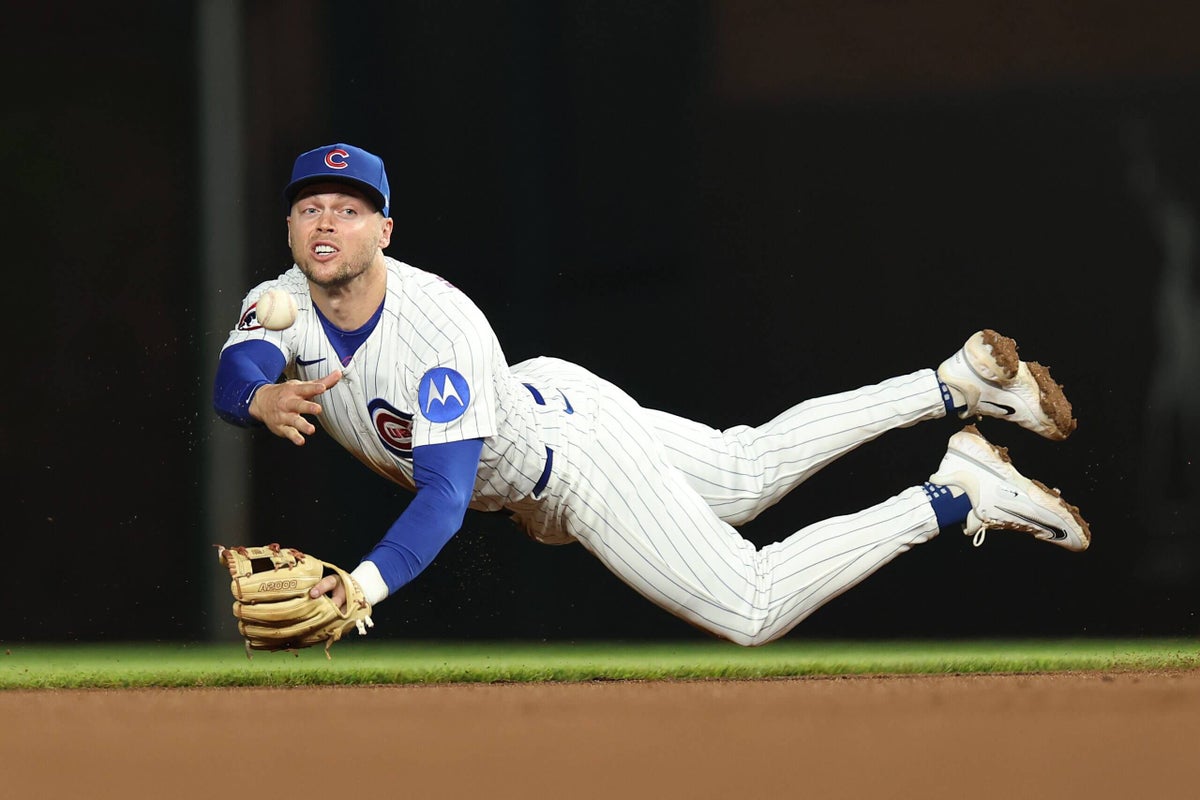
As freezing temperatures grip Chicago, forming pools of snow, ice and slush on the city streets, Cubs fans can be warmed by this thought: Spring training is about to begin for a team with legitimate World Series expectations.
That ambition, of course, should be the entire point of this multibillion-dollar franchise, the annual goal that centers everything. Not building a real estate empire or a highly ranked farm system or a budget-conscious roster just good enough to hang around in the wild-card race.
This sense of momentum goes beyond the usual optimism that accompanies pitchers and catchers reporting to spring training in Arizona. Following a 92-win campaign, Jed Hoyer’s front office executed a targeted offseason, adding All-Star third baseman Alex Bregman, starting pitcher Edward Cabrera and a new group of relievers to their nucleus of young talent.
“We’re a better ballclub,” Cubs pitcher Matthew Boyd said. “With the moves that were made, I think it’s obvious.”
The Cubs made huge moves in recent offseasons — hiring manager Craig Counsell away from the Milwaukee Brewers and trading for Kyle Tucker ahead of his walk year — without following through to maximize those win-now opportunities.
This winter represented a chance to fix some of those mistakes.
Counsell, who has a good reputation for handling pitchers and playing matchups, gets a bullpen that received roughly $30 million in reinforcements. After not trading for a reliable starting pitcher at last year’s trade deadline, the Cubs sent three prospects to the Miami Marlins for Cabrera, betting on his top-of-the-rotation upside and a plan to help him stay healthy.
This time, the Cubs did not make a half-hearted offer to Bregman, the coveted free agent who turned them down during spring training last year and later used an opt-out clause to leave the Boston Red Sox.
Signing Bregman to a five-year, $175 million contract, however, did not require Hoyer’s baseball operations group to unload another Gold Glove infielder such as Nico Hoerner, the way that acquiring Tucker precipitated the Cody Bellinger salary-dump trade with the New York Yankees.
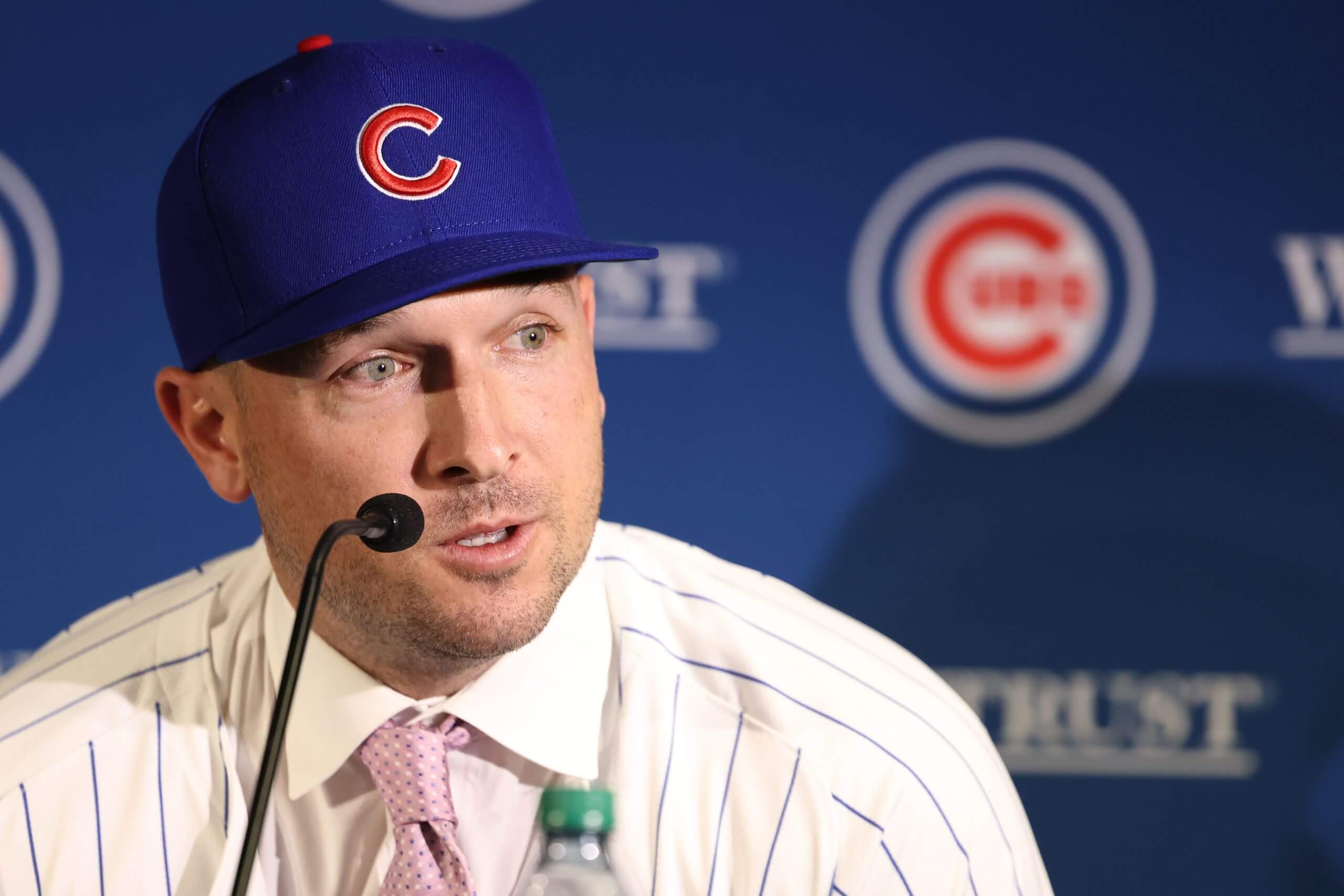
Alex Bregman’s new contract includes no opt-outs and a full no-trade clause. (Geoff Stellfox / Getty Images)
Landing Bregman a year ago might have helped draw more out of Tucker, who was an All-Star in the first half and a non-factor for long stretches in the second half. After an injury-plagued season, the Cubs showed little interest in bringing back Tucker, a low-key personality who went to the Los Angeles Dodgers on a four-year, $240 million contract that will allow him to be a supporting actor in a star-studded cast.
Bregman is viewed as such a force — on the field and in the clubhouse — that the Cubs went from being philosophically against using deferred money to finance deals to giving him $70 million in deferrals to make sure he didn’t return to the Red Sox.
“Winning,” Cubs pitcher Jameson Taillon said, “brought such a great vibe to Wrigley. I think it was kind of a culture shift for our organization, for everyone to see that the standard now is to make the playoffs.
“We should expect to be playing in October every single year.”
The Cubs went out of their comfort zone for Bregman, who will turn 32 next month, when they already have a promising young third baseman (Matt Shaw). With his two-way skills, baseball IQ and postseason experience, Bregman is the type of player who moves franchises to different places.
Bregman came up with the Houston Astros, earning two World Series rings and weathering a sign-stealing scandal to gain a reputation as one of the sport’s best leaders. The Red Sox gave Bregman a player-friendly contract last year, even though they had already invested more than $300 million in another All-Star third baseman (Rafael Devers).
Given another chance, and buoyed by their first playoff appearance since 2020, the Cubs operated with more urgency, not waiting until after the start of spring training before trying to make their big move.
“The hope is championships,” said Scott Boras, Bregman’s agent. “They brought a champion to Chicago. Bringing someone who’s gone through that multiple times, been in the World Series, and won and lost, it just is a library for so many players to take advantage of — and to relax. It’s comfort.
“All of the unknowns have answers. The expectations are dealt with daily. When you bring a champion in, you know where to go, you know how to get answers.”
Cubs fans who were hoping for a dynasty after the 2016 World Series might be wondering: Yeah, but what about the Dodgers?
It’s a fair question that will take almost nine months to answer. In the meantime, Chicago’s front office hasn’t stopped looking for upgrades, whether it’s free agents to improve the overall depth or the potentially big return from trading Shaw to the Red Sox as they seek to replace Bregman.
Playing in the weaker National League Central, the Cubs don’t have to be better than the Dodgers for 162 games. The 2026 Cubs can’t match the historical accomplishments of a franchise going for a 14th consecutive playoff appearance and a World Series three-peat.
But in pushing the Dodgers to the brink of elimination last year, the Toronto Blue Jays showed what’s possible when a team gets hot at the right time.
“It was an amazing playoffs and World Series,” Hoerner said. “You had really high-contact, low-power guys with success. You had the home runs for the Dodgers that ended up being the difference. Amazing infield play in (Game 7). Savvy veteran pitchers. You had young guys throwing 100. It had everything. So it was a healthy reminder, I think, that there’s not one way to go about having success, even at the highest level.
“As far as how that reflects for our group, I do think we have the ability to win in a lot of different ways. Our roster is well-balanced, and that ended up being the teams that had success.”
That formula is never exact and is constantly changing. The Cubs are banking on the continued development of young players such as Pete Crow-Armstrong, Moisés Ballesteros and Cade Horton, a bounce-back season from Shota Imanaga, and Counsell’s coaching staff pressing the right bullpen buttons.
The long journey officially begins with Wednesday’s first formal workout for pitchers and catchers in Mesa. Cubs fans can again start thinking about Friday afternoons at the Friendly Confines, weekends in Wrigleyville and October nights glued to the TV.
A decade after the 108-year championship drought ended, the Cubs are back in the business of competing for the World Series.
“That’s our goal,” Boyd said, “to bring another trophy to Chicago.”