
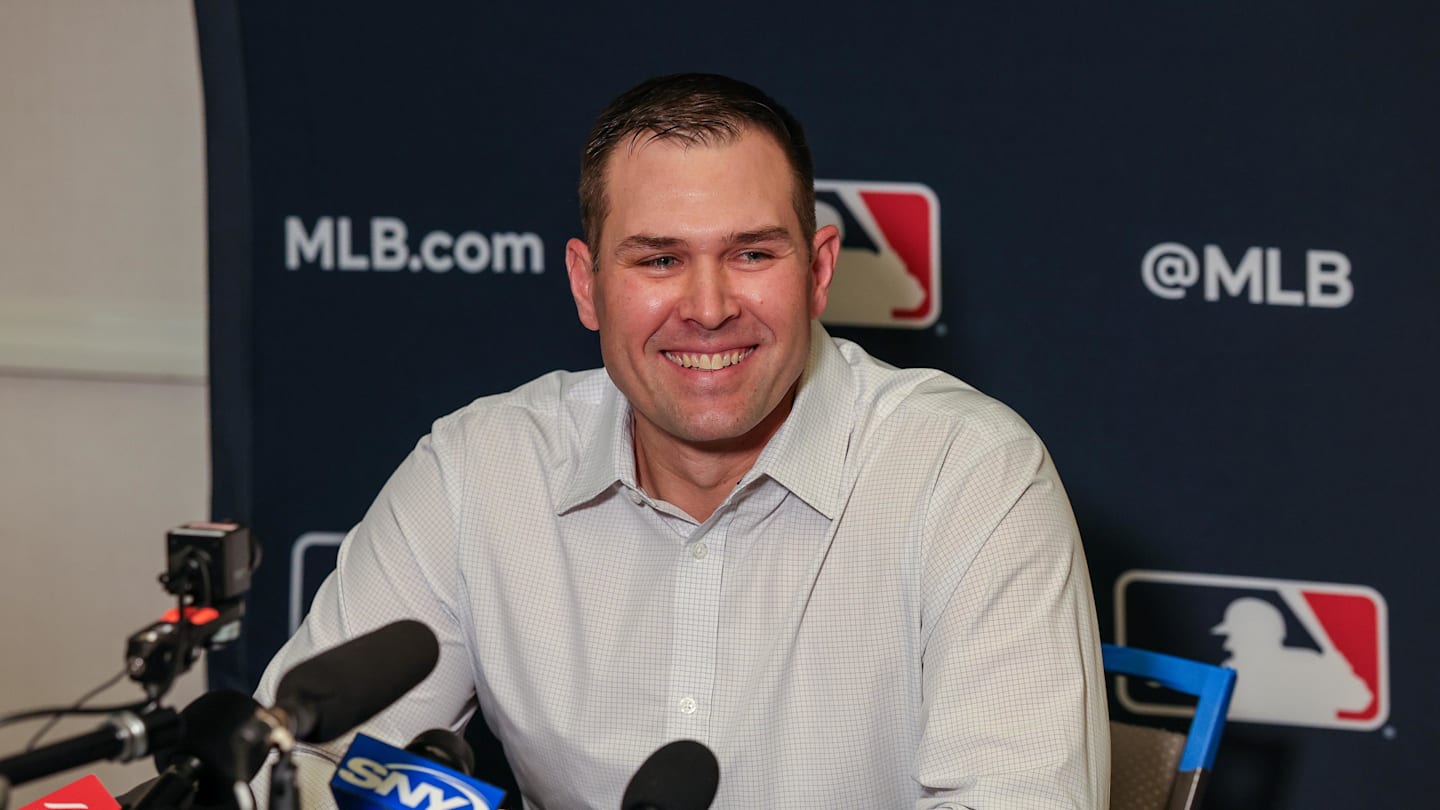
The Padres’ biggest signing of the offseason came in December, when the team added Korean star Sung-Mun Song on a four-year, $15 million deal. Song was a necessary addition to the lineup, especially in hindsight with left-handed bats Ryan O’Hearn and Luis Arraez signing with National League rivals Pittsburgh and San Francisco, respectively.
One of the Padres’ biggest appeals to Song was his defensive versatility. He has experience playing first, second and third base at a high level, making him a valuable addition to a lineup expected to shuffle frequently. He can substitute for Manny Machado at third base on off days or mix and match with Jake Cronenworth and Gavin Sheets on the right side of the infield.
Defense wasn’t Song’s biggest calling card in the KBO, but the ability was clearly there. Along with his versatility, he showed quick reflexes, a strong arm and plenty of speed to cover ground in the middle infield if needed. His lone weakness appeared to be a lack of aggressiveness, at times letting the ball “play him” instead of attacking the right hop – something an MLB coaching staff can easily clean up.
There aren’t many advanced defensive metrics available from Korean baseball, but Song posted a solid .962 fielding percentage during his 2024 Premier 12 performance.
Despite the appeal of his defensive skillset, Song is now projected to get most of his at-bats at designated hitter. That’s due to a developing infield logjam that has left the Korean star as the odd man out.
Manager Craig Stammen has announced that Gavin Sheets will be the starting first baseman, which locks Cronenworth in at second base and leaves little room for Song in the infield. A platoon with Sheets doesn’t make sense either, as both hitters bat left-handed, leaving virtually no scenario where Song finds consistent infield at-bats.
At DH, at least, Song can face right-handed pitching while recent addition Miguel Andujar handles southpaws. Even so, the arrangement doesn’t really make sense.
Andujar signed with San Diego for $4 million and is coming off a season in which he posted a 108 wRC+ in same-handed matchups. He’ll understandably want more than the roughly 25% of plate appearances that come against left-handed pitchers. For Song, being limited to a platoon DH role doesn’t align with his skill set. He was paid, in part, for his defense, and there currently isn’t much opportunity for him to showcase it.
That’s not to say Song can’t contribute offensively. He signed after posting consecutive KBO seasons with a wRC+ north of 140 and at least 19 stolen bases. That blend of speed and production will be huge for the Padres in 2026. The issue is less about talent and more about fit and opportunity.
Having too much depth isn’t a bad problem, and solutions will certainly emerge once injuries inevitably pile up. Still, even at full strength, the combination of Sheets, Andujar and Song doesn’t inspire much confidence. None of the three has proven capable of sustaining strong production across a full MLB season, and with first base and DH serving as premium offensive positions, the bar will be high.
With spring training approaching, the Padres have a lot of questions but no perfect answers. Sorting out Song’s role will be Craig Stammen’s first major test as the new Padres manager.