
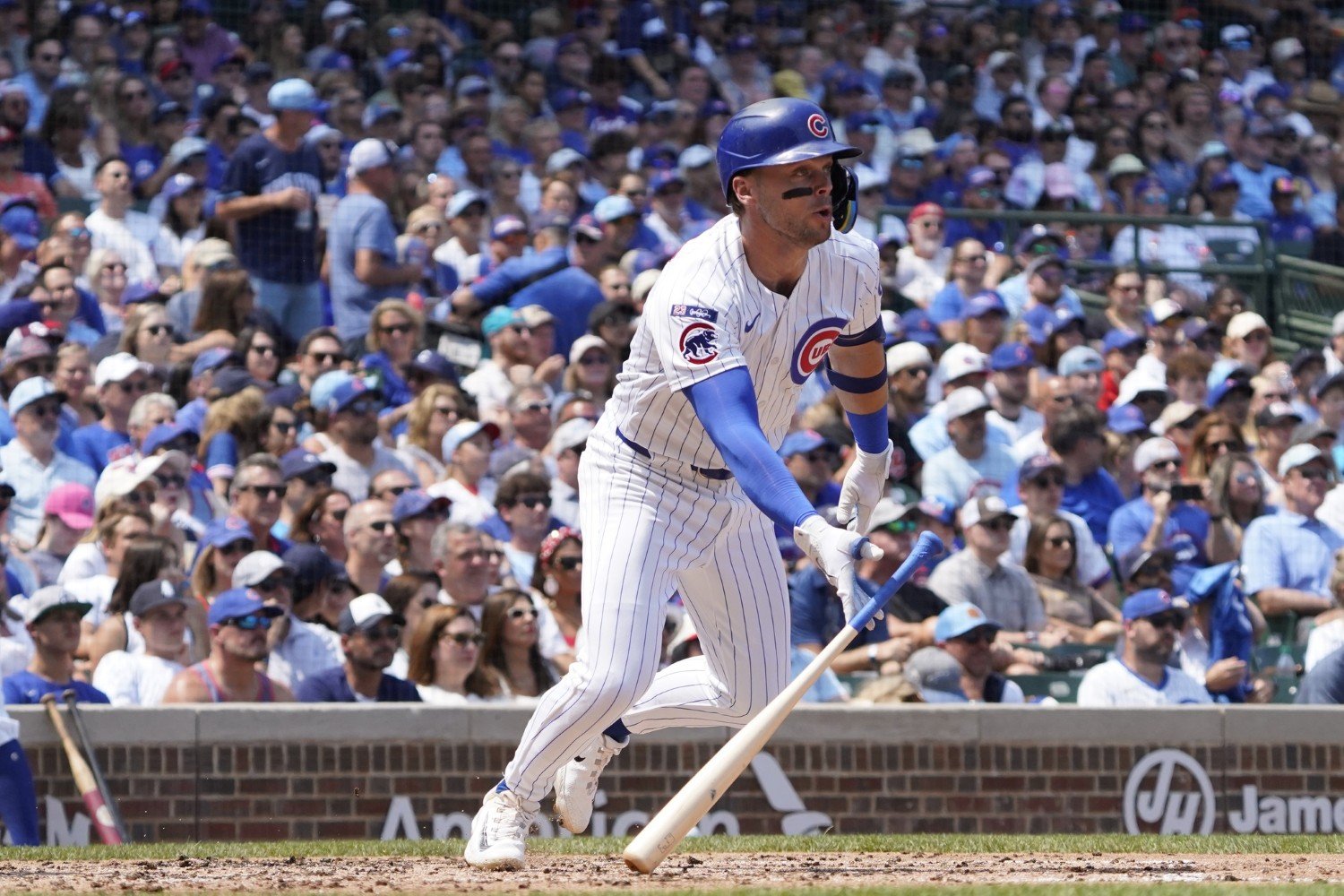
It’s the rumor that will not die. At several points over the last two years, Nico Hoerner‘s name has become a hot one in trade discussions. In particular, since Alex Bregman signed a five-year deal with the team last month, the Cubs have received calls from several teams about Hoerner. Initially, they were more inclined to retain Hoerner and to trade Matt Shaw, who is under long-term team control and would net a similar return despite being a worse player than Hoerner. However, that might no longer be true.
Early this winter, the Seattle Mariners pivoted away from previous pursuits of Hoerner and focused on the Cardinals’ Brendan Donovan. The Mariners and Cubs did touch base about Hoerner after the Bregman deal, according to a source familiar with the conversation, but never came close to finding a match. The Giants were more persistently interested in Hoerner, and that interest picked up after the Bregman signing, but the Cubs refused to consider a deal in which they didn’t receive top Giants infield prospect Josuar Gonzalez, so the talks fizzled.
It seemed as though the market for Hoerner (along with that for Shaw) was beginning to disappear. On Monday, the Red Sox became the latest team who had reached out to Chicago about Hoerner to move on to Plan B, trading for the Brewers’ Caleb Durbin instead. However, according to two league sources, there remain a couple of potential suitors for Hoerner, and the Cubs haven’t shut down those talks. If they get the right offer, they’ll trade the impending free agent, despite the fact that he’s a fan favorite and a beloved piece of the clubhouse.
That might send a shiver down the spine of some fans, but it’s important to emphasize the condition in that conditional statement. The team is not desperately looking to offload salary. They’re not eager to push Hoerner out of the way to give Shaw the second base job. They’ll only trade Hoerner if they get the right offer. So, naturally, we must attempt to answer the question: What’s the right offer?
According to sources with knowledge of the team’s demands in discussions with the three teams named above and two more, there are three key elements Jed Hoyer and Carter Hawkins view as essential in any deal that sees them part with their two-time Gold Glover.
A useful big-league infielder, at an affordable price. This player would effectively replace Shaw as the backup at second, third and (ideally) shortstop, with Shaw taking over as the starting second baseman. In all likelihood, they’d be a fringe regular better suited to backup work, but with multiple years of team control remaining.
A top prospect—probably a pitcher. The Cubs’ farm system is thin right now, especially when it comes to hurlers. Adding an arm who can have a significant impact on the 2027-31 Cubs remains on the team’s wish list as spring training gets underway. This would be one way to acquire that kind of pitcher, and although it would come with significant risk, they understand that they’ll eventually have to take that kind of chance, anyway.
Pitching help for 2026, in one form or another. If Chicago becomes more optimistic than they are right now about signing Zac Gallen, they might be more open to trading Hoerner for a package that focuses on the first two of the above elements. Spending another $15 million or more for 2026 might have to mean trading some salary, so in that scenario, Hoerner’s $12 million could become the budgetary casualty that paves the way for a final pitching boost. Alternatively, though, the team could target an optionable or versatile pitcher on the trade partner’s roster and achieve a similar, more direct upgrade to the pitching staff in the deal.
That’s a rich ransom, for a player who can become a free agent at the end of the 2026 World Series. So far, the Cubs haven’t gotten a sufficiently appealing offer that checks each box. Most teams are willing to satisfy items 1 and 3, but reluctant to trade a player with big potential long-term value for one they might lose after one season. At this point, the likelihood of a trade is still low, especially because there are only a few interested teams left in the picture. Nonetheless, a move can’t be ruled out.
Looking at the roster through a wider lens, it’s easy to see how a deal that checks each of those boxes could make sense for the Cubs. They’ve methodically converted long-term value into short-term value over the last few years, but that subpar farm system is a reminder that their shift into contention mode could leave them lurching back toward rebuilding by the end of the decade. To avoid that, they might need to reverse the flow and move a player under short-term control for someone who can be kept longer and cheaper. With Shaw on hand to replace him, Hoerner is a viable candidate for that treatment. The team needs pitching help for this season. and free-agent prices on the dwindling number of key arms are higher than they’d hoped. They certainly can’t afford to get any weaker in right field or at DH, so a trade of Ian Happ or Seiya Suzuki is hard to fathom. Hoerner is the guy who can be moved without leaving an unfillable hole, and who could fetch enough to patch the holes that still exist.
This would be Hoerner’s seventh full season with Chicago. He’s been ubiquitous for the post-COVID Cubs, and his blend of contact skills, speed and defensive aptitude have been key parts of the team’s identity the last few years. They don’t want to trade him. If a team gets desperate enough to check all three of their boxes, though, it could still happen.