
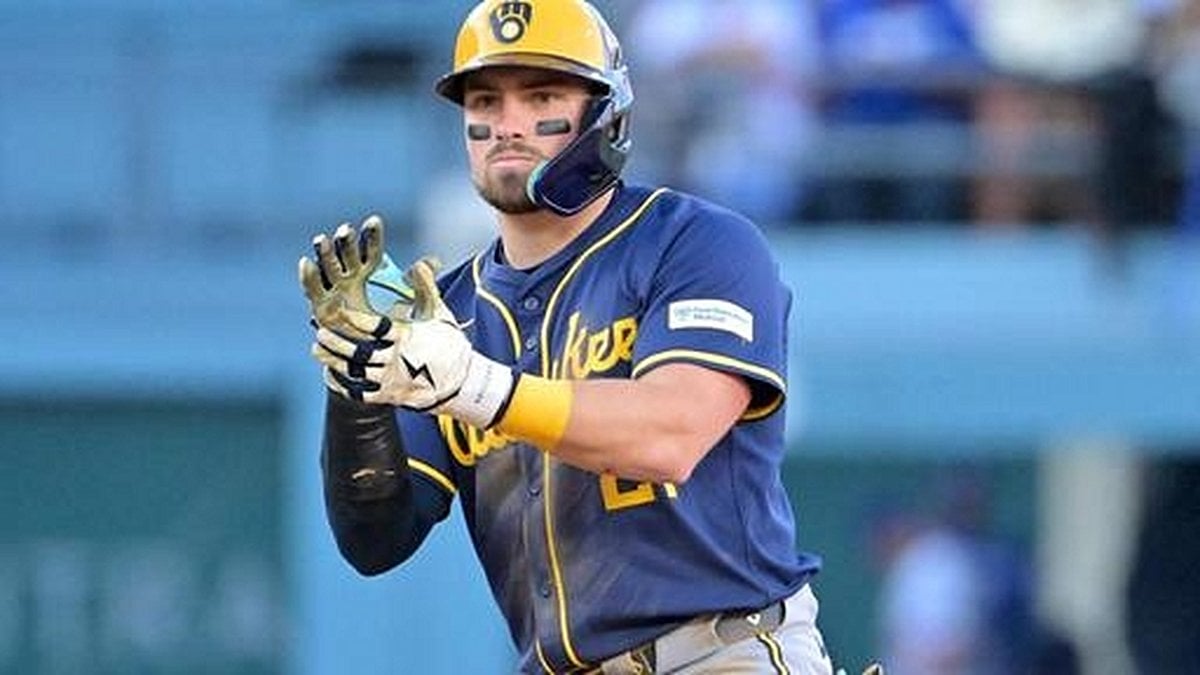
In a move that has sent shockwaves through the baseball world, the Milwaukee Brewers and Boston Red Sox finalized a blockbuster trade on Monday, February 9, 2026, dramatically reshaping both teams’ infield outlooks and igniting heated debates across two of the sport’s most passionate fanbases. The deal, which came together swiftly after early-morning rumors, saw the Brewers acquire David Hamilton, Kyle Harrison, and Shane Drohan from Boston, while the Red Sox landed Caleb Durbin, Andruw Monasterio, Anthony Seigler, and a coveted Competitive Balance B draft pick.
For Red Sox fans, the arrival of Caleb Durbin represents a major coup. Dubbed a “defense-first third baseman” and a “doubles and stolen base machine,” Durbin has drawn comparisons to legendary Boston infielder Dustin Pedroia for his gritty style and ability to spark rallies. According to multiple sources, the Red Sox front office had spent much of the offseason searching for exactly this type of infield addition, reportedly favoring a glove-first approach over slugging options like Eugenio Suárez and Isaac Paredes. This preference now appears fully realized with Durbin’s acquisition.
The trade’s full scope, as confirmed by Chris Cotillo on social media, is as follows: the Red Sox receive Durbin, Monasterio, Seigler, and a Comp B pick, while the Brewers take on Harrison, Hamilton, and Drohan. The deal was characterized by some as “absurdly lopsided,” with Boston seemingly emerging as the clear winner in the eyes of many analysts and fans alike. In fact, one commentator quipped, “This is worse than the Chris Paul trade that David Stern vetoed,” highlighting the sense of disbelief among observers at the perceived imbalance of the exchange.
David Hamilton, one of the key pieces heading to Milwaukee, is no stranger to Brewers fans. A former farmhand in the organization before spending three seasons with the Red Sox, Hamilton slashed .222/.283/.359 in Boston, primarily playing second base and shortstop. Now, Brewers manager and staff have signaled that Hamilton will receive extensive reps at third base during spring training, a position that remains wide open on Milwaukee’s roster. Adam McCalvy of MLB.com reported, “Hamilton will be given lots of reps at third base during spring training,” underscoring the team’s intention to test his versatility in hopes of finding a long-term solution at the hot corner.
Hamilton’s reputation in Boston was, to put it mildly, mixed. While he was once a Yankees fan favorite—an ironic twist given his latest move—he became “every Red Sox fan’s least favorite player” by the time of his departure, according to some local commentators. Despite this, his speed and defensive skills offer tantalizing upside for a Brewers team eager to inject youth and energy into their infield. The move also marks a homecoming of sorts, as Hamilton returns to the organization where his professional journey began.
Kyle Harrison, another player heading to Milwaukee, was previously considered the headliner in the Rafael Devers trade and had, by 2026, settled into a role as the Red Sox’s ninth starting pitcher at best. Shane Drohan, the third piece moving to the Brewers, was described as a pitching prospect unlikely to break into Boston’s rotation. For Milwaukee, the trio represents a blend of potential and depth, with Hamilton’s positional flexibility and Harrison’s left-handed arm drawing particular interest as the club prepares for a competitive season ahead.
On the flip side, the Red Sox’s new haul is drawing rave reviews in New England. Caleb Durbin, in particular, is seen as a perfect fit for Boston’s infield ethos. “A clear overpay for the Brewers, but a three-for-one swap is something you can almost justify,” wrote one analyst, before adding, “Durbin is going to torture the Yankees. And he never should’ve been on the table in the first place.” The sentiment captures the giddy excitement among Red Sox supporters, who see Durbin as both a defensive anchor and a potential sparkplug for the lineup.
Andruw Monasterio, included in the package to Boston, brings valuable experience as a backup infielder, while Anthony Seigler—once a first-round pick by the Yankees—adds further intrigue to the Red Sox’s system. The Competitive Balance B draft pick sweetens the deal, giving Boston a chance to further bolster their farm system in the upcoming draft.
The timing of the trade couldn’t have been more dramatic for followers of the New York-Boston sports rivalry. With the New York Knicks having just trounced the Boston Celtics and the New England Patriots suffering a lopsided Super Bowl defeat, the trade’s announcement added another twist to an already eventful week in Northeast sports. Commentators were quick to note the irony of the Red Sox acquiring a former Yankees prospect, with one observer remarking, “The Yankees are going to have to be more careful moving forward. Even if they don’t trade their valued prospects directly to the Red Sox, they seem to end up there anyway these days.”
For the Brewers, the trade signals a willingness to take calculated risks in pursuit of roster balance and long-term upside. With third base wide open, the club is betting that Hamilton can seize the opportunity and perhaps even exceed the expectations set during his tenure in Boston. At the same time, the addition of Harrison and Drohan provides valuable depth as the Brewers look to stay competitive in the National League Central.
Meanwhile, the Red Sox have made it clear that defense and athleticism are top priorities as they retool for the upcoming season. By acquiring Durbin and Monasterio, Boston has addressed glaring needs in the infield while positioning themselves for further moves, thanks in part to the extra draft capital. The move also reinforces the club’s commitment to a contact-oriented, speed-driven style of play, a hallmark of Red Sox teams from years past.
As spring training approaches, all eyes will be on both clubs to see how the new additions settle in. Will Hamilton finally put it all together in Milwaukee? Can Durbin live up to the hype and become a new fan favorite in Boston? One thing’s for certain: this trade has set the stage for plenty of intrigue, debate, and, perhaps, a few surprises as the 2026 MLB season unfolds.
With the dust still settling and rosters far from finalized, the baseball world will be watching closely to see which side ultimately comes out ahead. For now, fans in Boston and Milwaukee have plenty to talk about—and maybe even a little extra reason to dream about October.