
Tom Pohlad has talked more openly about the Minnesota Twins in recent months than, perhaps, any member of the Pohlad family ever has. The problem is not a lack of transparency. It’s that the transparency points in several different directions at once.
Taken individually, each quote sounds thoughtful. Put together, they paint a picture of an organization apologizing for the past, promising competitiveness in the future, and asking fans to ignore the present. That’s a difficult sell when the current reality is a payroll just north of $100 million; the departure of the team’s top baseball executive; and a fan base that feels more deflated than it did during the very period Pohlad admits was mishandled.
Speaking about the decisions made following the 2023 season, Pohlad didn’t mince words.
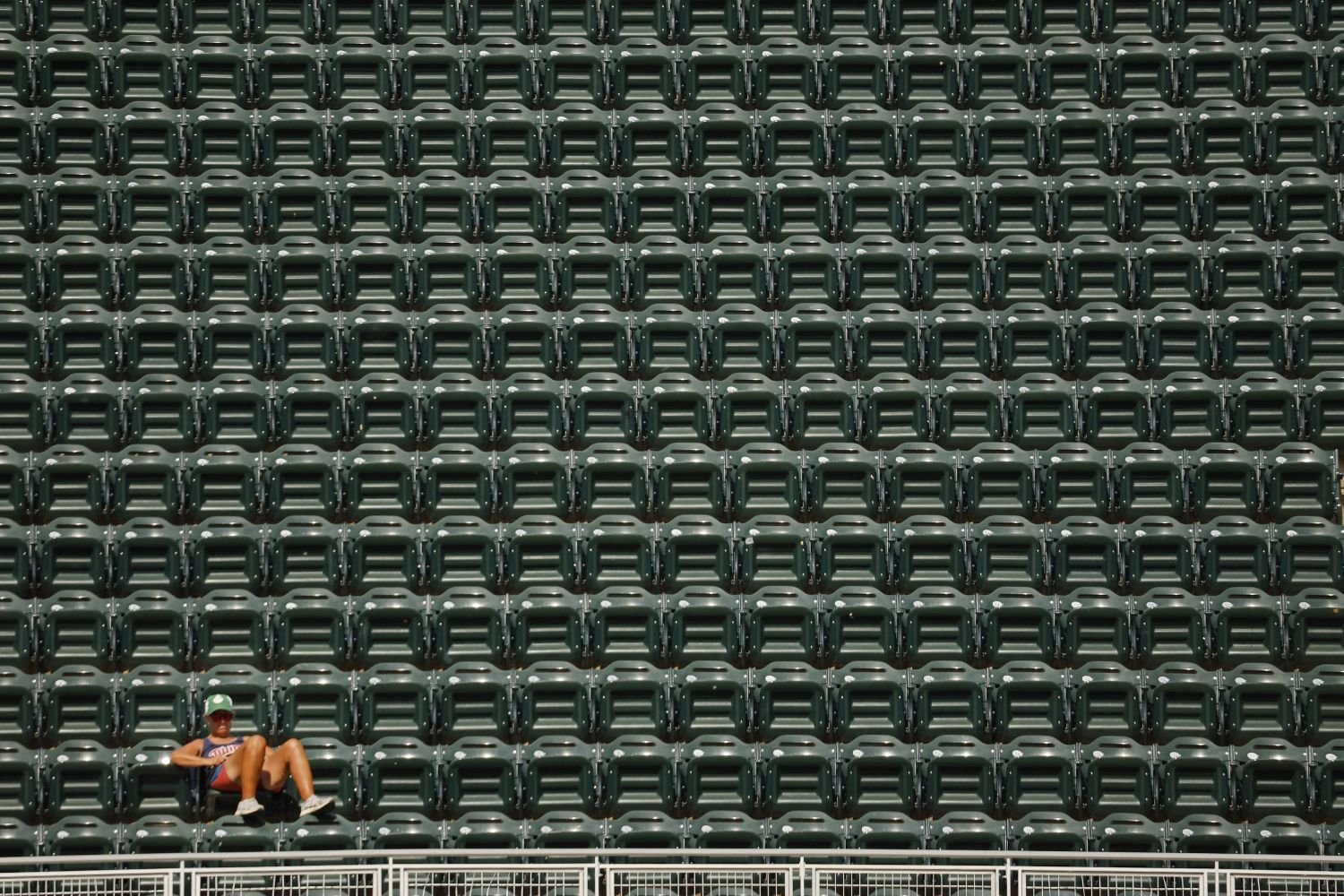
“We made what we thought at the time was a responsible financial decision, and we obviously failed to consider the long-term impact of that decision, and the short-term impact of that decision, frankly,” he said. “We sucked the air right out of our fan base, and it did significant damage to our brand and to our family from a confidence standpoint. Plain and simple, we got it wrong.”
That is an extraordinary admission for a Twins owner. It also lands awkwardly when paired with the state of the team today. Payroll is lower now than it was then. Confidence is not restored. If anything, the air feels even thinner.
Pohlad has repeatedly pointed to 2026 as a pivotal season, framing it as both a goal and a justification for the current approach.
“We will be competitive in 2026,” Pohlad replied. “Yes. I expect that. But the sense of urgency is about making sure that we start, right this second, getting after what the long-term plan is for this organization. And I’ve talked a lot recently about finding a way to build a business that can support a level of investment in the team, two or three years from now, that can be playing competitive baseball for a string of seasons in a row. That’s what we’re trying to build. And I think 2026 is critical to that success.”
There is logic in building toward sustained competitiveness, rather than chasing short bursts of performance. The issue is that the Twins are asking fans and employees alike to buy into a long-term vision, while simultaneously scaling back in the short term. That tension became impossible to ignore when Derek Falvey stepped away from the organization. Whatever else his departure represented, it signaled that the internal understanding of competitiveness did not match the public one.
Pohlad has also tried to shift the conversation away from payroll, urging observers to focus instead on results.
“Yes, our payroll is down from last year,” he said. “I think there’s still investments to be made between now and Opening Day. And I’d also say that, at some point, I’d love to get off this ‘payroll’ thing for a second and let’s get halfway through the year, to the end of the year, and let’s judge the success of this year on wins and losses, on whether we’re playing meaningful baseball in September. And if we’re doing that, I think we’re gonna be in position to grow payroll the following year, and the following year. That’s what I hope we can start focusing on.”
In theory, judging a season on wins and losses makes perfect sense. In practice, payroll remains the clearest signal of intent in modern baseball. Asking fans to ignore that signal requires trust, and trust is hard to rebuild after publicly acknowledging that it was broken.
Now look at the roster construction. Few experienced and healthy free agent relief options remain. Teams rarely make significant trades during spring training, even if it is not impossible. That leaves the Twins (probably) relying on young starting pitchers to transition into bullpen roles, a process that often takes time and rarely goes smoothly.
None of this means Tom Pohlad is being dishonest. It means he’s speaking from multiple timelines at once. He’s apologizing for past restraint while practicing present restraint. He’s promising future competitiveness while overseeing the Twins’ lowest payroll in over a decade. He is asking for urgency while preaching patience.
Fans are not confused because they’re ignoring what he is saying. They’re confused because they’re listening to it all. Pohlad needs to fix that, and changing actions (rather than words) seems the only way to do so.
What do you make of Pohlad’s comments? Leave a comment and start the discussion.