
FORT MYERS, Fla. — Like it or not, Isiah Kiner-Falefa, understands that he’ll always be associated with a play that will go down in baseball infamy.
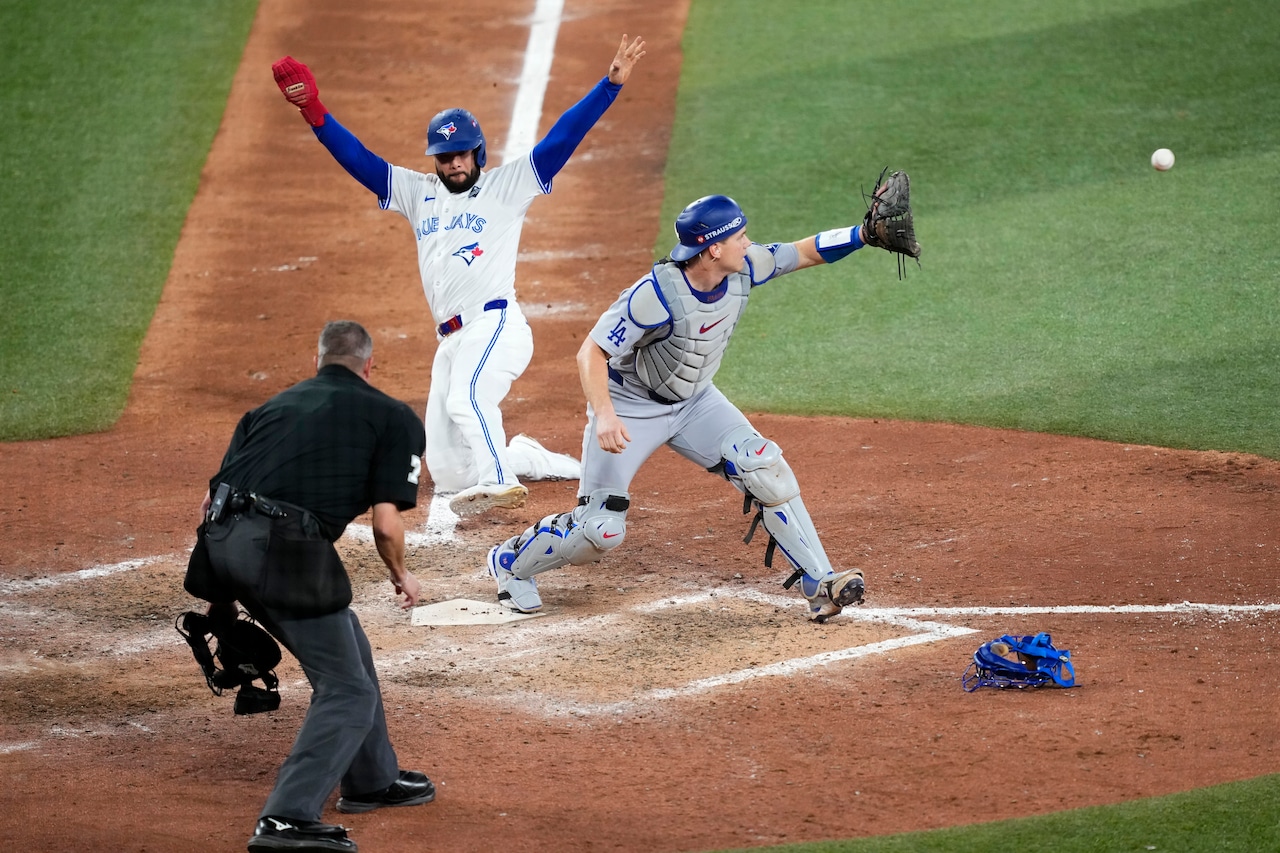
Last fall, in Game 7 of the World Series, Kiner-Falefa, then with the Toronto Blue Jays, found himself on third base representing the potential Series-winning run.
The bases were loaded with one out. The Jays and Los Angeles Dodgers were tied at 4-4. The Dodgers played the infield in and teammate Daulton Varsho hit a topspin grounder to the right side. Los Angeles second baseman Miguel Rojas backhanded the ball, stumbled a bit as he momentarily lost his balance, then threw home in an attempt to cut down the winning run.
The throw from Rojas arrived a nano-second before Kiner-Falefa slid. By the slimmest of margins, Dodgers catcher Will Smith got his foot down on home plate, creating a forceout for the second out. Varsho, meanwhile, beat the relay to first, but when Ernie Clement flied to center, the threat was over.
Two innings later, Smith homered to put the Dodgers ahead 5-4, and LA held off the Jays in the bottom of the inning to capture the series.
“It was,” confessed Kiner-Falefa, “heartbreaking.”
Perhaps not since 1986 had a team come so close to winning a World Series they would ultimately lose.
And because he was the baserunner who could have scored and won the Series, Kiner-Falefa unwittingly became the face of the loss.
Months later, the loss remains something of an open wound — somewhat healed by time, but still evident.
“I’m still not over it,” said Kiner-Falefa, who signed a one-year deal with the Red Sox last week to serve as a super-utility player and was introduced to the media Tuesday. “I won’t ever get over that; it’s more of how can I get back (to the World Series).”
Recalling the moment, Kiner-Falefa said as soon as the ball was hit, he was focused on trying to break up the possibility of an inning-ending double play.
“In my mind,” he said, “I thought it was a routine ball to second and (the Dodgers) were going to go home for one (out). I went in hard to slide. Ernie Clement (was on deck) and he was our best hitter other than Vladdy (Guerrero Jr.), so to hit into a double play there and not get Ernie up would have been terrible. So off the bat, my initial read was to slide hard and try break it up.
“I didn’t really see (Rojas trip) and all the little things. But my instinct, from where I was, I was just thinking: break up the double play and get our hottest hitter up.”
Clement, however, was retired, and the Dodgers went ahead to stay in the 11th.
In the chaos post-game, Kiner-Falefa maintains, he wasn’t asked about the play. The focus was on the Dodgers winning their second straight title and how close the Jays came to winning their first in more than 30 years. but the play wasn’t part of the focus.
It wasn’t until the next day and the days that followed, that Kiner-Falefa became the face of the defeat, with fans and media alike making the claim that he had failed to get enough of a secondary lead. In a bang-bang play at the plate, even a lead of another couple of inches likely would have resulted in the baserunner beating the throw and the Jays being crowned champions.
“It was organizational policy (regarding the length of the secondary lead),” said Kiner-Falefa. “I had the right intention the whole time. The biggest regret is there were no cameras in my face after the game. I think if it was going to be such a big deal, it would have been nice to have a camera in my face and have a chance to speak.
“But it blew up without me getting a proper interview. I thought that was kind of unfair. Everybody was going off without me really being able to talk about the play. That was tough. At the end of the day, I did what I was told.”
Indeed, later, overhead video surfaced of Toronto third base coach Carlos Febles, who held the same role with the Red Sox from 2018-2023, marking a spot in the dirt several feet away from the third base bag. That’s where Kiner-Falefa positioned himself before the fateful ball was put in play
Overnight, he was thrust into the role of Fall Classic villain. It wasn’t quite Bill Buckner-level, but it was plenty bad enough. The backlash was immediate and long-lasting. Kiner-Falefa, who usually spends the offseason in Dallas, instead retreated to his native Hawaii where he could more easily disappear.
A full five weeks after the Series, Blue Jays manager John Schneider was still being quizzed about the play at the winter meetings.
“You can look back and it will be like, ‘Wow, you were that close.’” said Kiner-Falefa. “It just sucks. I wasn’t expecting the backlash.”
Kiner-Falefa scrubbed his social media timeline of any reference to baseball, hoping to change his algorithm. But that didn’t stop the death threats and the online harassment.
“Being able to be in Hawaii, it was a little easier to remember why I play the game and who I play it for and the example I am for the kids,” he said. “I could see the bigger picture, get away and go to the beach. It allowed me to reset, refocus. You just have to move on.”
Kiner-Falefa said his time as the starting shortstop for the Yankees helped prepare him for the media scrutiny and second-guessing.
“It just sucked that there was no game the next day,” he said.
He’s had some communication with former teammates in Toronto over the winter and is heartened by their continued support.
“We win as a team, we lose as a team,” concluded Kiner-Falefa. “There were a lot of opportunities to win before that and we didn’t do it. That wasn’t the sole reason we lost. Seven game series, a lot happened before that.”
A lot, too, has happened since. He’s forever part of baseball history, even if the result wasn’t what he had wanted.
“Maybe in 10 years I can see it like that, when I talk to my kids,” he said. “For now, it hurts. It hurts me every day to not be able to get the job done. But it doesn’t define me. I’m only 30 and I hope to play the game a long time.
“But I know with the experience I have I can navigate through this and get over it.”