
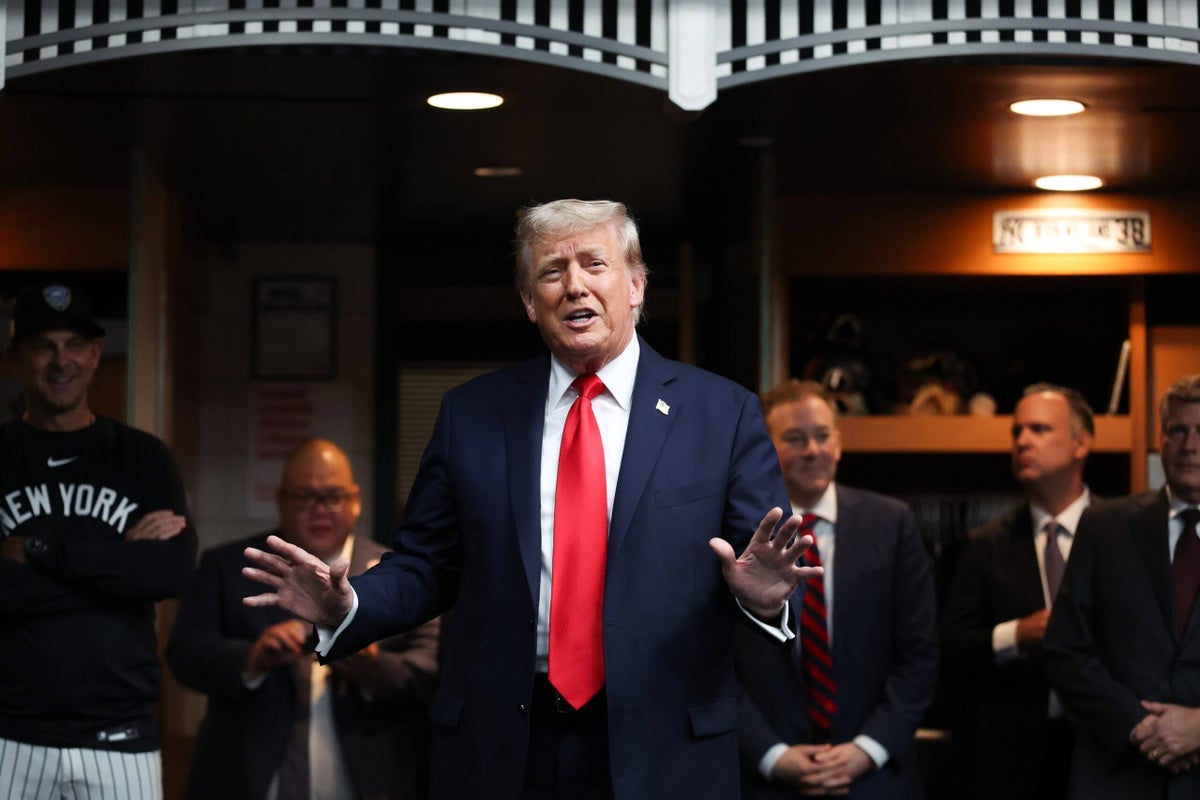
From the Super Bowl to the World Cup, the White House has loomed large over major sporting events and leagues, and with spring training underway, labor strife imminent and the World Baseball Classic approaching, President Donald J. Trump’s attention could soon turn back to baseball.
Trump has already tried to tip the scales in one significant baseball matter, publicly chiding Rob Manfred, Major League Baseball’s commissioner, in the process.
In May 2025, not long after meeting with the president, Manfred removed Pete Rose from MLB’s ineligible list, a major turn of events that posthumously made Rose eligible for Hall of Fame induction. Rose, a friend of Trump’s, was banished from the sport for gambling but remains MLB’s all-time leader in hits. A vote on his enshrinement hasn’t come yet, but could arrive as soon as 2027. Trump also believes that Roger Clemens, who was accused of using performance-enhancing drugs, should be in the Hall of Fame.
Manfred was cautious when asked about the influence the president had on his decision to reinstate Rose, but he seemed to acknowledge the president was one of several voices he weighed. Officials in other sports have gone out of their way to appease the White House.
Going forward, were the president of a mind to further involve himself in baseball, he would have numerous avenues, presidential historians and baseball industry officials say.
“The commissioner of baseball, like the leader of any major American national institution, has to be concerned about an unhappy president given the nature of this presidency,” Columbia University presidential historian Tim Naftali said. “This president has made clear that if he doesn’t like your institution, he will find a way to retaliate against you. What shouldn’t really matter, which is whether or not the President and the commissioner get along, might actually matter.”
Historically, when politicians have challenged baseball, they’ve often done so by threatening to remove the sport’s unique anti-trust exemption, though Trump’s willingness to use his bully pulpit to influence events could mean he tries to get what he wants without going to such formal lengths.
One immediate flashpoint looms: Border policy could directly affect baseball next month, when MLB’s international tournament, the World Baseball Classic, is scheduled to be played in Houston, Miami and San Juan.
But in baseball, there could be no greater catnip to this president than a high-profile work stoppage. MLB owners, who convene in Florida this week for their regularly scheduled meetings, are preparing a push for a salary cap and are widely expected to lock out players in December.
“The threat of Trump’s intervention in baseball, or any other sport, is extremely serious,” said Allan Lichtman, a historian and political analyst at American University. “It’s not new for presidents to get involved in sports, but Trump has much more aggressively used the powers of the presidency than any prior president to try to shape sports in his image.”
There is precedent for a president’s involvement in baseball’s labor relations.
Bill Clinton tried to end the ugly 1994-95 player strike by calling the players and owners to the White House. He didn’t achieve much, but politicians sometimes make indirect gains when they veer into sporting matters.
“Baseball is at least assertively the national pastime,” said Gene Orza, a retired lawyer for the baseball players’ union who attended the White House meetings. “It’s fodder for politicians to try to intervene so they can get some acclaim. It’s good publicity if they can solve problems, or, even if they are not the reason for it, be seen as having contributed to the solution.”
The White House did not return requests for comment.
If Trump enters the fray in the expected lockout, the players could have the most to lose — regardless of any resentment Trump might have for Manfred.
“What jumps out at me is his extreme hostility to labor organizing,” Lichtman said of Trump. “If he were to jump into a labor management dispute within baseball, I have no doubt that his anti-union proclivities would prevail.”
But Trump could well wind up pressuring both parties.
“He could be very brutal on labor without picking sides,” said one baseball industry official granted anonymity to speak candidly about a sensitive topic. “Just beating the s— out of everybody to get a deal. Which I believe he will do.”
Not all of baseball’s owners are supportive of Trump, and the president also counts some players as friends. He publicly praised Clemens, for example, after they golfed together.
“It depends if he doesn’t like a particular owner,” Naftali said. “We have to keep in mind with President Trump that he sees himself as a populist leader. There are unions that he will support. After all, he’s friendly with the police union. I’m not sure I could game the politics there that easily.”
Via presidential appointees, Trump has some influence over the National Labor Relations Board, an agency that could get involved in a lockout if either side levies a charge that the other committed an unfair labor practice.
Yet labor law ultimately appears to put some limit on what a president can achieve in a private-sector negotiation. Presidents typically rely on “persuasive authority,” said Kate Andrias, professor of labor law and constitutional law at Columbia Law School, in the fall.
“They use the labor secretary to try to bring both parties to the table,” Andrias said. “There is a very narrow provision in the law that does allow the president to seek a court injunction of a strike but only if several conditions are met, including that the strike would imperil the national health or safety.”
It’s highly unlikely a work stoppage in baseball would meet those conditions.
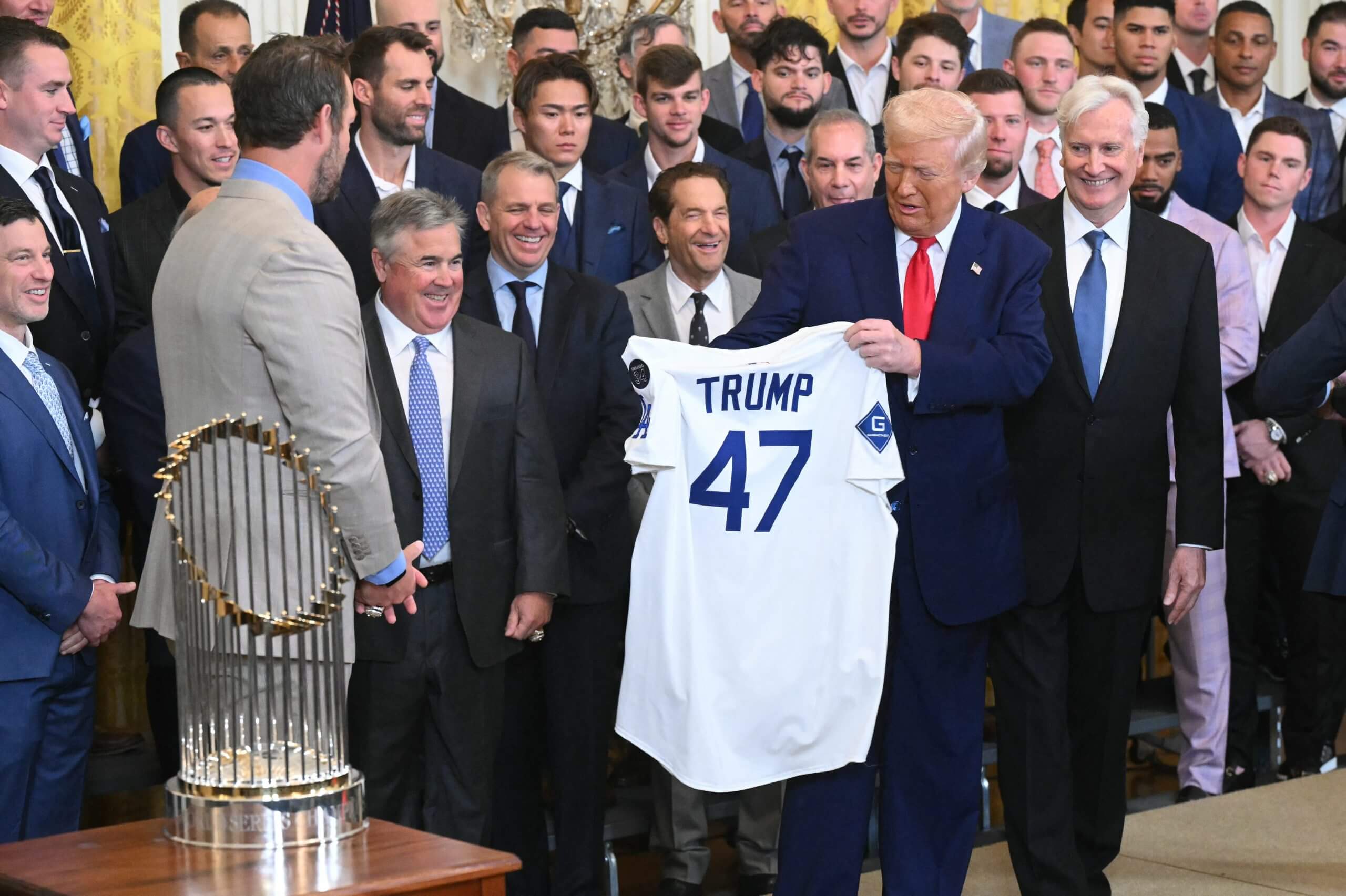
President Trump has had a complicated relationship with MLB over his time in office. (SAUL LOEB / AFP via Getty Images)
But if Trump wants to insert himself into baseball, he has other options.
The president has already helped team owners keep tax breaks that save them millions. When Republicans introduced their sweeping domestic bill to Congress last summer, it called for reduced tax breaks for team owners across sports, not just baseball. Those clauses were removed before the bill passed into law.
“It would, in effect, have cost owners billions of dollars,” said the baseball industry official. “Trump helped them get that done. He didn’t have to. There’s always issues that come up, up and down the road, that he can cause problems with.”
MLB has also proactively altered some of its diversity equity and inclusion efforts in response to the White House. And public money goes to professional sports teams through stadium subsidies that local politicians hand out — politicians Trump might be able to influence.
The antitrust exemption — an anomalous 1922 Supreme Court decision allowing MLB and its teams to behave as monopolists in ways most other U.S. businesses cannot — has been a favorite target not of presidents, but of Congress.
But despite repeated attacks on the exemption, it has always survived, and politicians might not necessarily mind that outcome.
The late U.S. Senator Arlen Specter once told his staffers that he felt the exemption was bad policy. Nonetheless, Specter actually loved it, said Stephen Ross, a professor of sports law and constitutional law at Penn State.
“Because every time Major League Baseball did anything he didn’t like, he would have a press conference threatening legislation to take away the exemption,” Ross said. “And then if MLB did anything to accommodate Sen. Specter’s concerns, he would hold another press conference and claim great political credit for his leadership.”
The stakes don’t need to be as high as anti-trust exemptions or labor peace for Trump to see potential benefit: The less consequential the issue, the easier it might be for Trump to affect change. Trump’s Hall of Fame campaigning actually seems to fit with the president’s broader messaging.
“It’s not trivial in the sense that Pete Rose and Roger Clemens arguably represent the kind of individuals that President Trump views as his base,” Naftali said. “He thinks about people who were criticized by elites.”
A baseball commissioner has to keep not only 30 owners happy, but find a way to work with players as well. These days, the head of the national pastime might have an extra job function: placating the commander in chief.
“There shouldn’t be any sort of source of discord between these two institutions,” Naftali said of baseball and the White House. “They’re both national institutions. One has nuclear weapons, the other one does not.”