
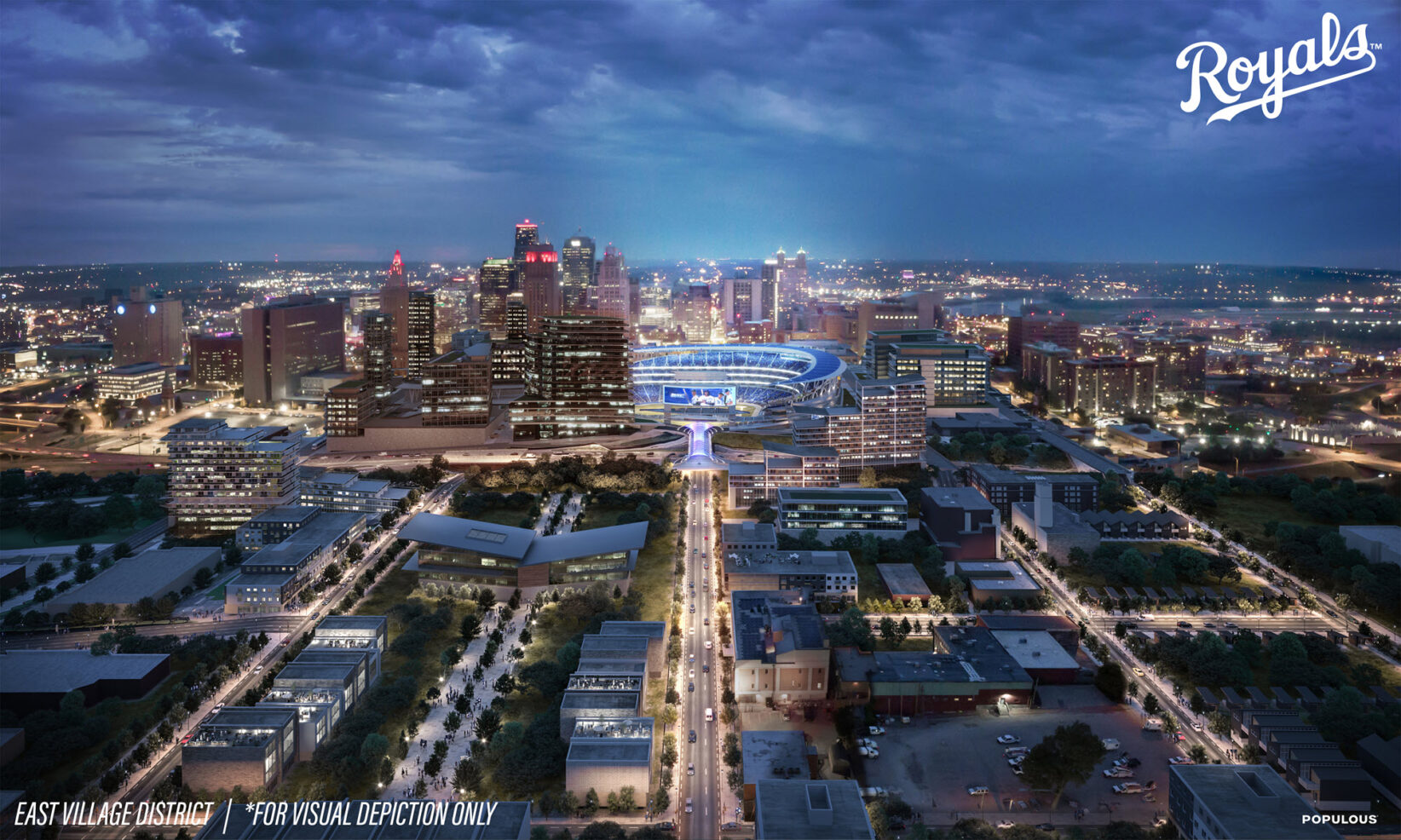
Kansas City won’t lose its crown on his watch, Quinton Lucas pledged during the mayor’s State of the City address Wednesday at City Hall, offering a commitment to work out a home-run deal for Kansas City residents that keeps the Royals in Missouri and brings the baseball club’s downtown stadium dream to reality.
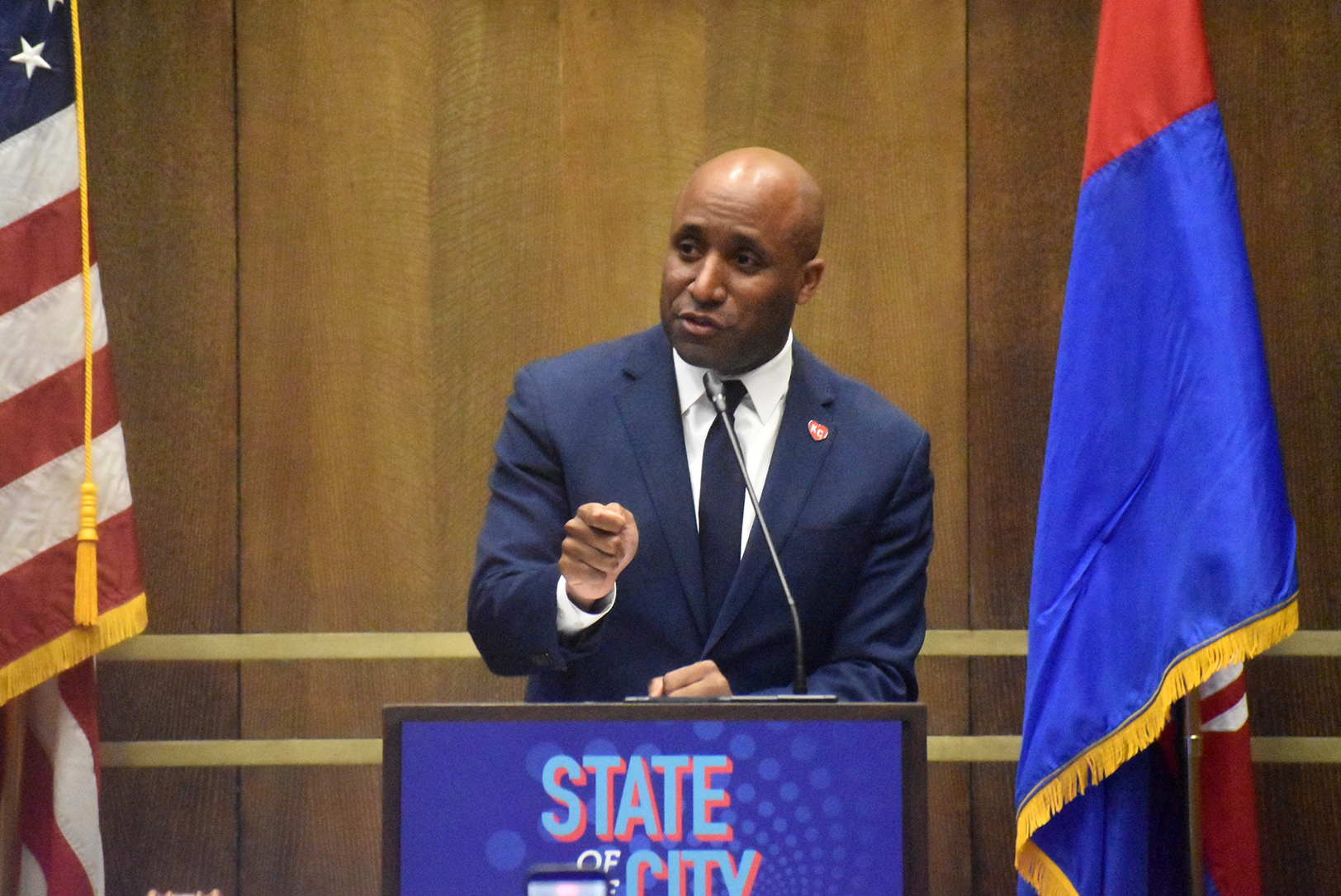
Kansas City, Missouri, Mayor Quinton Lucas delivers his State of the City address at City Hall; photo by Taylor Wilmore, Startland News
“As part of our growth, our retention of the Kansas City Royals in the only home they’ve ever known, Kansas City, is a must,” said Lucas, making the economic case for a downtown ballpark. “Retaining the Royals is not about sports, it’s about economic development for our city.”
The mayor — who also used the address to propose a $2.5 billion budget for Fiscal Year 2026-2027 — framed the stadium not as a standalone project, but as part of a broader strategy to attract investment, talent, and energy to the urban core.
A 2024 sales tax initiative intended to help support the Royals’ downtown stadium plans at a site in the Crossroads — as well as renovations of Arrowhead Stadium at the Truman Sports Complex — failed to gain traction with voters. The rejection ultimately sent the Royals on an extended hunt for new locations on both sides of the state line; the Chiefs announced plans to relocate to Kansas and build a $3 billion complex.
A 2023 rendering shows an aerial view of a proposed Royals baseball stadium if it were located in Kansas City’s East Village; rendering courtesy of the Kansas City Royals, Populous
Amid fallout and criticism of the Kansas-led border-hopping deal, Kansas City re-emerged as a contender for downtown Royals baseball.
“We will get a deal done in 2026 that’s fair and transparent for our taxpayers, our future, and our team,” Lucas said.
That pledge came as the mayor detailed a sweeping spending plan that prioritizes city employees, public safety, housing stability, and infrastructure upgrades, all with an eye toward Kansas City’s role as a 2026 World Cup host city and its long-term growth beyond the global spotlight.
RELATED: England’s World Cup team picks Kansas City as its official base camp, joining Argentina
“At the core of our $2.5 billion budget for the next fiscal year is our people,” said Lucas after recognizing city workers in the audience. “Employees in this room, and staff out working in the field as we speak, as they deliver a world class city prepared to host the World Cup in 2026, but also where the roads and sidewalks will be a bit smoother, the 911 calls will be answered a bit faster, and where housing is safe, accessible, and available to all.”
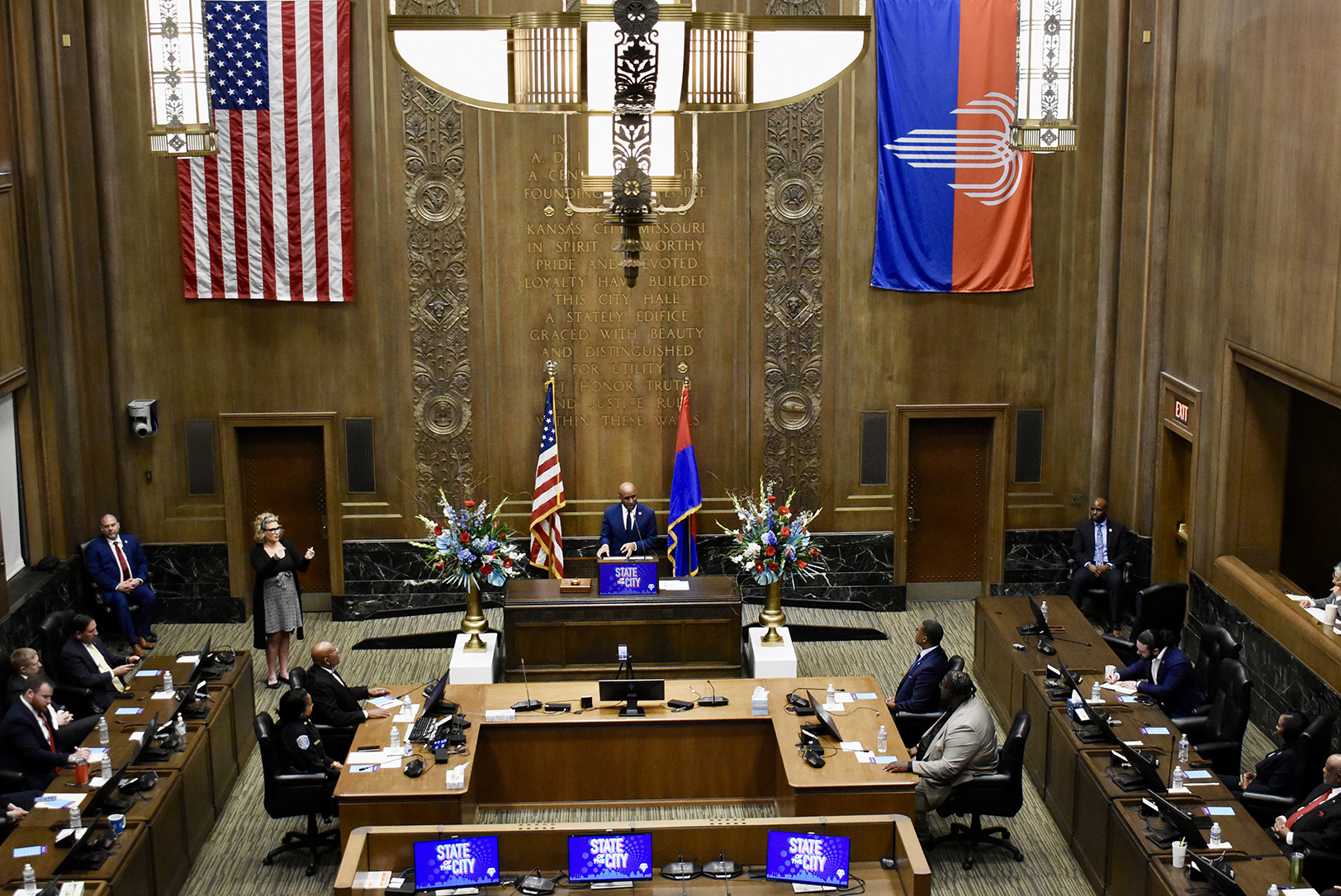
Mayor Quinton Lucas delivers his State of the City address in council chambers at City Hall; photo by Nikki Overfelt Chifalu, Startland News
$930M for workforce, no mass layoffs planned
Before diving into new initiatives, Lucas focused on stability.
A significant portion of the proposed budget is directed toward city employees, including their pay, benefits, pensions, and healthcare, a move he said reflects lessons learned during the uncertainty of the early pandemic years.
Looking back at that period, when Kansas City faced the prospect of furloughs and layoffs, Lucas emphasized how far the city’s finances have come.
“As a new mayor during the pandemic, I saw the city stare down the reality of furloughs, the threat of layoffs, and cuts to every department,” he said. “We weathered that storm, but I pledged then and today that while I’m here: we will never be broke.”
“We will never have forced reductions because we couldn’t control our spending,” he continued. “And we will never stop letting workers know, through pay, through benefits, through retirement pensions, that we appreciate not only their work, but their ability to take care of their families.”
Renewing the city’s earnings tax, he noted, remains essential to keeping general operations and public safety services on steady footing.
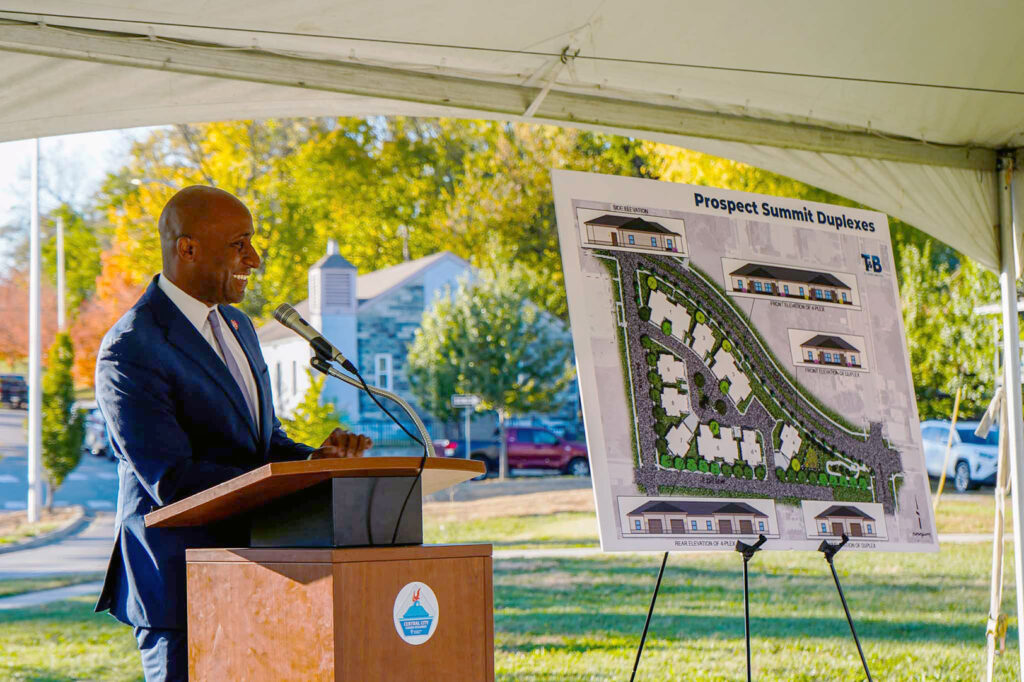
Mayor Quinton Lucas speaks at a groundbreaking event for the Prospect Summit Duplexes, a project supported by the Central City Economic Development (CCED) Sales Tax Program; photo by Brian Escobar, EDCKC
Housing investments target affordability and stability
If public safety reflects the city’s immediate concerns, housing represents its long-term stability, Lucas said.
The mayor described housing as one of the most transformative areas of city investment in recent years, with funding set aside for homelessness prevention, legal support for tenants facing eviction, and 10,000 new affordable housing units coming to Kansas City.
“New buildings are great, but we will have no greater legacy from our tenure than the tens of thousands of Kansas Citians we will launch into better, safer, and more stable housing,” he said.
Since its debut, the city’s right to counsel program has helped thousands of residents avoid eviction. Lucas also discussed the Housing Gateway Program, the initiative aims to quickly rehouse more than 600 unhoused residents by coordinating service providers and raising private funding.
Public safety holds the majority of the general fund
As in past years, public safety dominates the general fund conversation.
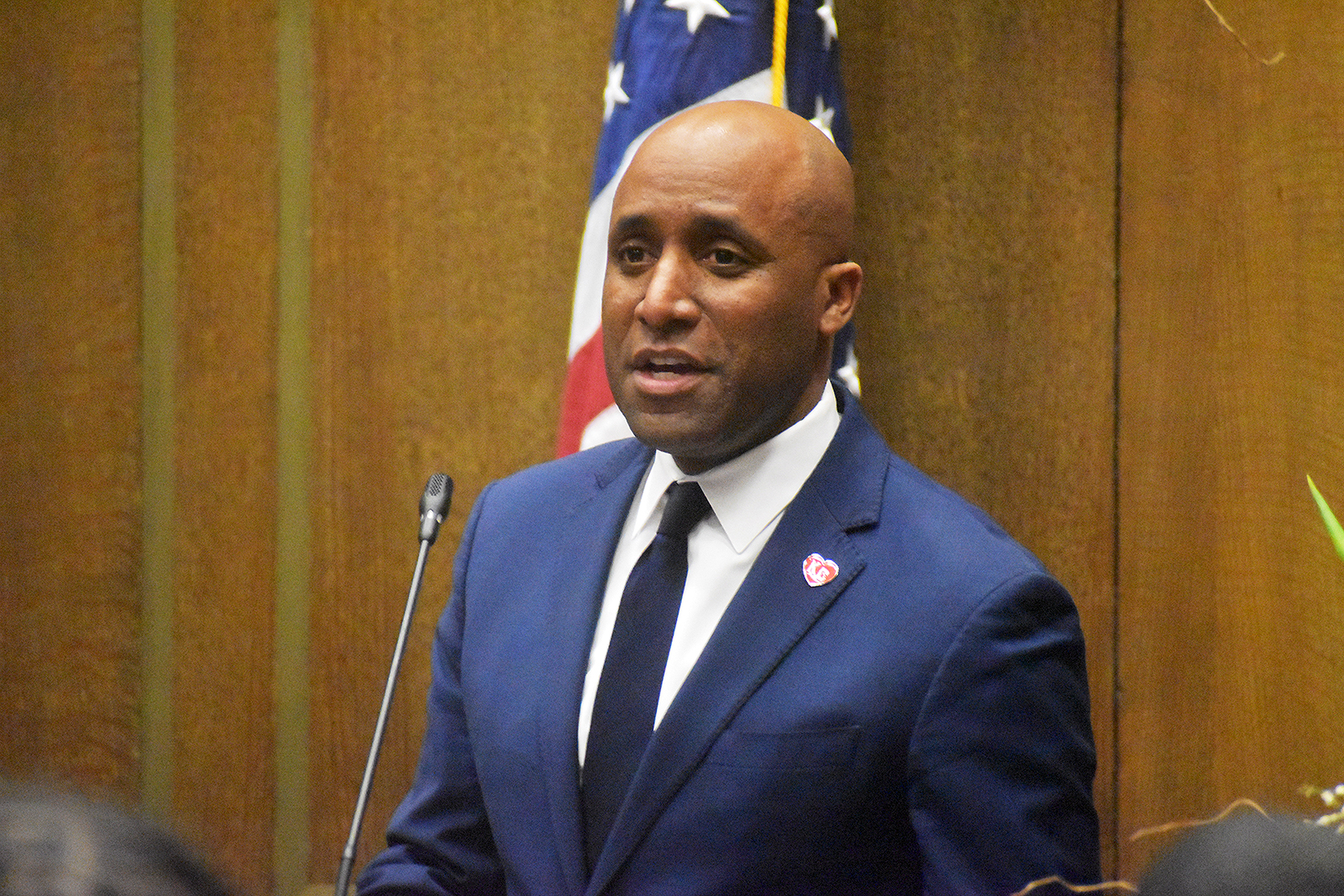
Mayor Quinton Lucas delivers his State of the City address at City Hall; photo by Taylor Wilmore, Startland News
Lucas stated that the proposed police budget once again surpasses the state’s minimum funding requirement and supports plans to add officers and civilian dispatch staff. At the same time, he urged the State Board of Police Commissioners to follow through on its end.
“Our hope is that the State Board of Police Commissioners will fulfill their pledge to hire 50 additional law enforcement officers and 20 new call takers and dispatchers and deliver on officer pay increases with a proposed $363 million budget,” said Lucas.
He also emphasized the need for the police board to confront rising legal costs.
“The current trajectory in litigation costs is unsustainable for the police department’s budget,” he said.
The mayor pointed to recent downward crime trends as signs of progress, highlighting declines in homicides, non-fatal shootings, and robberies over the past year. He credited such programs as SAVE KC and a newer Intimate Partner Violence Intervention initiative with helping interrupt cycles of repeat violence.
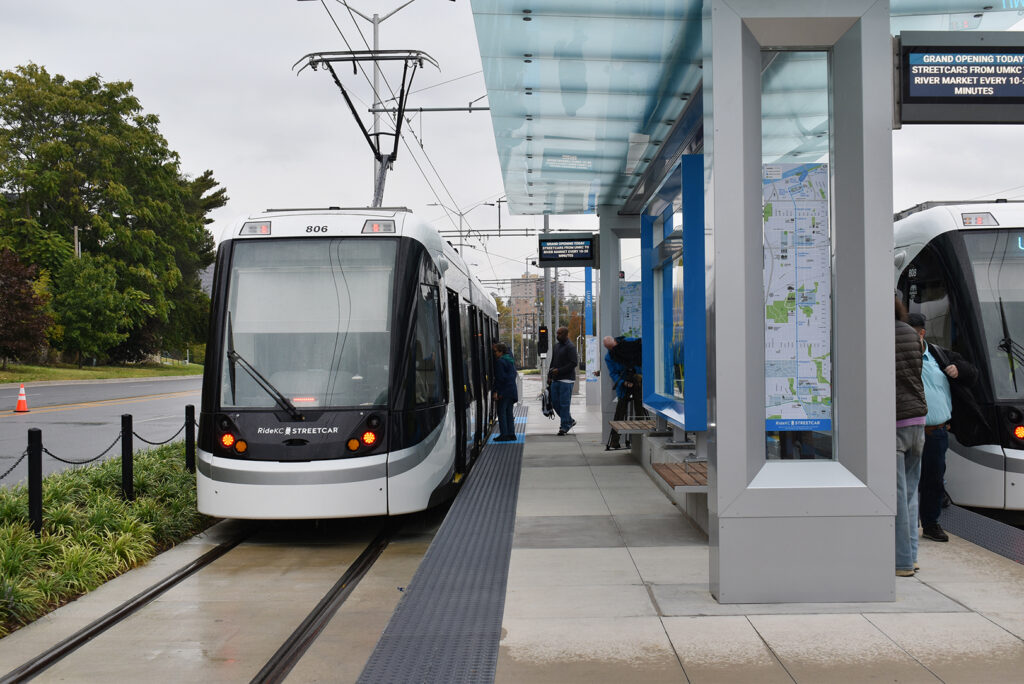
Passengers board and disembark streetcars at the UMKC stop on opening day of the KC Streetcar’s Main Street extension; photo by Taylor Wilmore, Startland News
Roads, transit, and safer streets
Lucas also stressed a commitment to the fundamentals: roads, transit, and the daily experience of moving through Kansas City.
“This year’s budget will invest $30.9 million to resurface an estimated 300 lane-miles of our streets, because whether you take the bus, drive, bike, or walk, you deserve infrastructure that works,” he said.
Traffic safety projects under the Vision Zero initiative remain part of that effort, with funding directed toward high-injury corridors.
“I will admit it is getting harder to fly through Kansas City,” said Lucas, referencing efforts to stop speeding. As a parent, he added, he supports steps that make streets safer for children and pedestrians.
Meanwhile, the KC Streetcar’s south extension to UMKC and the Country Club Plaza is now up and running, with a riverfront extension expected before the World Cup. The city also plans to continue exploring east-west connections while supporting bus service through KCATA.
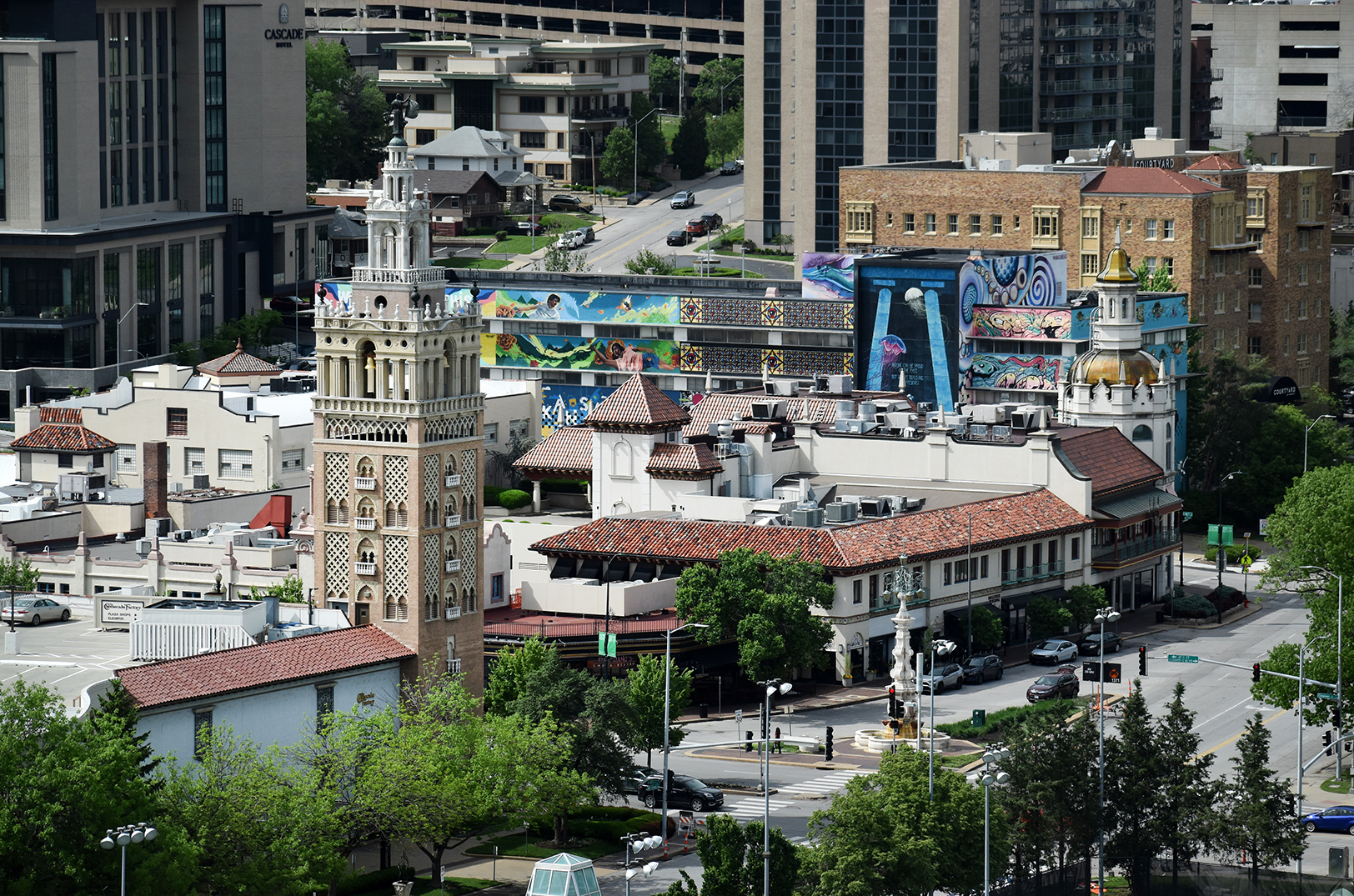
Kansas City’s Country Club Plaza, one of the area’s along the KC Streetcar line that could be impacted by FIFA World Cup 2026 visitors; photo by Tommy Felts, Startland News
Economic growth and a welcoming message
In addition to the Royals proposal, Lucas highlighted ongoing and future investment in the West Bottoms, 18th and Vine, the riverfront, the Country Club Plaza, and the Leeds area near the Truman Sports Complex, along with more than $500,000 to modernize building and zoning codes and speed up permitting.
“Growth is our only option to maintain the standard of services our citizens deserve, without raising taxes,” he said.
He emphasized that progress in one corridor should not leave another behind, and the need for balanced development citywide.
Lucas closed by zooming out from budgets and development plans to reflect on Kansas City’s 175-year history and its future.
“For 175 years, a mayor has said the state of our city is in a strong position,” he said. “No matter who you are, where you’re from, where you’re going, or what you’re dealing with, you belong here, you are welcome here, and together, the state of your city, our city, is strongest when you thrive.”