
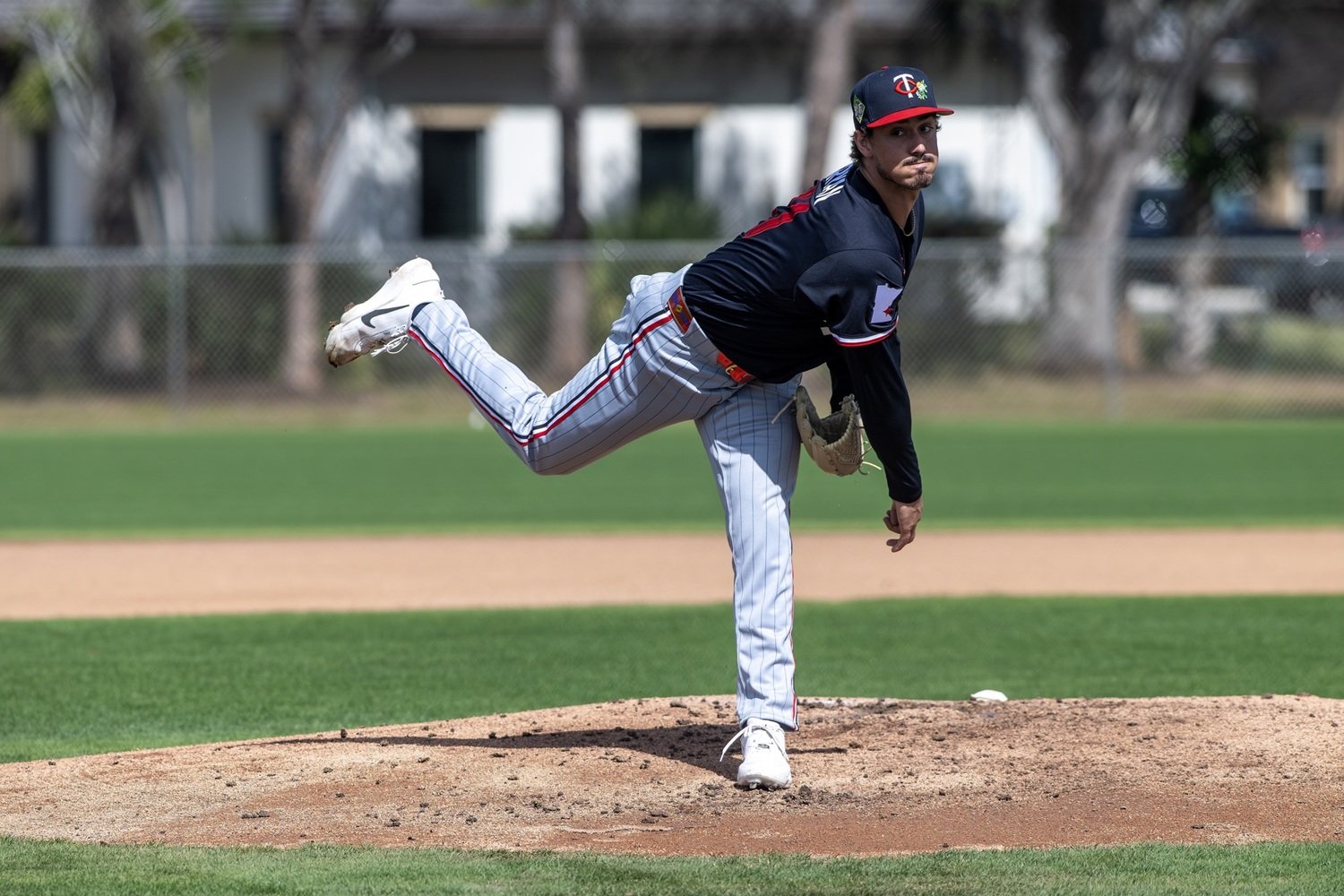
Joe Ryan did not sound bitter. He did not sound triumphant. Mostly, he sounded tired of the whole thing.
“It is what it is—it’s done,” Ryan said, after he and the Minnesota Twins agreed to a one-year, $6.2-million contract on January 26 that includes a $13-million mutual option for 2027. The deal came together just hours before Ryan and team officials were scheduled to board flights to Phoenix for an arbitration hearing.
In the end, cooler heads and simple math won out. The Twins and Ryan were just $500,000 apart when they filed figures ahead of the January 8 deadline. For a pitcher coming off a 13-10 season with a 3.42 ERA and 194 strikeouts in 171 innings, the gap was relatively minor. But the process is rarely about the gap. It’s about the ritual, and the ritual remains as uncomfortable as ever.
A Strong Season With Some Late Noise
Ryan’s platform year was strong, by any reasonable measure. He worked 171 innings, missed bats at an elite clip (28.2% strikeout rate), and (for much of the season) was a steadying force in a rotation that needed one. Through his first 121 1/3 innings, he posted a 2.82 ERA and allowed just 14 home runs. He looked like the type of arm who could anchor a playoff series, and was named to his first All-Star team. Then the context changed, and so did his performance.
Following a rough outing in Toronto on August 25, Ryan acknowledged that his energy dipped in the weeks after the August 1 trade deadline, when the Twins were no longer positioned to chase a postseason spot. Over his final 10 starts, he logged a 4.89 ERA and allowed 2.2 home runs per nine innings, across 49 2/3 frames. The sharpness faded. The fastball command wavered. The ball left the yard more frequently.
In arbitration, those details matter. The late-season fade becomes an exhibit. The home run rate becomes a bullet point. The human context often gets stripped away. For teams and players, this can create wounds that are hard to heal.
Ryan recently switched representation to VC Sports Group, but the figures for the filing had already been exchanged with his previous agency. When talks stalled, the numbers went in. When neither side blinked immediately, the hearing date loomed. Ryan admitted he was not a fan of the system and feels like baseball needs to find a new salary system for young players.
“They’re trying to win, and that’s kind of their show,” Ryan said. “That’s their baseball game. … I think at the end of the day that process is pretty antiquated, and kind of stupid. No one in the league likes it. No team likes it. No one that works for a team likes it. No players like it. It doesn’t benefit anyone. It’s just a dumb system.”
The Skubal Effect
If there is any momentum for change, it may come from cases like Tarik Skubal’s. The Tigers ace recently secured a significant arbitration win, as he filed at $32 million and Detroit countered at $19 million. The ruling in favor of the two-time defending Cy Young Award winner broke the previous arbitration salary record of $31 million, set by Juan Soto in 2024. More importantly, it represented a raise of $21.85 million, more than double the previous record increase of $9.6 million set by Jacob deGrom in 2019.
Skubal’s victory reinforced the fact that frontline starters with elite results are being rewarded aggressively by panels. When a Cy Young-caliber arm walks into a hearing with comparable stats and walks out with the number he filed, it shifts the landscape. For pitchers like Ryan, that matters.
While Ryan is not coming off a complete and excellent season, he is part of a wave of arbitration-eligible starters who combine innings volume with swing-and-miss ability. As salaries for that tier climb through arbitration, teams will have a harder time suppressing numbers by leaning on selective splits or brief downturns.
Panels have shown a willingness to reward impact and durability. Skubal’s case strengthens the argument that pitchers with high strikeout totals, strong run prevention, and meaningful innings loads deserve to be paid accordingly. It nudges the system slightly toward the players, even if the framework remains flawed.
Business as Usual
For the Twins, avoiding the hearing was the priority. Arbitration hearings can strain relationships. They force teams to highlight weaknesses. They require players to sit quietly while their value is dissected in an adversarial fashion.
Minnesota has generally tried to avoid that outcome with its core pieces. Getting a deal done at $6.2 million keeps Ryan in the fold on reasonable terms and leaves open the possibility of a $13-million mutual option next season. From a roster-building standpoint, it’s tidy. From a player relations standpoint, it avoids unnecessary scars.
Still, Ryan’s blunt assessment lingers. The system is antiquated. It benefits both sides, but in somewhat brutal fashion. Both sides play their roles because the collective bargaining agreement requires it. In the end, the Twins and Ryan did what most teams (and players) eventually do. They compromised. They shook hands. They moved forward. The process may be dumb, as Ryan put it. But until something replaces it, this is the game within the game.
Do you agree with Ryan that something needs to change? What system would be fair for both players and teams in the next CBA? Leave a comment and start the discussion.