
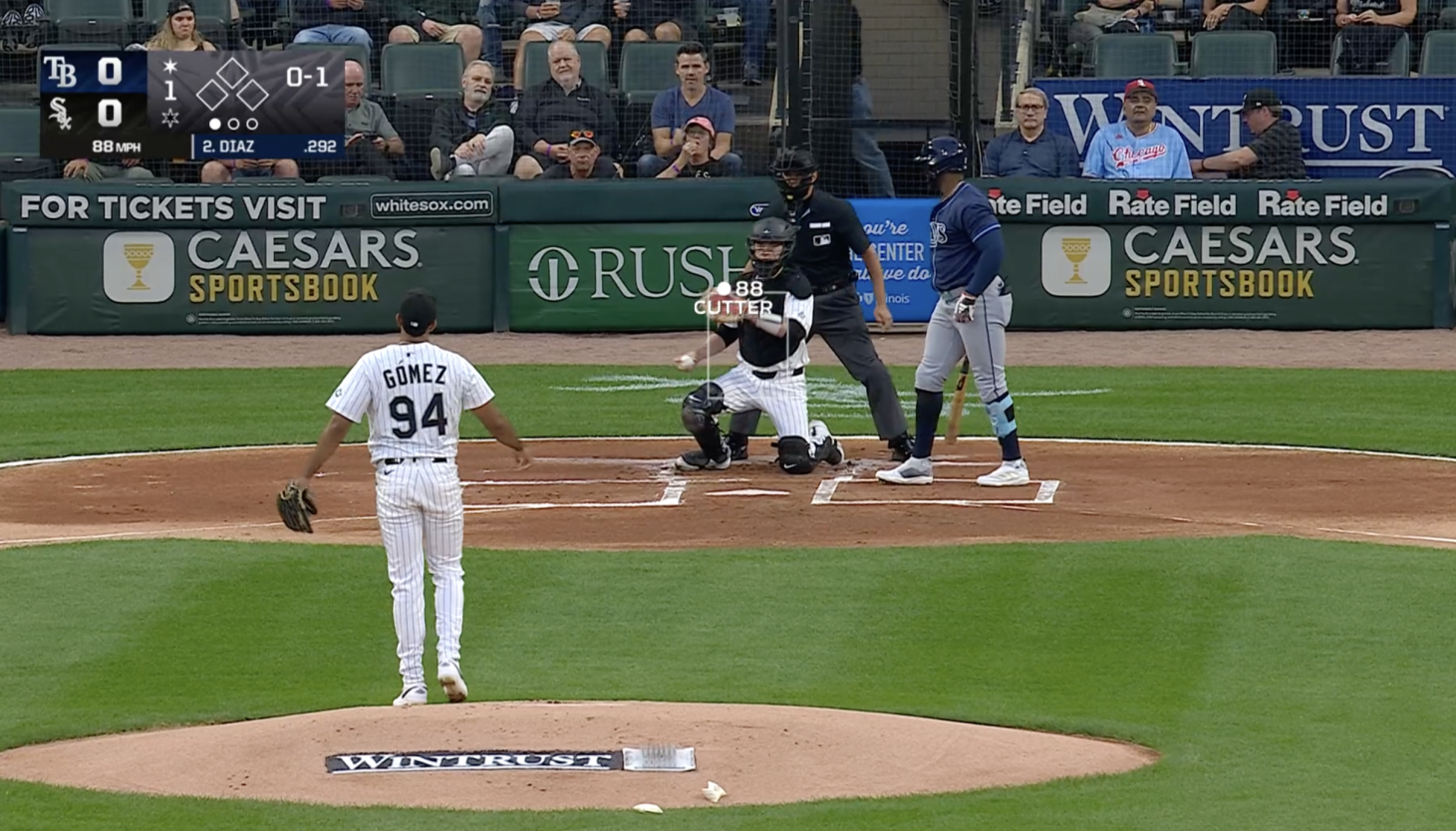
Three seasons after adding the pitch clock to TV broadcasts, baseball producers now are figuring out how to handle the Automated Ball-Strike Challenge System, which will be part of MLB regular-season games beginning this season.
ABS was the biggest topic of discussion at the annual MLB production meetings last month in New York, where league officials and game producers from around the country address broadcast elements, new technologies and best practices. Though ABS won’t be as impactful as the pitch clock, it will affect TV broadcasts.
The strike-zone box, which has become as vital to baseball broadcasts as the first-down line on football broadcasts, will remain on the screen, but it no longer will indicate whether a pitch was a ball or a strike. In addition to showing the pitch speed and type, the box has marked a strike with a filled-in circle and a ball with a hollow circle. Home viewers might not have ever noticed.
The change was made because that box now will be used for the ABS system, and MLB is doing everything it can to ensure no one can exploit it. In fact, MLB will allow the box to be shown in just one place in the ballpark: the broadcast booth. More on that later.
Viewers still will know whether an obvious call merits a challenge. Challenges must be made immediately, so there’s no chance of a viewer contacting the team in time. Besides, only the batter, pitcher or catcher can issue a challenge, and he can’t have any assistance.
Once a player challenges a call, which he indicates by tapping his head, an animation of the pitch will be shown immediately on a videoboard in the stadium and on viewers’ screens. The call will be confirmed or overturned right then and there. No calls to replay umpires necessary.
The question for producers is how to display this for viewers. Do they add teams’ remaining challenges to an already-packed scorebug? How do they present the scene of challenges, which MLB said averaged only 14 seconds in spring-training trials last year?
Don’t expect challenges to appear in the scorebug. They’re more likely to appear in a graphic that slides out from the bug, like broadcasts do with mound visits. Teams start each game with two challenges and lose them only if they fail, so they could challenge more than two pitches.
Producers also could add drama to the scene by breaking the screen into boxes. Imagine a three-box with the graphic of the pitch and reactions from the batter and pitcher. In a key spot in the ninth inning, that could make for good TV.
How teams use challenges should make for good discussion among broadcasters. Producers have learned that teams already are discussing strategy, such as which players can or can’t initiate a challenge. Pitchers who think everything they throw is a strike and hitters who lack a great feel for the strike zone probably won’t be allowed to. And broadcasters will have more to discuss once enough data is compiled about team tendencies regarding challenges.
But the addition isn’t without headaches for production crews. MLB’s biggest point of emphasis at the production meetings was the change to the availability of the broadcast with the strike-zone box. MLB doesn’t want that feed shown anywhere in the ballpark, outside of the broadcast booth, to prevent teams from taking advantage of it.
That means players in the clubhouse and dugout and fans waiting in line for concessions won’t see the strike-zone box on nearby TVs. Technical teams from local and national outlets have spent a lot of time figuring out how to change the feeds they send through the ballpark. It won’t affect home viewers.
Producers don’t expect ABS challenges to provide many dramatic moments to display, and they want to be careful not to overdo them. The challenge system might just blend into the game as quietly as the pitch clock has. But in big moments, those 14 seconds could provide some compelling sights.
Remote patrol
The Cubs and White Sox announced their spring-training broadcast information this week:
• For the Cubs, Marquee Sports Network will air 11 games and The Score 10. Both will carry the Cubs’ first two games, the opener next Friday against the Sox and the game Feb. 21.
• For the Sox, Chicago Sports Network will air nine games, and 10 will air on ESPN 1000, which will carry the opener next Friday against the Cubs. CHSN will carry the next two games.