
SCOTTSDALE, Ariz. (AP) — For those worried robots are about to take over Major League Baseball, Colorado Rockies manager Warren Schaeffer has some experience with the Automated Ball/Strike system that’s coming to stadiums this summer.
Yes, the machines have a lot of power. But the human touch still matters.
“I’ve seen challenges lost in the first inning,” Schaeffer said. “That’s not good. Emotion is a big key to this.”
The ABS system made a cameo last year in big league spring training and was greeted with a mix of curiousity, excitement, disdain and uncertainty. Now that it’s here for regular-season games in 2026, the novelty is quickly giving way to strategy.
MLB gave a presentation on the ABS process Thursday at Cactus League Media Day in Arizona. Joe Martinez, the sport’s vice president of on-field strategy, said a survey taken by the league found 52% of fans said ABS had a “very positive” impact on last year’s spring training games, 20% called it “slightly positive,” and 18% said it was no factor.
Only 10% of fans rated ABS as having a “slightly negative” or “very negative” effect on the game.
As a refresher, here’s how the system works:
Stadiums are outfitted with cameras that track each pitch and judge whether it crossed home plate within the strike zone.
Human umpires call every pitch, but each team has the ability to challenge two calls per game. Teams that burn their challenges get one additional challenge in each extra inning. A team retains its challenge if successful, similar to the regulations for video reviews, which were first used for home run calls in August 2008 and then widely expanded to many calls for the 2014 season.
Only a batter, pitcher or catcher may challenge a call, signaling by tapping one hand on a helmet or cap, and assistance from the dugout is not allowed. A challenge must be made within two seconds, and the graphic of the pitch and strike zone is shown on the scoreboard and broadcast feed. The umpire then announces the updated count.
Schaeffer, who was managing at Albuquerque when ABS debuted in Triple-A in 2022, said it’s important that teams develop a coherent strategy on how to deploy challenges. He added that “15 guys will have 15 different opinions” on how to use it, but the most important aspect is everyone is on the same page.
“We still have to have a lot of conversations behind closed doors, so that we’re putting our players in the best position to succeed,” the manager added.
Multiple MLB managers and GMs said Thursday that catchers will probably have the most leeway to challenge because they’ve got the best view of the baseball.
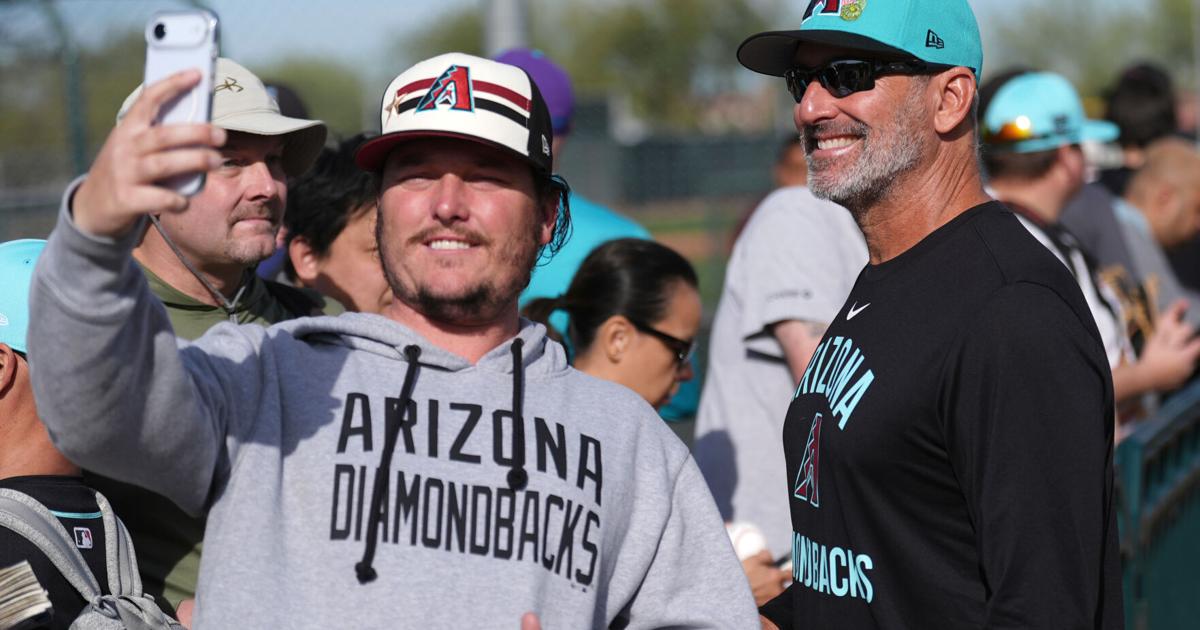
“You want to have one late in the game, just in case,” Arizona Diamondbacks manager Torey Lovullo said. “The top of the first inning on a 0-0 fastball … I don’t want to challenge and lose. We’ll most likely rely on catchers first — pitchers at times get a little emotional. Hitters can be that way sometimes, too. I think we’re going to rely on the catchers and start there.
“But I want to have one in pocket, when I can, when it’s in a critical part of the game.”
The ABS system could be particularly beneficial to players like New York Yankees slugger Aaron Judge, who have a good eye for the strike zone. Judge walked an American League-high 124 times last season.
“Our guys who are really good at controlling the zone should benefit and Aaron is certainly one of those guys who controls it real well, knows it real well,” Yankees manager Aaron Boone said.
ABS was tested in 13 spring training ballparks last year, and teams won 52.2% of 1,182 challenges, which averaged 13.8 seconds. Strike zones vary depending on a player’s height — starting at 53.5% of a batter’s height for the top and 27% of a batter’s height for the bottom.
Each player will be measured for his strike zone starting at 10 a.m. to noon on a rolling basis during spring training — the time of day to maintain uniformity — and the data will be verified by the Southwest Research Institute.
There appears to be widespread agreement across MLB that the ABS system is a positive.
Texas Rangers president of baseball operations Chris Young used to work closely with MLB’s umpires when he was employed by the commissioner’s office and said they were long overdue for some help.
“They do a phenomenal job, but the stuff in today’s game is better than ever,” Young said. “Umpiring is harder than ever. If there’s the ability to use technology to add a level of consistency, that’s great for everybody.”
AP Baseball Writer Ronald Blum contributed to this report.
AP MLB: https://apnews.com/hub/mlb
Success! An email has been sent to with a link to confirm list signup.
Error! There was an error processing your request.
Copyright 2026 The Associated Press. All rights reserved. This material may not be published, broadcast, rewritten or redistributed without permission.