
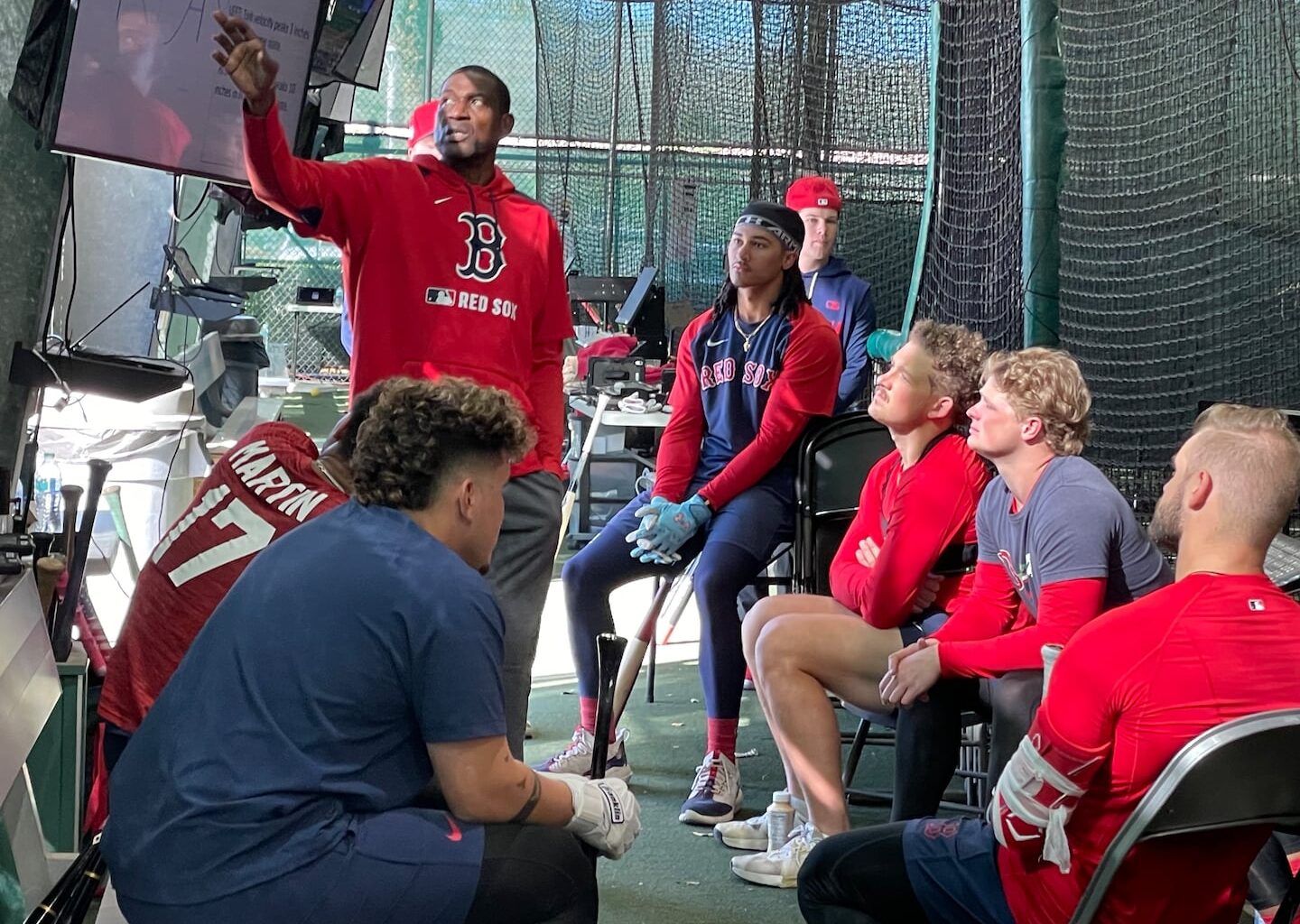
“I’ve never thrown 97 entering into a season,” he grinned.
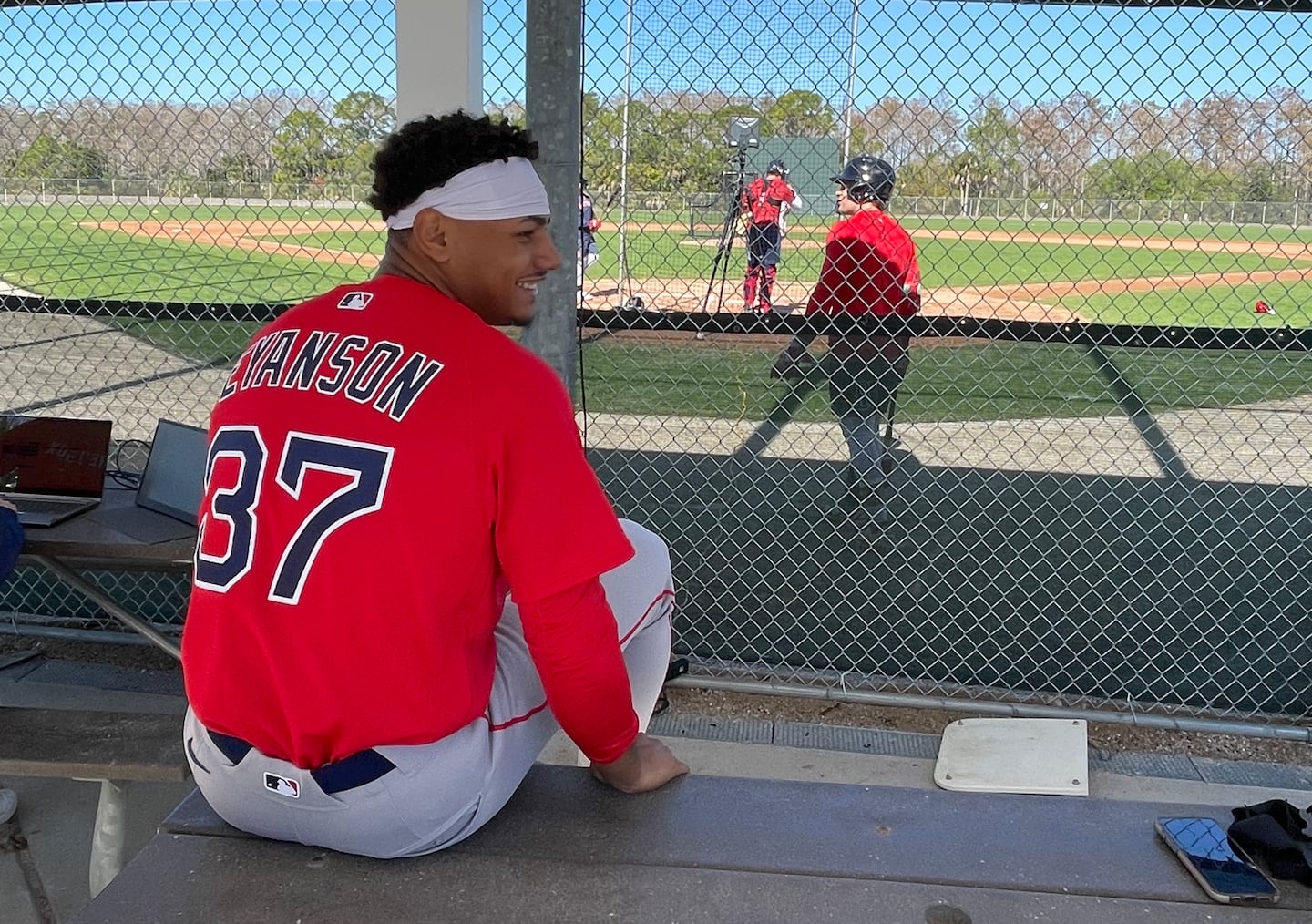 Red Sox prospect Anthony Eyanson is among the many players already at the team’s facility in Fort Myers, Fla., ahead of the official start of minor league spring training.Alex Speier
Infielder Franklin Arias, whose silky defense and tremendous contact skills have positioned him as the Sox’ top position prospect, was tasked over the winter with adding strength and shifting his contact point forward by a couple of inches in order to more effectively pull the ball in the air for power. In his first plate appearance against a pitcher since last year, he clipped a pitch at 102 m.p.h. and a 27 degree launch angle for a homer, inspiring shouts from teammates.
Get Starting Point
A guide through the most important stories of the morning, delivered Monday through Friday.
The early-February roar of activity on backfields stands in defiance of traditional player development practices. For much of baseball history, minor leaguers went home at the end of seasons with orders to get a month or two of rest followed by a gradual buildup to be in shape for spring training.
Teams sometimes gave them homework assignments ― perhaps one generic workout program for position players, another for pitchers. Players were encouraged to kick off baseball activities ― lightly playing catch or swinging a bat — around Thanksgiving.
Club officials crossed their fingers, hopeful that players ― many of whom supplemented meager minor league wages with winter jobs ― didn’t let their conditioning lapse. If a player maintained his shape and skills over the offseason rather than suffer regression, it was a win.
“The premise for a lot of people was, ‘Shut it down. Don’t worry about picking up a ball [until mid-November],’ ” said Red Sox Triple A pitching coach Dan DeLucia, a former minor league pitcher. “Basically, we’ll see you in mid-February. There were no check-ins. It was such a hand’s-off approach.”
No longer. Besides an MLB-mandated “dead period” from mid-November through early January, several dozen players have been in Fort Myers from roughly the end of last season. The winter is not a time of rest but instead purposeful work.
“This time is the best opportunity to push forward and get better,” Arias said through a translator.
Several factors have reshaped how teams work with players throughout the year. Independent, data-driven offseason training facilities such as Driveline highlighted how players could not merely maintain but drastically improve skills.
“We’ve seen what the cream of the crop in player development looks like, and we’re trying to emulate that,” said Red Sox player development manager Justin Frometa.
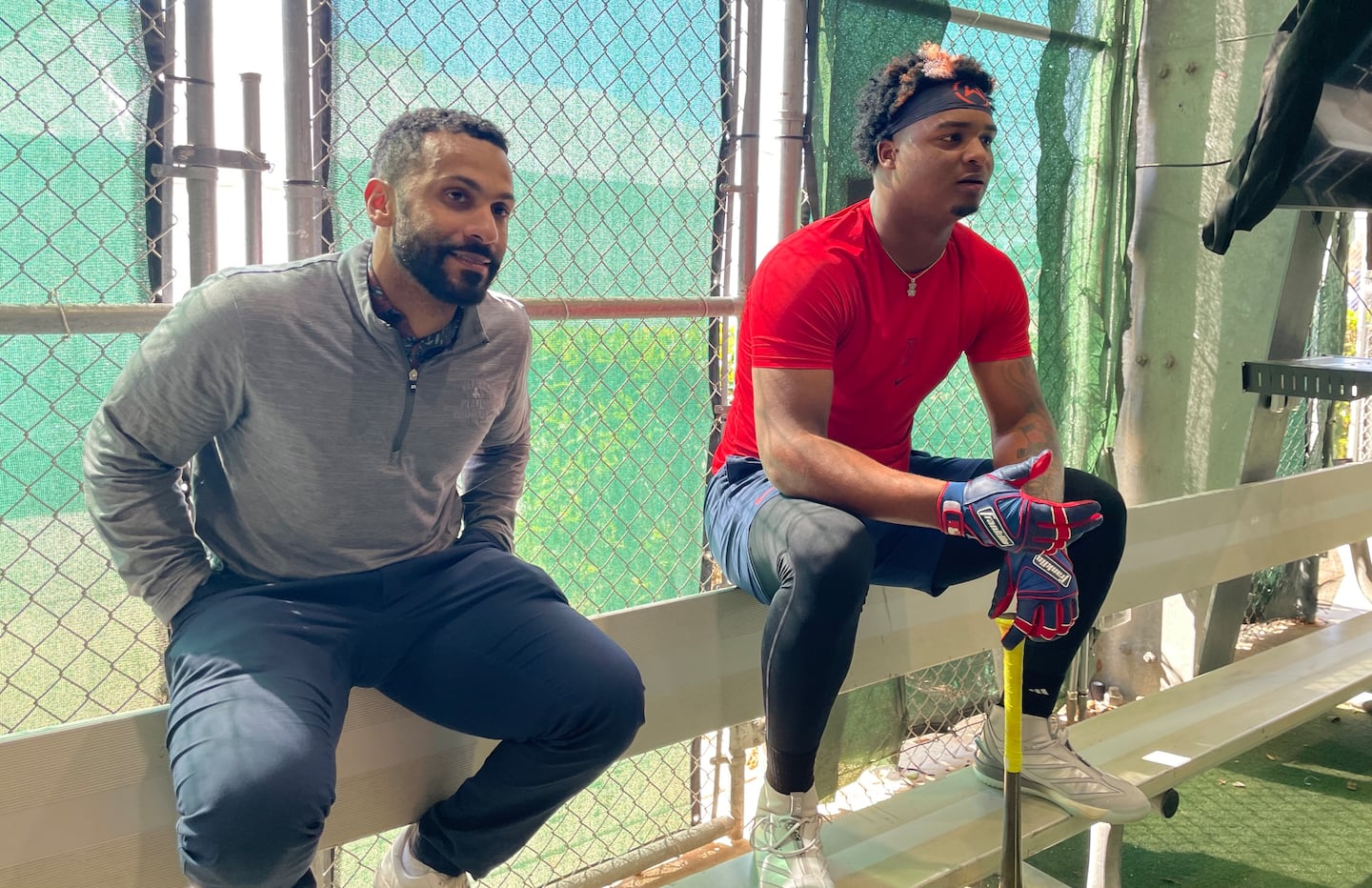 Red Sox player development manager Justin Frometa (left) and player Justin Gonzales at the team’s facility.Alex Speier
Those same facilities contributed to powerful evidence that year-round throwing cycles placed players at no greater risk of injury — and in fact, might decrease it. Prolonged shutdown periods followed by urgent spring training buildups, meanwhile, led to predictable annual spikes in elbow injuries.
“There’s no healthy tissue of the body that takes a full month to recover,” said Red Sox director of strength and conditioning Nick Shedd. ”Within about two weeks, you’re as recovered as you’re going to be. You might as well start training at that point.
“Guys end up circling the drain, trying to constantly get back to a base after not training through the offseason. If we try to push that too fast, then usually guys end up getting hurt toward the end of spring training or in the first couple weeks of the season, so we need to start building their work capacity way sooner.”
Rather than leaving it up to players to find their way to training facilities, the Red Sox are among the teams that have created significant player development infrastructure.
Whereas Fort Myers once had a skeletal offseason staff, Red Sox farm director Brian Abraham suggested the Sox have tripled to quadrupled the available coaches and coordinators who work with players on everything from hitting and pitching to strength and conditioning, nutrition, and education.
Meanwhile, the explosion of technology across the complex allows the team to monitor everything ― including the size and strength of players, the force they’re generating through their movements, bat speed, velocity, pitch grips and finger pressure, biomechanics, as well as workloads and body stress ― while charting improvements over time. The approach reflects a belief that information is the fuel to help protect and improve players.
“Every untracked rep,” mused Red Sox assistant hitting coach John Soteropulos, “is like a small cut to my soul.”
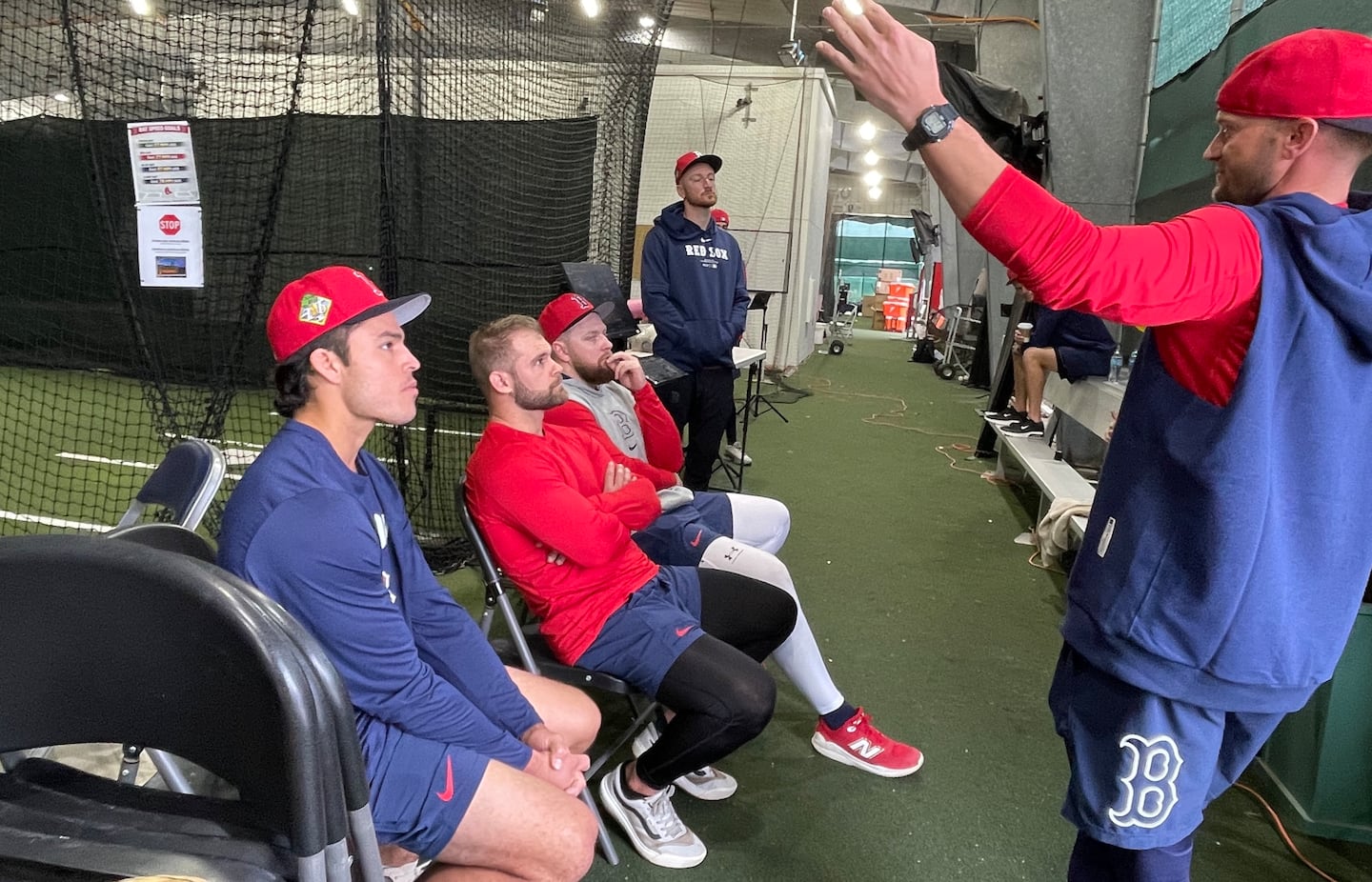 Many Red Sox prospects gathered at the team’s facility in Fort Myers, Fla., in early February.Alex Speier
Ongoing training in Fort Myers represents an antidote to such dispiriting occurrences. When development occurs in the team setting, goals can not only be defined but refined ― and the team can quickly tweak training methods to address anything that might be holding back progress, whether a need for physical or skill development.
“Having guys in-house as much as possible, providing all the resources to them, offering just that level of consistency [makes] the feedback loops so much tighter,” said Red Sox major league director of development Chris Stasio. “The commitment to offseason training has been paramount to really everything that we do.”
The impact of those efforts has been amplified by the players’ embrace of it.
When the Sox introduced their year-round training program to minor leaguers ― starting with the latest draftees and a few dozen top prospects who spent the fall and winter of 2023-24 in Fort Myers ― there was skepticism and reluctance. That’s no longer true, for a number of reasons.
First, thanks to the Minor League Baseball collective bargaining agreement that took effect in 2023, players are getting paid to do it. Sox minor leaguers get roughly $650 per week to take part in the Fort Myers training program, roughly $400 more per week than those who train on their own. The team pays for housing (offering a hotel or a stipend for rent) and provides two meals per day.
On top of that, the combination of training staff and resources, education programs (the Sox devote time to coach-led sessions such as the importance of contact point in offensive production, or video breakdowns of game situations to sharpen on-field aptitude), enthusiastic word-of-mouth, and evidence of prospect breakouts by past OTP participants Kristian Campbell, Payton Tolle, and Connelly Early (known throughout the organization as “The Goal Crusher”) have made the program an easy sell.
Late in the 2025 minor league season, Salem Red Sox hitting coach Nelson Paulino summoned a group of young Latin program invitees into a meeting to explain the benefits of the OTP. Prospect Yoeilin Cespedes, a leader of the group, quickly interrupted Paulino.
“[Cespedes] looked around the room and he said, ‘Don’t worry. We’ll all be there.’ And he walked out,” said Frometa. “That is the example of the culture we’re trying to create and what we’re trying to build here.”
Not all Sox prospects train in Fort Myers. The team is selective in how it expands the group training in Fort Myers, having started with roughly 40 prospects (as well as five to 10 rehabbers) on Jan. 11, another similarly sized group arriving on Jan. 25, with an additional 50 players set to arrive on Feb. 14, and finally, another 30 players ― mostly drawn from players who spent last year in the Dominican Summer League, and who have been working out at the team’s academy ― coming on Feb. 28 for the official start of minor league spring training.
For the players who aren’t in Fort Myers, the Sox have set up remote training programs and check-ins to monitor progress and maintain the same sort of goal-setting and assessments that are conducted at Fenway South.
With so many of their prospects training under their roof, the Red Sox have fewer questions about whether some of their most important young players are taking their intended steps forward.
“It’s easy to go to sleep at night knowing that we have players in our purview, versus kind of out on their own, doing things that — hopefully they’re doing it right, but we aren’t exactly sure,” said Abraham. “It’s great to see the guys progressing in real time.”
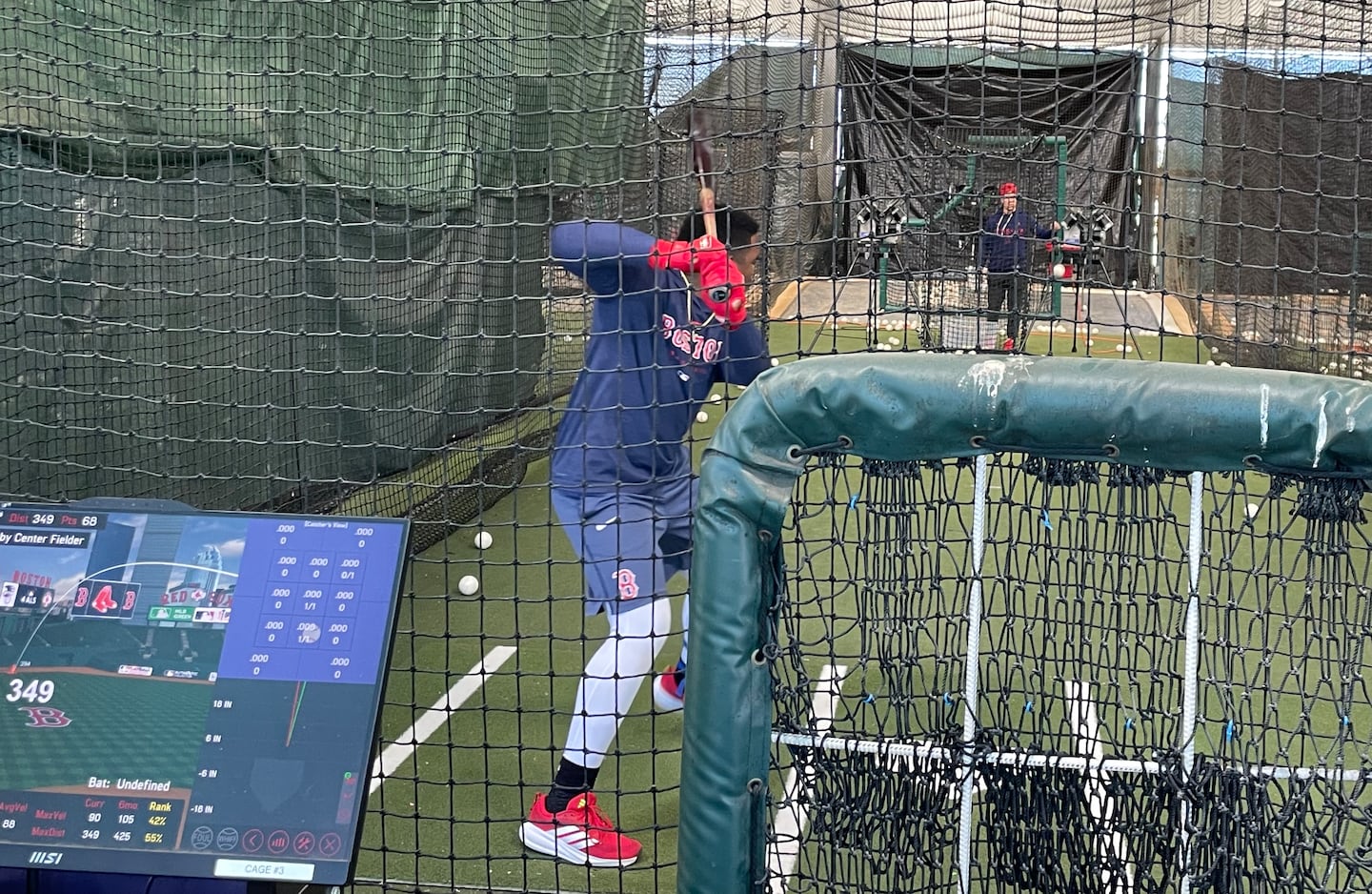 Red Sox prospect Yoeilin Cespedes’s batting practice is monitored by a HitTrax system at the team’s facility in Fort Myers, Fla.Alex Speier
Alex Speier can be reached at alex.speier@globe.com. Follow him @alexspeier.