
Want more ways to catch up on the latest in Bay Area sports? Sign up for the Section 415 email newsletter here and subscribe to the “Section 415″ podcast wherever you listen.
SCOTTSDALE, Ariz. – Giants catcher Patrick Bailey is the best in the business at framing pitches, and now Major League Baseball is messing with his craft.
The two-time Gold Glover is perfectly fine with it.
The automated ball-strike challenge system will be introduced this season, which will lessen the chances of human error by umpires and give teams opportunities to challenge bad calls. Initially, Bailey considered it a major blow to good defensive catchers but now welcomes it and embraces it.
“There are always ways to get an edge,” Bailey said at his Scottsdale Stadium locker before Thursday’s workout. “It’s something we’re working on this spring to see where we can get that edge … excited about the opportunities coming.”
Buster Posey likes it, too. The Giants’ president of baseball operations, considered the best catcher in franchise history during a likely Hall of Fame career, was impressed with how the ABS system was used by Major League Baseball as an experiment in spring training last year.
“It’s going to be fascinating to see how it plays out,” Posey said. “I liked it. I thought it added something else for the fans to be engaged with.”
The rules are basic.
Each team gets two challenges per game and can retain a challenge when successful.
Only a catcher, pitcher, and batter can request a challenge – no input from teammates or the dugout is allowed – within a couple of seconds after the pitch.
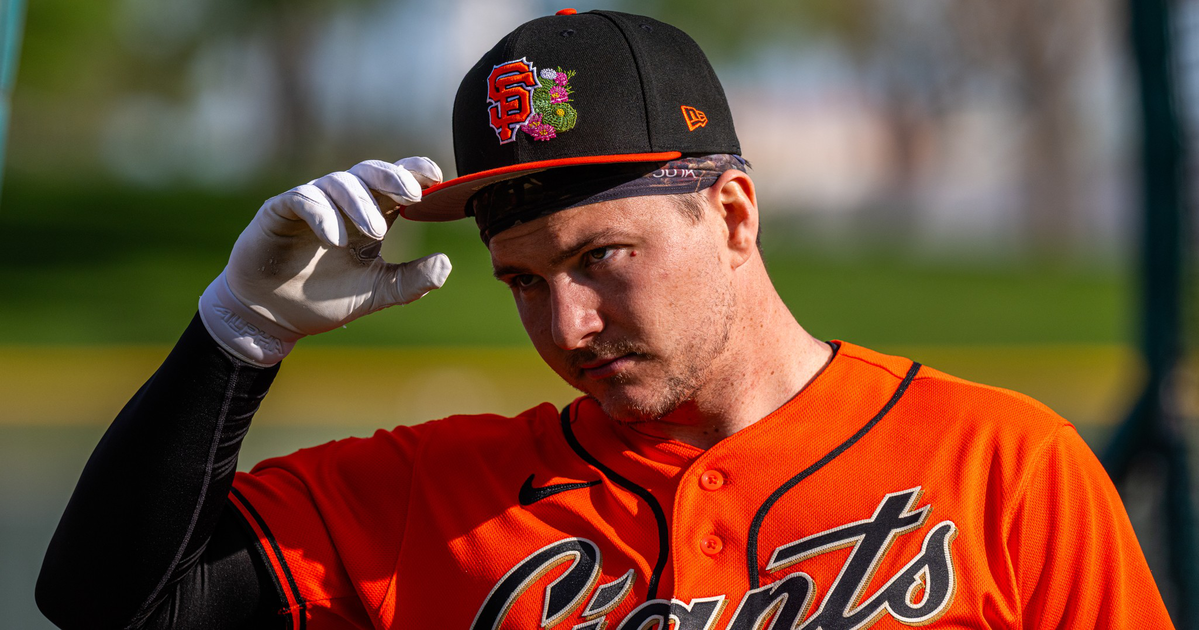
To request a challenge, they must tap the top of their helmet or cap.
Teams get an extra challenge in every extra inning so long as their challenges have been exhausted.
“For a hitter who knows the zone, that really is a weapon, right?” Posey said. “I mean, think about a 1-1 count flipping to 1-2, and then reversing to 2-1 with a challenge. It’s a big deal.”
For a catcher with elite awareness of the strike zone, it’s a big deal, too.
“I’m looking forward to it,” Bailey said. “It’s definitely different. I’m sure there’ll be some ebbs and flows to it, but I assume the egregious calls would work their way out of the game, as they should. At the end of the day, I think the 50-50 ball is probably where we have to dominate the most.”
Bailey is exceptional at securing the 50-50 ball (or borderline pitch) as a strike. As an elite framer, he masters the art of pulling a pitch back into the strike zone and convincing the umpire to call a strike. The advanced metrics prove he’s tops in the majors based on his 25 Catcher Framing Runs and 31 Fielding Run Value.
The calculations for these stats are complex. Suffice it to say Bailey’s premium framing skills set him apart both statistically and to the naked eye.
Bailey has come around on the ABS system. Last year, he said in an interview with The Standard that it “takes a lot off my plate in a bad way” and “I think you’re going to see a lot of catchers out of baseball with the ABS.”
Fortunately, MLB didn’t push through a full ABS scenario with every pitch decided by technology – robo umps, if you will – which has been experimented on in the minors. That would have eliminated the umpires’ duties to call balls and strikes.
The challenge system was implemented instead – with umpires still calling balls and strikes – for which Bailey and other players across the game are grateful.
“Now we’re just trying to get a feel for the strike zone,” Bailey said, “a more defined strike zone.”
Indeed, the ABS strike zone is a key element. Thursday, MLB staged a presentation for media members at a Scottsdale hotel, run by former Giants pitcher Joe Martinez, now MLB’s VP of on-field strategy. He explained every detail of the incoming ABS system including how the strike zone will be technologically determined.
The top of a player’s strike zone will be at the point that’s 53.5% of his height. The bottom: the point that’s 27% of his height. The width of the zone is 17 inches, the same size of the plate.
Naturally it’ll be different for the Giants’ Bryce Eldridge, who’s 6-foot-7, compared with 5-9 teammate Drew Gilbert. Based on the math, Eldridge’s strike zone would be 42 inches at the top and 21 inches at the bottom, a 21-inch zone. Gilbert’s is smaller: 37 inches at the top and 19 inches at the bottom, a zone of 18 inches.
Hitters’ strike zones (and heights) will be measured during spring training and verified by a third party.
“There’s definitely some strategy to it,” said Eldridge, who experienced the ABS system last year in Triple-A. “We kind of stayed away from it until we knew it would impact the game, maybe later in the game. It depends on the situation.
“It’s a heat-of-the-moment thing. You’ve got to make a quick decision. You can’t sit there and think about it. Having Pat Bailey, you’ll probably want to let him use most of them.”
Posey said the front office will more fully examine strategic options during training camp and that assistant general manager Paul Bien and his analytics staff will be heavily involved. Decisions will be made on determining the highest-leverage moments of a game to challenge a call.
Most likely, Bailey will be given the autonomy to challenge any calls he believes could be reversed, rather than the pitcher, because of his excellent zone awareness.
“I do think it’s much easier for the catcher to tell if it’s a ball or a strike,” Posey said. “We’ll have ongoing conversations, but that’s my lean. I think the best framers in the game are going to force the opposition to make more decisions than if they weren’t good framers.”
Bailey needs to look at the ABS system from a hitter’s vantage, too.
“One thing to think about,” Bailey said, “is if you strike out on a pitch, and you challenge it and win, you still have two strikes on you, which means you still have super low expected results. So I’m curious if teams will challenge the two-strike pitches or if it’ll come more in hitter counts where you can really take advantage of it.”
Oracle Park and the other 29 facilities will have cameras and Hawk-Eye technology tracking all angles of the pitch with results flashed on the scoreboards and broadcast feeds. Same with spring training parks, except for the Angels’ facility in Tempe, Ariz., which has no replay board.
One caveat: When a position player pitches, the ABS is shut down. Thankfully.
The ABS system is yet another rule in a changing game that in recent years adopted a pitch clock, shift ban, pickoff limit, and bigger bases. All led to countless debates at the time, but now they’re simply accepted as part of the game.
It’s a good bet the ABS system will follow suit.
“Three months into the season, I imagine we’re not even really thinking about it much,” Posey said. “That’s my guess.”