
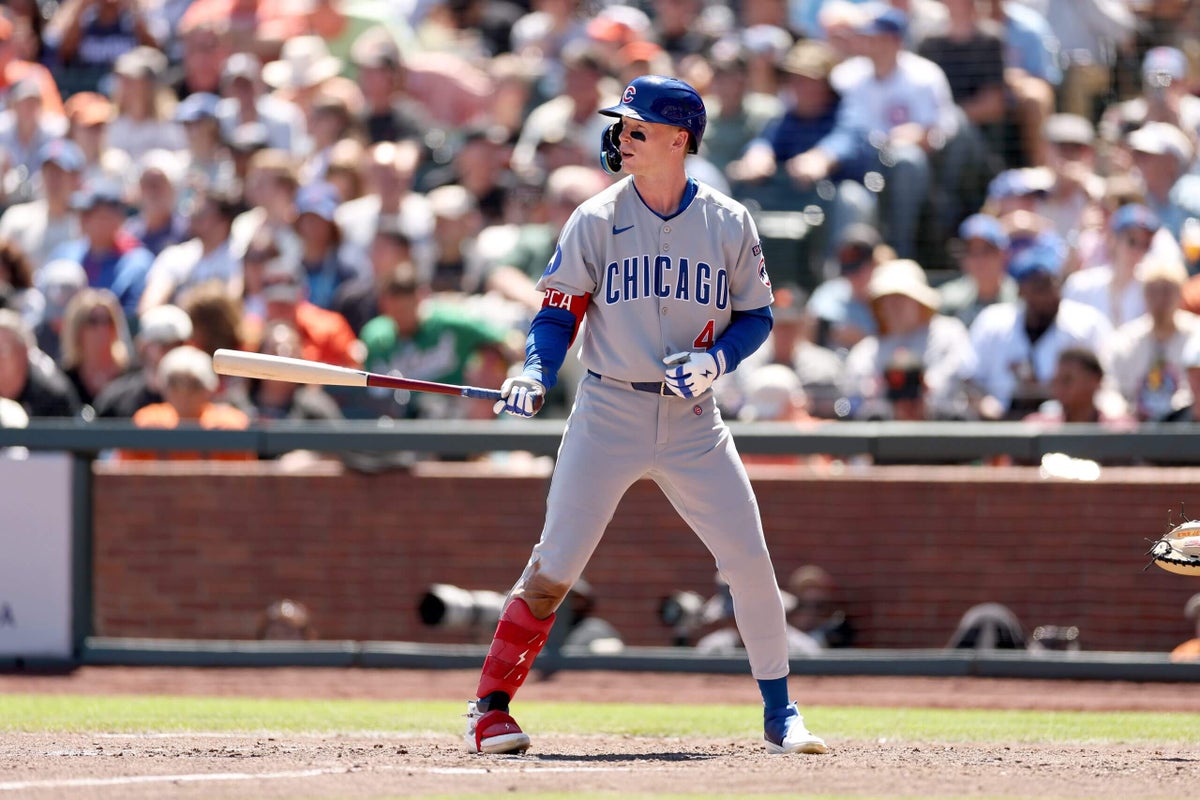
MESA, Ariz. — Pete Crow-Armstrong was very happy with his season as a whole. The All-Star center fielder put up a 109 wRC+ while hitting 31 homers and stealing 35 bases.
Those who followed his entire year, though, know it really was a tale of two halves. For four months, Crow-Armstrong looked like an MVP candidate. As the calendar turned to August, he had a 137 wRC+, and with 27 homers and 29 stolen bases, a 40-40 season wasn’t out of the question.
Then everything changed. Crow-Armstrong had a 45 wRC+ in the final two months. He hit just four more homers and was rarely on base, hitting just .188 with an OBP of .237. If not for his elite defense at a premium position, he would have been nearly unplayable.
To correct these issues, the focus appears to be twofold. Crow-Armstrong believes the first issue comes down to consistency. After the season, he sat down with some coaches, including assistant hitting coach John Mallee. The two had built a relationship when Mallee was the Cubs’ Triple-A hitting coach, and it has only continued to grow over the years.
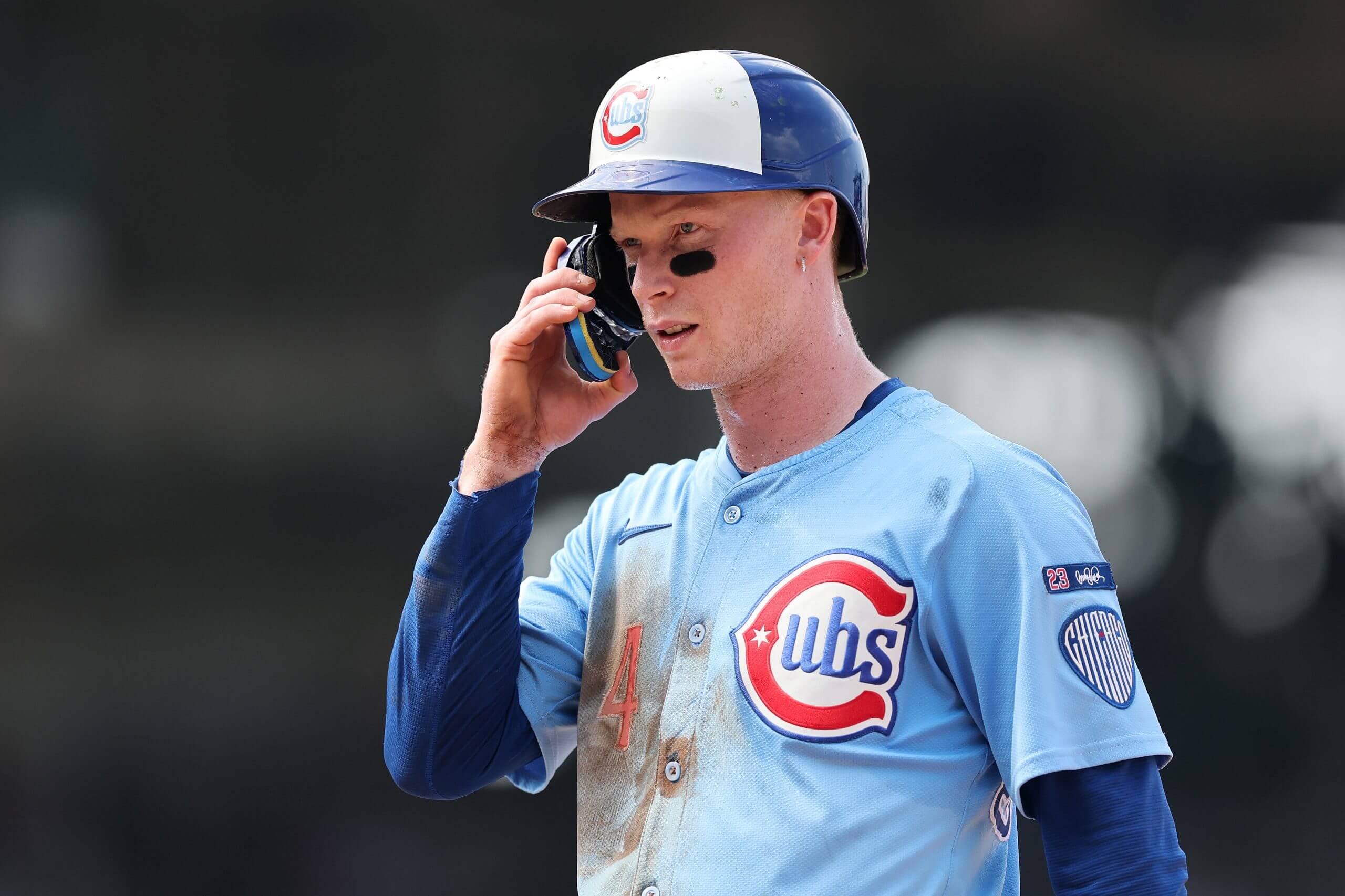
Pete Crow-Armstrong traces some of his late-season slide in 2025 to inconsistency in the batter’s box. (Michael Reaves / Getty Images)
“We just noticed that when the setup was out of whack, I wasn’t really getting in the box the same way,” Crow-Armstrong said. “That’s when the swing went to crap, and the mechanical stuff started playing a bigger role in the lack of success.”
Mallee explained in greater detail.
“He got a little stretched out,” the veteran coach said. “He was accelerating in his stride, covering too much ground, which kind of made him a little long, and he was mis-hitting balls. So he went back to staying short like he was earlier in the year. Small tap, small separation and really rotating in place as opposed to jumping and crashing forward. Kept his head stiller and allowed him to get to more balls consistently.”
Crow-Armstrong said he’s worked on really “mastering and perfecting” his setup so it won’t drift come the middle of the summer. The swing, when the mechanics are right, isn’t an issue. It’s something he’s worked hard on over the years and doesn’t need to adjust any further. Repetition is the key.
That’s not always as easy as it sounds. Certain players can obsess over mechanics, especially during a slump. They search for the feeling of when things were right. They can get into their head and not focus on the task at hand when they’re at the plate. They can make unnecessary changes and fall even further behind. There are numerous pitfalls with this strategy, but Crow-Armstrong is doing his best not to think about mechanics when the games start and to instead trust that the work will pay off.
What he really wants to focus on, what many in the organization see as the next step for him, is honing his swing decisions. Team president Jed Hoyer talked about it to open spring training, manager Craig Counsell said it’s the obvious flaw, and Crow-Armstrong has already been talking to his coaches and teammates, including Alex Bregman, about how to improve.
“It’s definitely the swing decisions,” Crow-Armstrong said. “I know what I do well. I know what I don’t do well. I know that I chase. I know I can get away with hitting bad balls and doing damage on bad balls, but there is no consistency there. It’s very sporadic.”
Of eligible players in 2025, Crow-Armstrong had the third-highest chase rate in baseball at 41.9 percent. Oddly enough, his two lowest months with regard to chase rate were August and September. Success didn’t really line up with not chasing. What changed was that he stopped doing damage on the good pitches he was swinging at. That may have more to do with the mechanics being out of whack.
Different players find success in different ways. What works for someone like Bregman may not work for Crow-Armstrong. It can be dangerous to try to correct something and then end up taking away what makes a player special.
“How it clicks for you, how you see it, how it resonates and how you process it, it’s different for everybody,” Counsell said. “The way Alex approaches it, it’s been successful, and it’s been successful for other players as well. So of course, we’re all going to listen to that. Then you try to find stuff that applies and sticks for your process.”
Crow-Armstrong had some freakish at-bats when he slugged balls at his eyes or his toes and sent them into the seats. He understands that’s not the best path to success, even if it can lead to it at times.
“I’m never practicing hitting those bad balls,” Crow-Armstrong said. “If I do it, I do it. More often than not, if I’m swinging at some s— at my shins, it’s not usually backspun in the air. There will be times in the game where that does happen. But we saw that maybe twice, three times last year.”
To train for better swing decisions, Mallee said there are drills in which Crow-Armstrong will swing only at balls in or balls away. They work with the Trajekt machine, and he’s supposed to look for an area in the zone where he expects the ball to end up and swing only there. Then he’s held accountable for those swing decisions.
There is also the natural growth that comes with understanding not only your strengths and zone, but also how various pitchers may try to attack you. Building that internal bank of batter-pitcher matchup history allows a batter to make better swing decisions. Mallee and Crow-Armstrong say he does his most damage when swinging at pitches on the “second floor” (if the zone were broken up into three zones from top to bottom, think of the second floor as the middle one) on both edges of the plate. Swing largely at those pitches, and success will come.
“As he matures as a hitter, the strike zone will start to shrink,” Mallee said. “It’s not just swinging at balls and strikes, what pitches can he hit against this guy, the locations that he can handle. Over time, the plate discipline gets better.”
Ian Happ, who once struck out at a rate above 30 percent and has averaged 23.4 percent over the last four seasons, attributes that experience to his drop in strikeout rate. Strikeouts aren’t actually a major issue for Crow-Armstrong, though. At least they weren’t last year. He was at 24 percent in 2025, a perfectly acceptable rate.
He’d feel happier with his performance if better swing decisions led to not only more consistency, but also maybe a few more walks here and there. The lack of production for the final two months was, in his eyes, unacceptable.
“I would love to just be on base more,” Crow-Armstrong said. “I feel like there were two months out of the year where I wasn’t on base. That’s a whole lot worse than trying to rein in the athletic way I can get to those bad balls and take advantage of my athleticism. I would much rather cut that down than not and see myself on base a little more.”
Last summer with the Boston Red Sox, Bregman took youngster Ceddanne Rafaela under his wing. It was hardly a perfect season at the plate for the talented center fielder, but his chase rate did drop from 46.3 percent to 41.4 percent while his wRC+ jumped 10 points to 91. Can Crow-Armstrong make similar adjustments? He’s soaking in the knowledge he can from veterans and coaches to try to improve in any way he can.
It could be smaller steps for Crow-Armstrong. It may be that his swing decisions improve only slightly, but he takes strides in other areas as well. Then you have a better, more complete player. Ultimately, all the Cubs and Crow-Armstrong want is for the growth to continue.
“Just keep improving as an offensive player,” Counsell said. “It can be a little in that area, it can be a little better swing path, a little better pitch-to-pitch emotional regulation. All of those things, just keep improving.”