
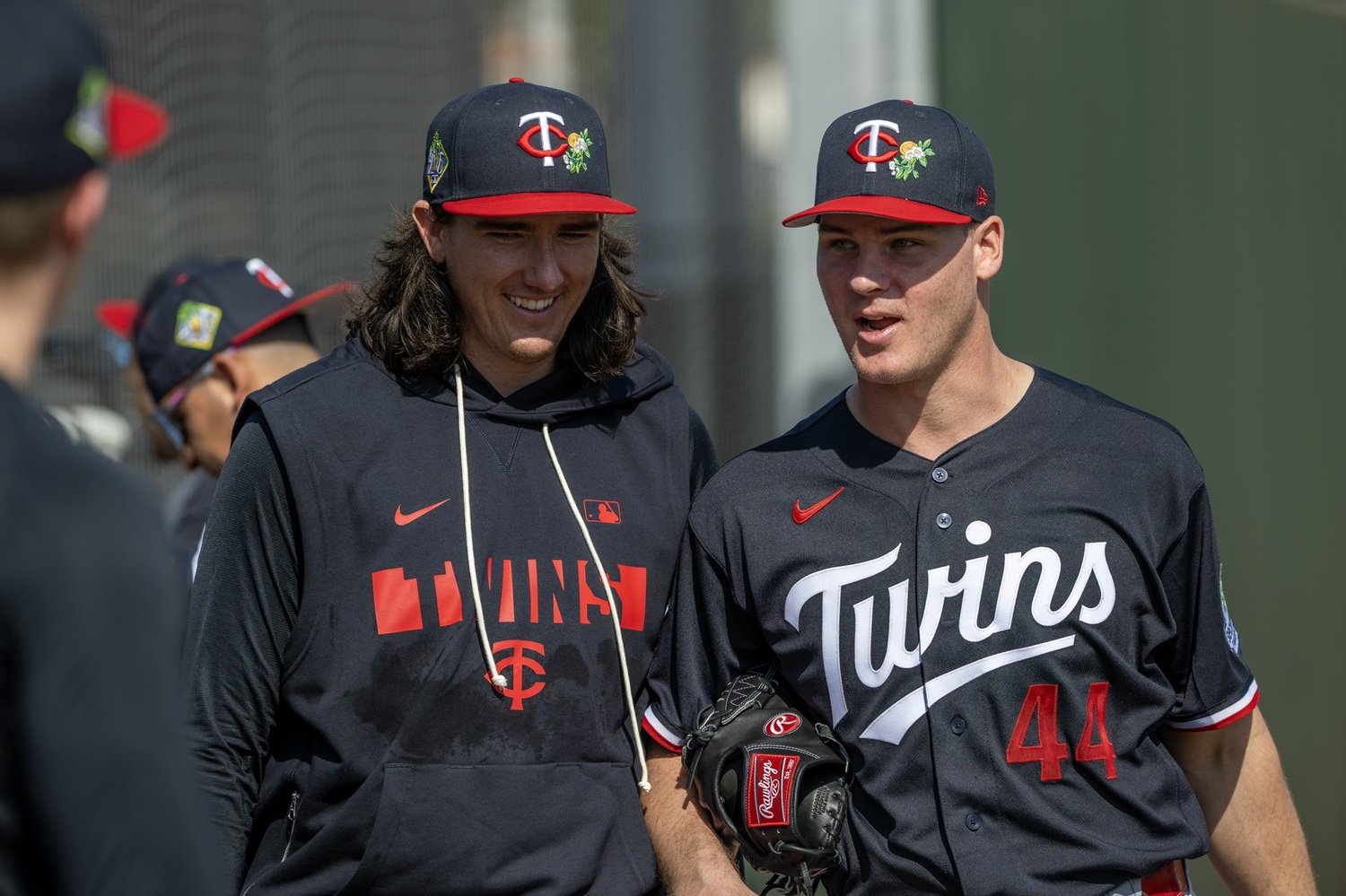
When the Minnesota Twins walked out of last year’s trade deadline having dealt away their entire late-inning infrastructure, the implication was clear. This bullpen was going to need a complete rebuild.
Jhoan Duran was gone. Griffin Jax was gone. Louis Varland was gone. Brock Stewart was gone. Even depth arms who had soaked up meaningful innings were moved, as the front office pivoted toward future flexibility. By the time the dust settled, Minnesota was left with a relief corps that resembled more of a tryout list than a functional major-league unit.
Fast-forward to the first official week of spring preparations, and the picture is beginning to sharpen. A handful of additions have quietly transformed what once looked like an organizational weakness into a group with at least some defined roles.
Closer: Taylor Rogers
It’s a familiar face stepping back into the ninth-inning conversation. Rogers returns to Minnesota for the first time since being dealt away four seasons ago, and immediately becomes one of the most experienced late-inning options in the room. While he no longer features the consistent mid-90s velocity that earned him All-Star recognition earlier in his career, he still offers steady command from the left side and a track record of handling pressure situations. On a modest one-year commitment, he projects as the bullpen’s primary southpaw and the most logical candidate to handle save opportunities as the season begins, barring a healthy and thunderous spring by Liam Hendriks.
Set Up Options: Cole Sands, Justin Topa, Anthony Banda
Sands enters camp looking to rebound from a frustrating follow-up to his breakout 2024 campaign. His swing-and-miss ability dipped noticeably last season, while his walk rate trended in the wrong direction, resulting in more traffic and more damage. Even so, his pitch mix and prior success suggest there is still legitimate upside here. Minnesota will likely lean on him in meaningful innings, hoping the sharper version of his arsenal returns.
Topa was able to stay on the mound more consistently in 2025, after injuries derailed the previous year. He logged one of the heavier workloads of his career. He doesn’t overpower hitters, but keeps the ball on the ground (47.7% ground-ball rate) and limits loud contact when he’s right. Asked to take on higher-leverage responsibilities late last season, he showed some volatility. With the current roster construction, however, he may again find himself pitching in key spots.
Banda joined the organization shortly after camp opened, following a move that brought him over from the Los Angeles Dodgers. The veteran left-hander has quietly posted strong run prevention numbers over the past two seasons, thanks to improved fastball location and a willingness to challenge hitters inside. He is better suited for matchups against left-handed bats, but has proven capable of covering multiple innings when needed. He is due to make $1.6 million this season, so he is nearly guaranteed to break camp with the club.
Middle Relief Mix: Eric Orze, Travis Adams, Kody Funderburk, Andrew Chafin
Acquired from the Tampa Bay Rays earlier in the offseason, Orze brings a mid-90s fastball and a splitter that has generated strikeouts throughout his professional career. He translated that swing and miss ability into solid results during his first extended big-league look last season and could quickly climb the trust ladder if that continues.
Adams appears ticketed for bullpen work full-time, after Minnesota shifted away from developing him as a starter in 2025. Last season, his results in relief were uneven, but there were encouraging signs late in the year. His velocity ticked up in shorter appearances. In his final eight appearances (8 1/3 innings), he had a 3.02 FIP and an 8-to-5 strikeout-to-walk ratio. The Twins will be watching closely to see if that version of Adams can show up more consistently over a full season.
Funderburk made perhaps the strongest late-season impression of anyone remaining in house after the deadline teardown. In 24 innings following the trade deadline, he posted a 0.75 ERA with 28 strikeouts. That extended opportunity down the stretch forced him back into the club’s future plans. Entering spring, he looked like the clear secondary left-handed option, though Banda and Chafin’s arrivals add new competition to that role.
Chafin enters his age-35 season and his 16th year in professional baseball. While the deal does not guarantee him a spot on the Opening Day roster, it immediately throws him into legitimate competition for a role. Last season, the veteran posted a 2.41 ERA across 33 2/3 innings. He struck out 36 hitters against 19 walks and limited left-handed batters to a .136 average. That type of platoon effectiveness remains especially valuable, even with other lefties on the roster.
This list omits fellow non-roster signee Liam Hendriks, whose return to the organization reads like something out of a baseball time capsule. Originally signed by Minnesota as a teenager out of Australia, he later developed into one of the sport’s most dominant closers—after departing the system before the Twins gave him a chance to be a reliever. Now nearing 37 and working back from multiple health setbacks, he arrives on a minor-league deal as an upside play, but with serious questions about his utility.
Taken together, this group lacks the established star power that defined Minnesota’s bullpen in recent seasons. There is no arm capable of dominating the ninth inning the way fans had grown accustomed to before last summer’s reset. What it does have is variety, flexibility, and multiple pitchers with something to prove.
That reality may ultimately define the Twins’ early season. Without a traditional late-inning hierarchy carved in stone, matchups and hot hands are likely to dictate usage patterns, as the coaching staff evaluates who can handle higher-leverage moments. It’s not the most glamorous approach, but it’s often how new bullpen cores are formed.
If even two or three of these arms outperform expectations, Minnesota could find itself with legitimate trade chips or a surprisingly stable back end of the pen by midseason. For now, the bullpen remains a work in progress, but for the first time since the deadline fire sale, it at least resembles a group with direction, rather than one simply filling innings.
What will change with this bullpen group before Opening Day? Leave a comment and start the discussion.