
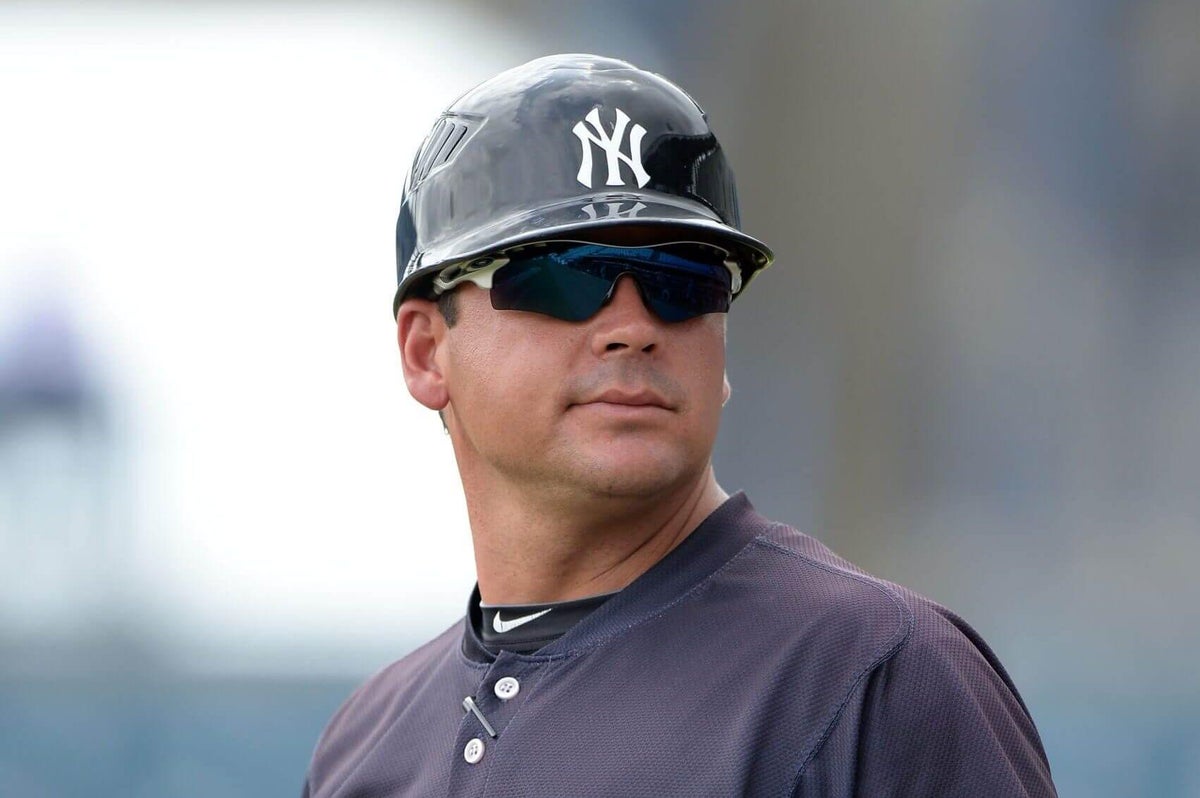
TAMPA, Fla. — Mario Garza went into his new role with his eyes open. Before the New York Yankees promoted him to take over their international scouting department in January, he knew it was under intense scrutiny from fans and people in the game, and that it likely would be for a while.
It was no surprise. Years of burning millions of dollars on prospects who didn’t pan out precipitated the firing of longtime international director Donny Rowland in October, leading to a protracted search for a new top voice and to the exodus of a few international prospects, including talented Dominican shortstop Wandy Asigen, who took more money from the New York Mets.
Garza, a 44-year-old with an extensive background in player development but no prior scouting experience, plans to reverse that trend with a holistic approach.
“We’re going to utilize all our departments,” he told The Athletic in his first interview since accepting the international scouting director job.
“We’re going to utilize our education department to try to get under the hood a little bit to find out who this player is mentally and emotionally. We’re going to use mental conditioning to find out who they are (and) how they process information. We’ll use performance science. We’re going to take our (player development) system and their perspective on what is most likely to be impacted once they sign, and what is the hardest to impact.
“I think there was some attempt previously to do that, but I hope we take all those things I just mentioned to the next level.”
For Garza, it all starts with “a desire to win a World Series.”
“I’ve been here 16 years, and that hasn’t happened,” he said of his Yankees tenure, which began as a coach for Class-A Tampa. “I think I have an opportunity to impact the organization in this area, and I think my skills line up for it.”
“He’s an amazing human being,” general manager Brian Cashman said of Garza. “Connect-ability is a really high character trait for him. So he’s a great baseball guy that has great personal skills. He is a great evaluator of talent. … He already knows all the personnel that we want to have. You want evaluation. You want firehoses connecting to performance science and analytics. That will give him a head start as we try to relaunch that department and move forward.”
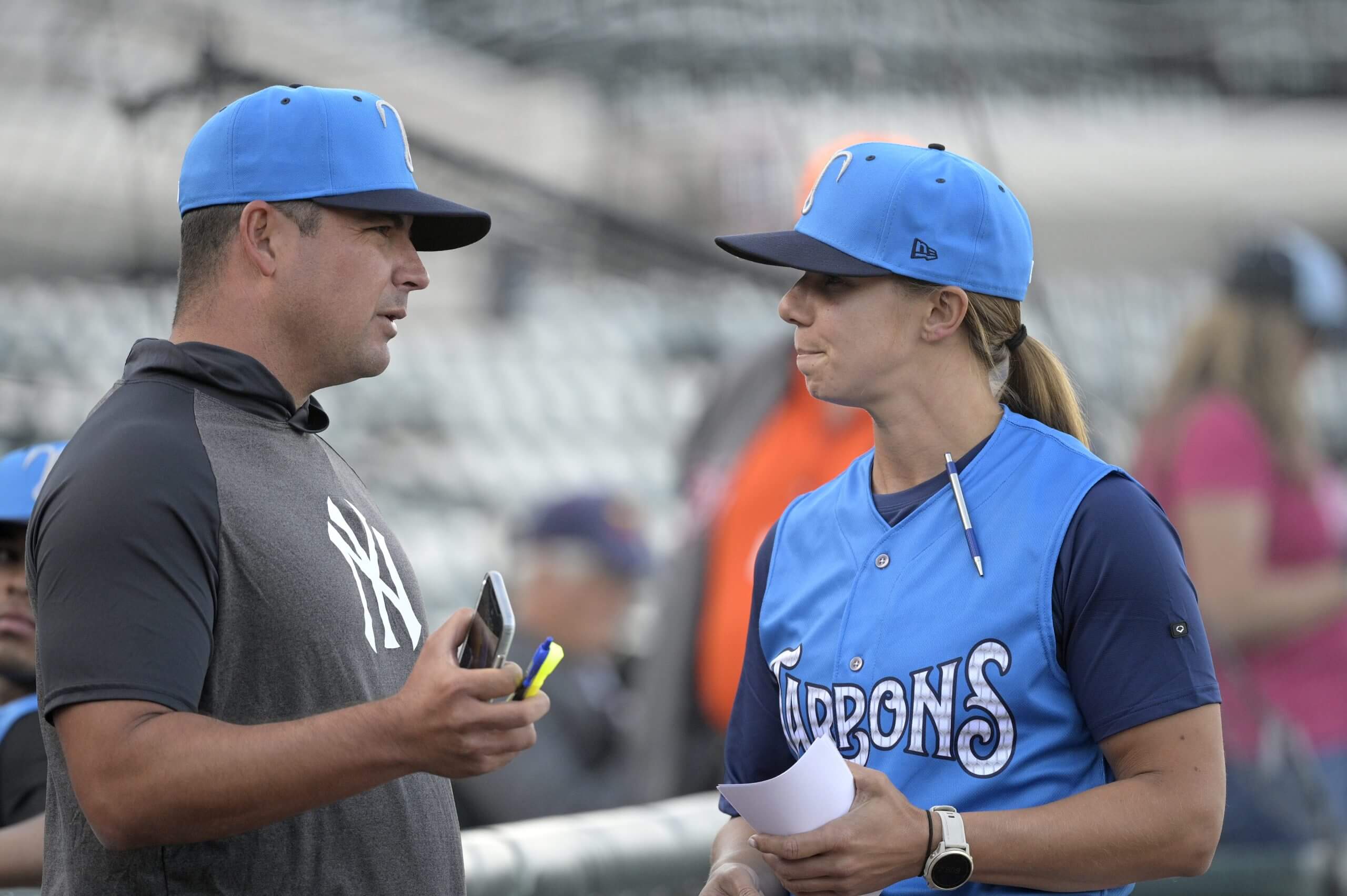
Mario Garza, pictured in 2022 with then-Tampa Tarpons manager Rachel Balkovec, has been in the Yankees organization for 16 years. (Phelan M. Ebenhack / Associated Press)
Although Garza hasn’t been a scout, he played four seasons as a catcher in the Houston Astros’ farm system. He has managed three of the Yankees’ lower-level minor-league teams, and he spent five years from 2015 to 2019 working out of the team’s complex in the Dominican Republic as its assistant director of international player development and its director of Latin American operations. He most recently served as the club’s director of baseball operations.
Over that time, Garza, who speaks Spanish, learned to build deep connections with Latin American players. There were nights spent teaching English to former top prospects Estevan Florial and Everson Pereira, along with searching for American TV shows and movies that would help them learn on their own. There were days with catcher Gary Sánchez discussing baseball concepts in front of a white board.
“My heart goes out to those players because they’re starting their professional career younger than American players and in a different country,” Garza said. “They have to grow and understand a new culture and a new language, and then try to do an incredibly difficult job.”
But also, over that time, the Yankees’ big-money bonus losses piled up. Notable disappointments include shortstop Alexander Vargas ($2.5 million, 2019), Raimfer Salinas ($1.85 million, 2017) and a 2014 international class that cost more than $30 million (including penalties) and produced just two big-league role players.
The Athletic recently published Keith Law’s top 20 Yankees prospects for 2026, and the following prospects didn’t make the list: Brando Mayea ($4.35 million, 2023), Roderick Arias ($4 million, 2022) and Mani Cedeno ($2.5 million, 2025). The Yankees, however, are hardly the only team that’s had trouble mastering the inexact science of projecting international prospects.
A major selling point for the Yankees was Garza’s familiarity with all the arms of the organization. The Yankees have had success in recent years in domestic amateur scouting, with several first-round picks contributing in the majors (Clarke Schmidt, Anthony Volpe, Austin Wells) and others who appear to be on the way (George Lombard Jr., Spencer Jones, Dax Kilby). Their pro scouts, in particular, have excelled at acquiring talented arms (Clay Holmes, Luke Weaver, Luis Gil) for their player development department to coach up.
Omar Minaya, a Yankees senior advisor, said one of Garza’s main goals will likely be to “make sure what’s important to (player development) is going to be done as early on as possible” in the international scouting process. While Minaya noted that signing international prospects and developing them are two separate endeavors, “blending of the departments” will be key.
Garza said he will also lean “big time” on new hire Matt Slater, who will fill the newly created role of global player acquisitions supervisor and will work closely with Garza on signings. Slater spent the previous 18 years handling similar duties with the St. Louis Cardinals, and he’s also served as an advisor to the Orix Buffaloes, a Nippon Professional Baseball team in Japan.
“He’s very connected in Asia,” Garza said. “That’s something that I think will be on the horizon. We’re going to try to make more trips to Asia. We’re going to try to be involved in markets that we maybe haven’t been as involved in previously. … Matt Slater’s a big part of that. He’s going to be involved in the big decisions. He’s going to be involved in our processes, building them out.”
Garza added that he’s already begun outreach efforts within the international player community, connecting with agents and trainers to establish relationships based on transparency and accountability.
“Hopefully, we can establish some clear, clean communication from the beginning,” he said. “I don’t go into too much about (the previous administration) in those conversations. … There are a lot of close relationships that (the Yankees) still have that I’m benefitting from because of people who have been here before me.”
Garza also said it will be important to treat international prospects and their families as if “they’re Yankees already” when they visit the complex in Boca Chica, Dominican Republic, to further drive home the lofty standards to which they will be held.
Though returns from international scouting usually take years to bear fruit, there are signs already that the department may be finding its footing under Garza and his scouts.
On Saturday, the Yankees reached an agreement with 16-year-old Venezuelan catcher Sebastian Perez to sign for $1.6 million as part of the club’s 2027 class, a league source told The Athletic. Perez, who boasts impressive arm strength and athleticism, had recently broken a $1.3 million pact with the Pittsburgh Pirates over disagreements about potential escalators in the proposal, the source said. He isn’t eligible to officially sign with a team until January, under MLB rules.
Before making the handshake agreement, Perez spent three days at the Yankees’ complex in Boca Chica. Donning a Yankees hat and workout gear, the club put him through its revamped pre-agreement scouting process that blends elements of its player development, analytics and mental skills departments.
Garza said it was part of the Yankees’ new aim to take the guesswork out of international scouting and “try to quantify as much as possible” about a prospect before deciding if he’s a good fit.
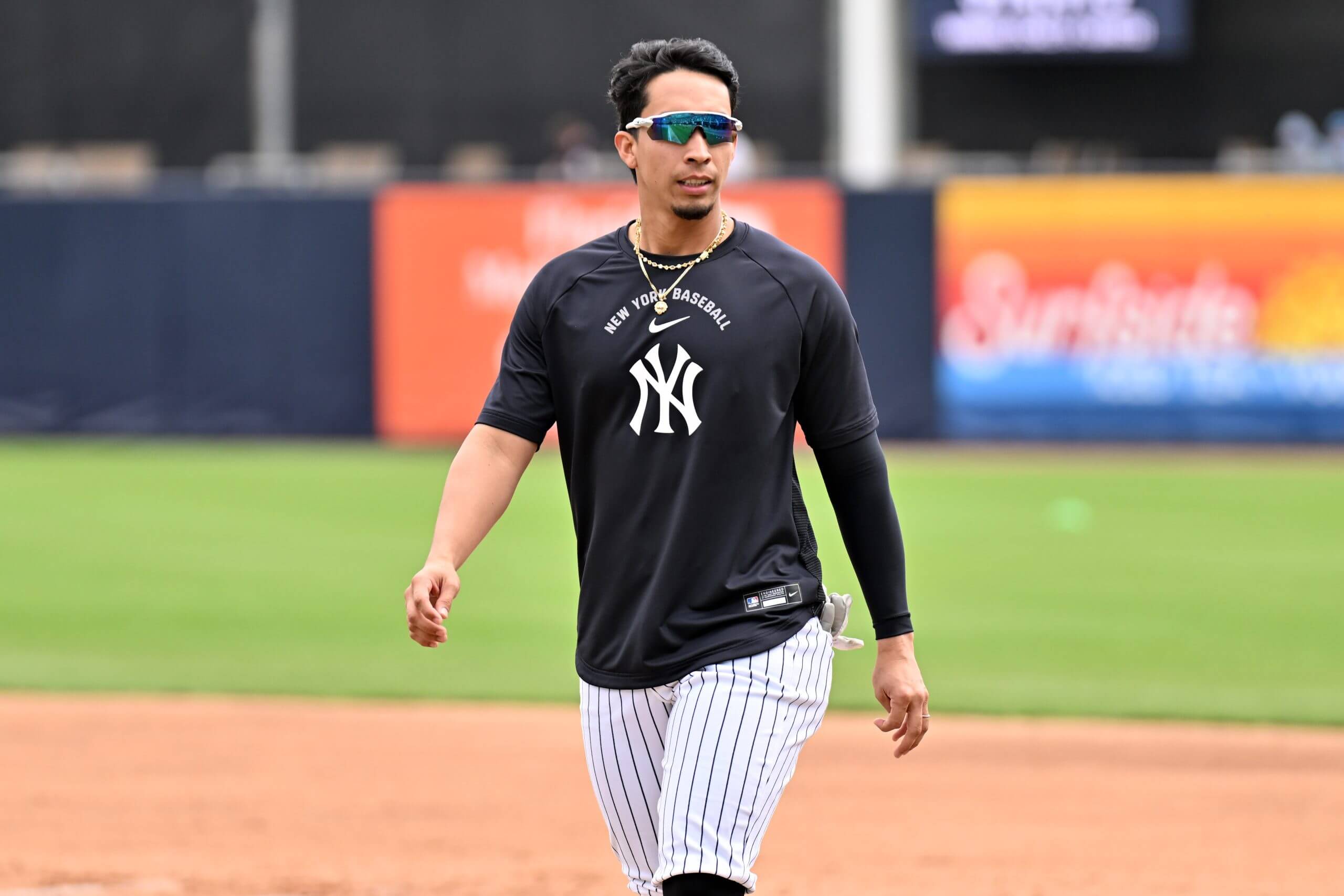
Oswaldo Cabrera is among the former international prospects who appreciates Mario Garza’s impact on them. (Jonathan Dyer / Imagn Images)
Of course, Garza is used to the old-school way, too. Oswaldo Cabrera remembers when he was just 16 years old and would walk past Garza in the hallway at the Boca Chica complex. Sometimes Garza would lightheartedly pepper Cabrera with questions in English, emphasizing the importance of learning the language, before actually sitting down and working with him.
“Now I’m realizing he does it on purpose because he tries to make you get better,” Cabrera said. “All those little things that guy does for us (are) really important, for sure.”
And now the Yankees believe all those little things Garza used to do to build relationships with Latin American players will pay off with victories in international scouting.
“I want to win a World Series,” he said. “Everything I do will be filtered under that.”