
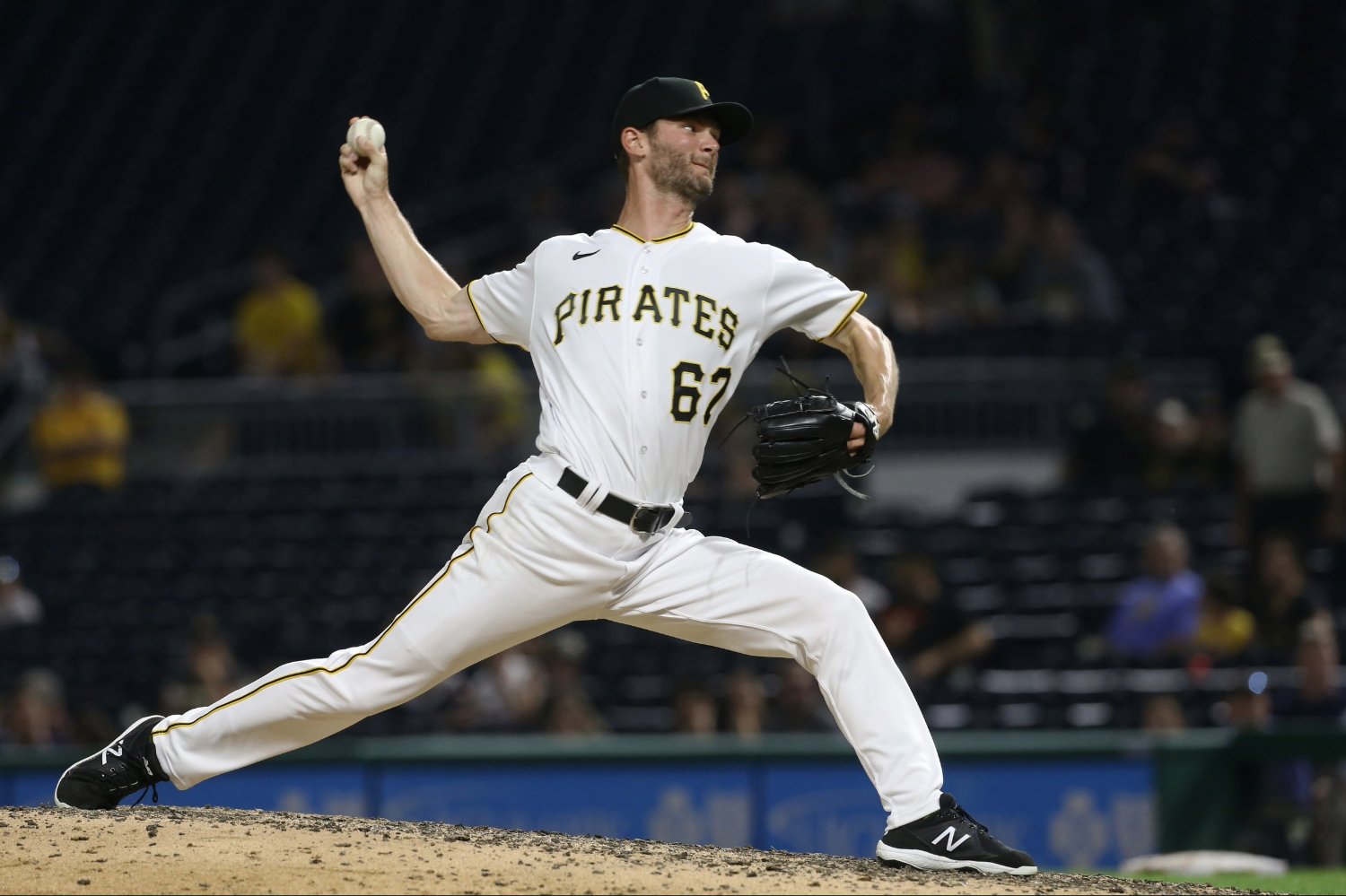
It flew way under the radar earlier in the month, but the Boston Red Sox did add another bullpen option to the mix in Kyle Keller. Unlike fellow offseason acquisition Ryan Watson, Keller isn’t on the 40-man roster — he’ll earn $1.9 million if he breaks camp with the team — meaning he’ll have to displace someone to return to the majors. The good news is that, besides Watson and Tyler Samaniego, the Red Sox didn’t add anyone else to the reliever mix this winter (save for a smattering of non-roster invitees). In other words, opportunities will be abundant in spring.
That’ll be important for Keller, who hasn’t pitched in Major League Baseball since 2021. He’s spent the past four years in the NPB, racking up some big strikeout numbers while allowing too many home runs and walks. The 32-year-old right-hander posted a 2.42 ERA across 152 1/3 innings in Japan, though his peripherals left something to be desired.
One thing to note is that, while his mid-90s fastball velocity really played up in the NPB (where high-end velocity is much rarer than in MLB), Keller won’t be able to get by so easily if he’s missing his spots. However, as shared by Section 10’s Tyler Milliken, that four-seamer did yield a 126 Stuff+ grade last year. It’s easily his best pitch, though a 70% usage rate probably won’t fly in the states without another tick or two on the radar gun.
His other two pitches, a curveball and splitter, are generally reserved for specific batters, with the curve primarily used against righties and the splitter saved exclusively for lefties. The problem is the curveball, despite generating a decent whiff rate (26.8%), gets hit hard and doesn’t grade out well in terms of shape or break. The split-finger did stifle left-handed batters in 2025 (.147 xwOBAcon), though that sample is comprised of only 40 pitches.
Really, this is a bet on a unique fastball that Keller just dominates the upper-third of the zone with. The pitch has tremendous rise and ride, meaning hitters perceive it going up in the zone after it’s released. Keller can run into some trouble when he leaves it down — it runs into the swing path of hitters, especially lefties, in that case — but there’s a reason why the pitch only yielded a 30.0% ground-ball rate last year. He wins by throwing the pitch high and daring batters to catch up with it.
Keller is a fascinating case of a one-trick pony whose trick is actually a lot more impressive and deceptive than it appears at first glance. His first assignment clause comes in mid-April, meaning the Red Sox will have a couple of months to evaluate him in spring training and Triple-A before he can seek a major-league deal with another team. Will that be enough time to win him a job in Boston’s bullpen? Seeing as the team has lost so many relievers this offseason (Steven Matz, Jordan Hicks, Brennan Bernardino, Chris Murphy, Liam Hendriks, Josh Winckowski) without adding many options to replace them, the signing of Kyle Keller could prove to be monumental if everything breaks the right way.