
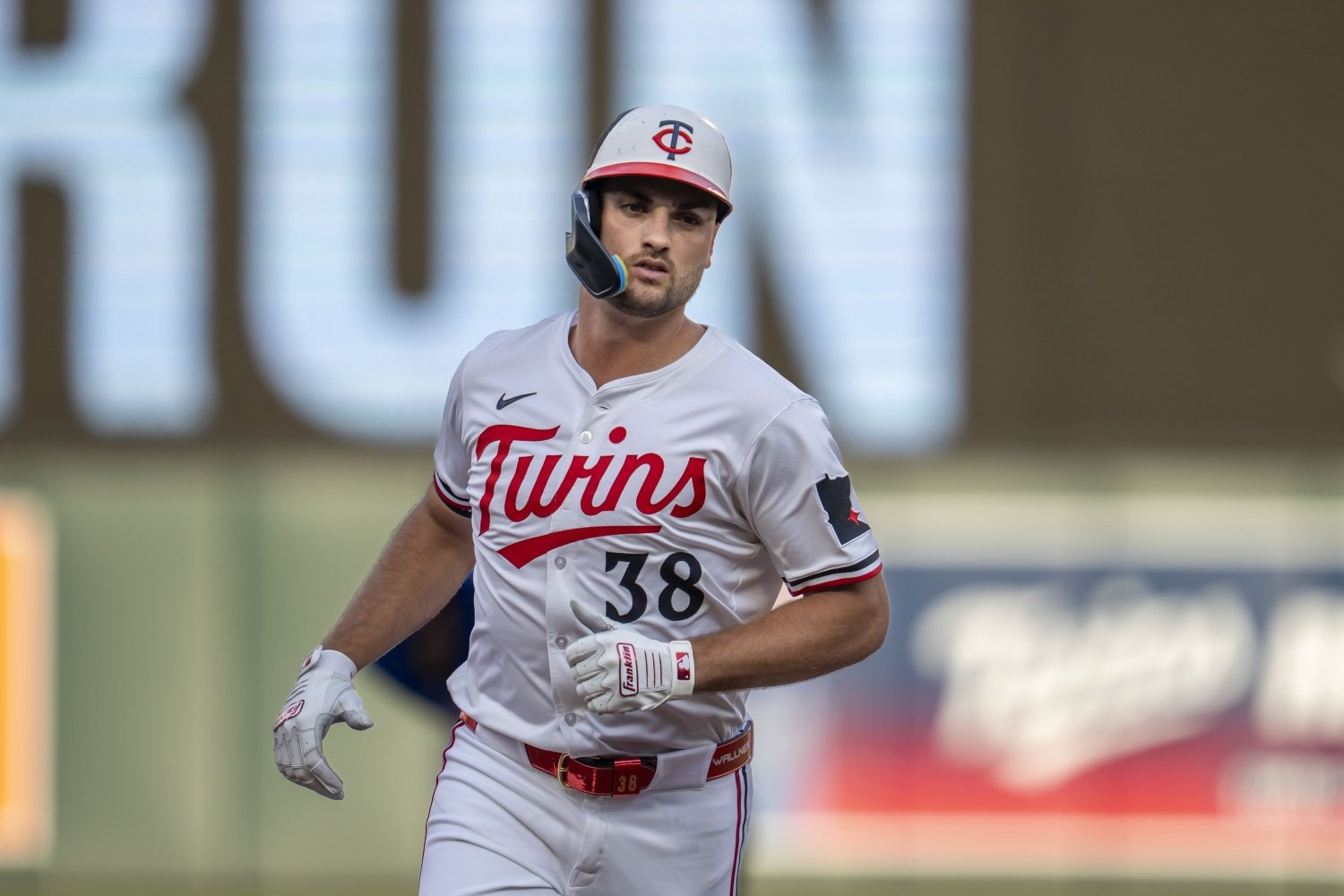
Matt Wallner is entering his fifth season on the big-league roster. At this point, we kind of know what he is—and we kind of don’t.
He’s spent time in left field and at DH, but the overwhelming majority of his innings have come in right field for the Twins. That’s not by accident. He has an absolute cannon for an arm. According to Statcast, his arm strength ranked in the 99th percentile of all outfielders in 2025. It was 99th percentile in 2024 and 100th percentile in 2023. That gives him real defensive upside, despite the struggles he’s had in properly positioning himself and getting to balls fast enough to let the arm play as well as it should.
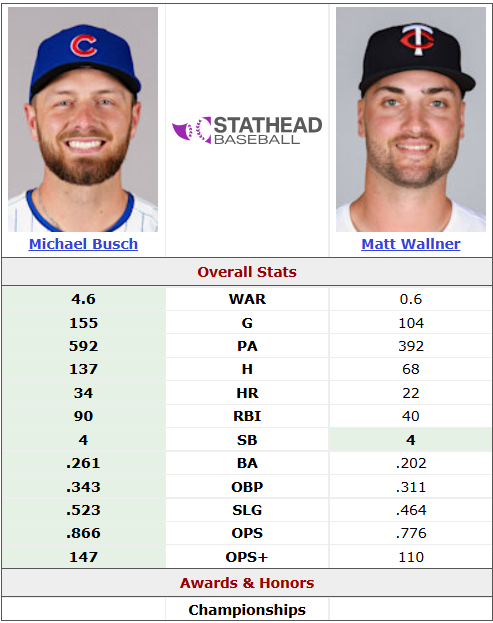
Offensively, it’s been even more of a rollercoaster. In 2025, Wallner hit just .202. That’s the number that jumps off the page, and not in a good way. His on-base percentage was .311, which is respectable for someone barely clearing the Mendoza Line, but when your batting average starts with a “.20,” there’s only so much spin you can put on it.
The expected stats don’t bail him out. His expected batting average sat at .205, right in line with the results. This wasn’t a case of screaming line drives right at defenders or terrible luck. He simply didn’t make enough consistent, high-quality contact to deserve much better. It’s not exactly a mystery why he struggled; we diagnosed his problems last summer.
It’s also not the first time we’ve seen this. In 2024, Wallner broke camp with the team, but hit just .213 with 27 strikeouts in 59 plate appearances before being sent down to Triple-A. That’s understandable if you’re 22, but when you’re 26 (with multiple seasons of big-league time), those stretches feel more significant.
To his credit, he responded. After getting called back up in 2024, he hit .272 with 25 extra-base hits over his final 55 games. The swing decisions improved, and the power played better, without him completely selling out for it. That stretch created real optimism heading into 2025.
Unfortunately, it didn’t carry over consistently.
League-wide offense isn’t what it used to be. A .275 hitter today is basically what a .300 hitter was 30 years ago. Pitchers are better, velocity is up, and bullpens are deeper. Context matters. Still, it’s rare to see someone hit around .200 and be a truly impactful everyday player. Yes, there are exceptions. Kyle Schwarber has done it with the Philadelphia Phillies, but he’s also launching 45-plus home runs and posting elite on-base numbers. That’s a different tier of production. Arguably, that’s the right road map for Wallner, but for all his bat speed and strength, he hasn’t shown the same caliber of in-game power Schwarber has.
Wallner’s 2025 pace over 162 games would’ve put him around 34 home runs, which isn’t bad. But if your profile is built around power, 34 feels more “solid” than “game-changing.” That’s roughly one home run every five games. Fellow age-27 Minnesota native Michael Busch hit 34 homers for the Cubs, but he also had a much lower strikeout rate and showed the ability to hit line drives to all fields. If you’re making your living off the long ball the way Wallner does, you’d hope for quite a bit more.
Here’s where it gets interesting.
There were real signs of progress under the hood in 2025. His strikeout rate dropped to 29%. That’s still not good, but it’s a significant improvement from the 36.4% mark in 2024. Yes, he made more bad contact, thanks to his flatter bat path, and yes, some of the strikeout decrease had to do with being more aggressive early in counts, but for a player with this much pop, being aggressive is ok.
The raw power remains very real. His barrel rate stayed comfortably better than average, and his average exit velocity hovered north of 90 mph. Both numbers were lower than in 2024, but that’s the cost of making more contact. When he squares it up, it goes a long way. The question is whether he can do so more consistently this season.
Health hasn’t helped. Wallner got off to a slow start in 2025, then dealt with a midseason injury that stalled any momentum he was building. For a hitter who thrives on rhythm and timing, that matters. It’s hard to make adjustments when you’re constantly resetting.
I want to believe in Matt Wallner. I want to tell you he’s about to put it together and become a 35-homer, .250 hitter with a .350 OBP and a rocket launcher in right field. But I can’t say that with full confidence. Too many signals are garbled, or pointing in the wrong direction.
If he can push the batting average back into the .250 range, which he’s flashed before, his profile changes dramatically. A .250 hitter with a 12% walk rate and 30-plus homer power plays. Add elite arm strength (and maybe some better routes, with more experience and instruction) in right field, and now you’re talking about a very valuable player. Maybe the more likely outcome is something frustratingly but usefully in-between. PECOTA projects Wallner to hit .222/.326/.427 in 489 plate appearances this year: not fully available, not fully breaking out, but not struggling the way he did last year, either.
There’s a lot of volatility with Wallner. His floor is a streaky power bat who doesn’t make enough contact. But the ceiling is a true impact corner outfielder who changes games on both sides of the ball. That’s why 2026 feels pivotal. If he has another season like last year, it’ll be hard to muster much enthusiasm next spring. Indeed, it might be some other fan base doing the mustering by then.