
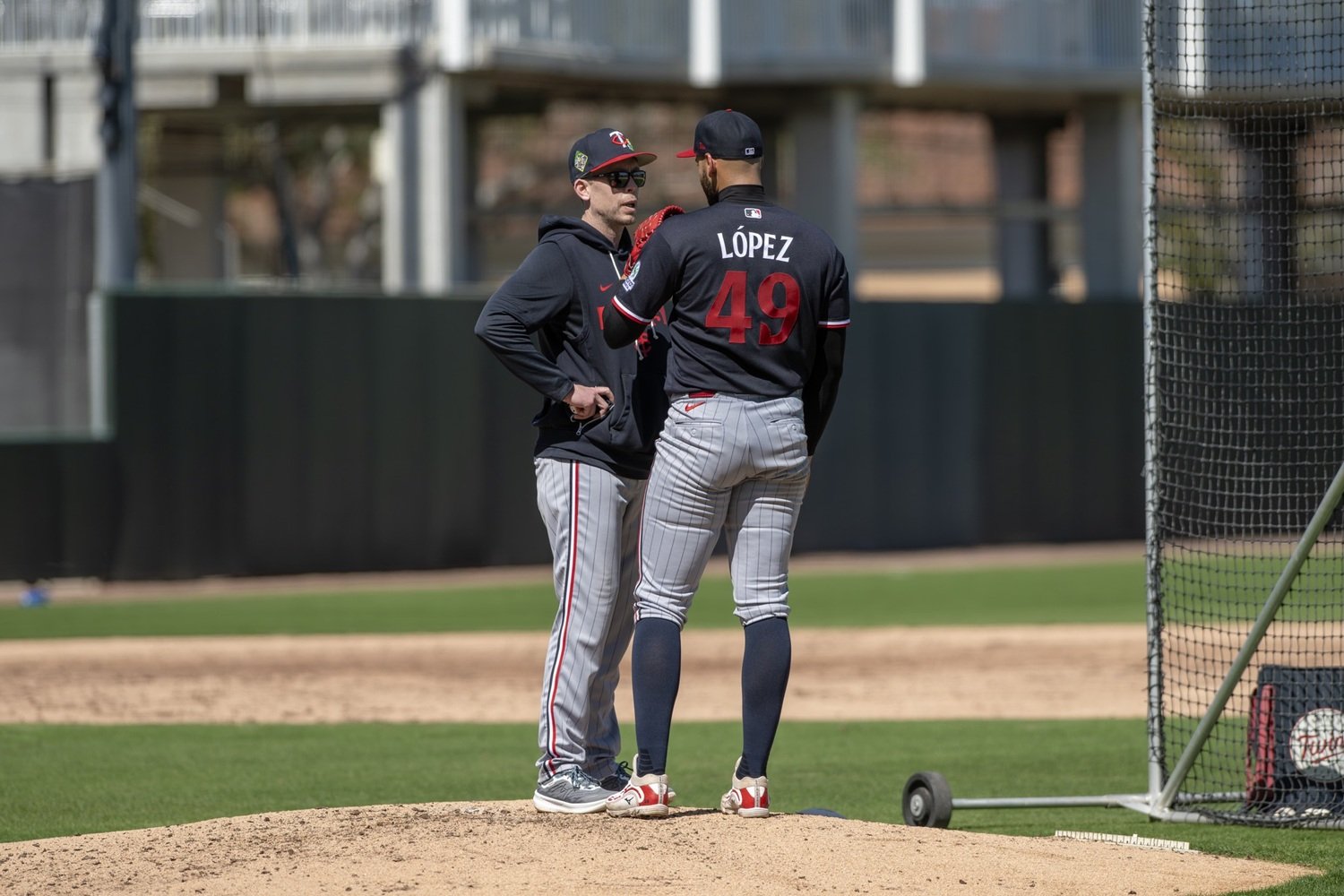
The news surrounding Pablo López cast an immediate shadow over Minnesota’s spring outlook, and the numbers shifted just as quickly as the mood inside the clubhouse.
According to FanGraphs, the Twins saw their playoff odds fall from 31.7% to 26.6% following the announcement that López is expected to miss the 2026 season after suffering a torn UCL. While López will receive a second opinion, the expectation is that he will miss significant time and is likely headed for Tommy John surgery. Minnesota built its roster around stability in the starting rotation, and losing its ace before Opening Day creates a ripple effect that impacts everything from bullpen usage to innings distribution across the staff.
Interestingly, Jared Greenspan of MLB.com recently listed the Twins as one of 10 teams capable of outperforming their playoff odds in 2026. He pointed to the 2025 Toronto Blue Jays as an example of a club that beat the projections and played its way into October. However, those projections for Minnesota were calculated before López’s injury became public, which means the climb is now steeper than initially expected.
Reasons Why the Odds Are Against Them
1. Losing Their Ace: The most obvious hurdle is replacing López at the top of the rotation. Minnesota can shuffle names into his spot, but there is no internal option capable of replicating the value he provided every fifth day. His leadership will also be sorely missed, as young pitchers get their first full season at the big-league level.
2. Shortstop Depth Chart: Shortstop depth is another concern, with Baseball America recently saying, “They don’t have a shortstop.” The Twins are projected to rank 30th in fWAR at the position. Brooks Lee has shown flashes at the big-league level, but has also battled injuries and inconsistency. Kaelen Culpepper broke out last season but has yet to play above Double-A. Marek Houston is widely viewed as the organization’s best defensive shortstop, but evaluators still question whether his bat will play at the highest level.
3. Bullpen Rebuild: Minnesota also lacks proven high-leverage right-handed relievers after trading Jhoan Duran, Griffin Jax, and Louis Varland at last year’s deadline. The club can hope for more from Cole Sands and Justin Topa, but both may ultimately be better suited for middle-inning roles.
4. Lack of Offensive Upgrades: Offensively, the lineup needs internal growth. Royce Lewis and Matt Wallner have shown the ability to be impact hitters, but each needs to recover from an underwhelming 2025 to offset the loss of run prevention on the pitching side. Josh Bell was the team’s biggest offseason signing, but he can’t save the entire lineup.
Reasons Why They Can Defy the Odds
1. Rotational Depth: Even without López, Minnesota still has rotation depth that many teams would envy. Taj Bradley, Mick Abel, and Zebby Matthews now move up the depth chart and will have opportunities to prove they can handle meaningful innings in a competitive environment.
2. Potential All-Star Players: The Twins also feature two of the best players in the division in Byron Buxton and Joe Ryan. Both can carry stretches of a season and swing the outcome of tight games, which often determine postseason positioning in the AL Central. Luke Keaschall could also build on a strong rookie campaign that included a 134 wRC+ and further lengthen the lineup; the projections like his bat a lot.
3. Prospects on the Verge: Help may arrive from Triple-A sooner rather than later. Outfielders Walker Jenkins, Emmanuel Rodriguez, and Gabriel Gonzalez can all provide an offensive boost for a lineup that struggled in the second half. Left-handed pitchers Connor Prielipp and Kendry Rojas are two of the most exciting arms in the system, but they struggled in their first taste of Triple-A. Any of the names above could provide a meaningful boost over the course of the season.
A five-percentage-point drop in playoff odds feels significant in February, because there are no wins in the bank yet. Everything is theoretical, and projections become the loudest voice in the room. But 26.6% is not zero. It is not a white flag. It’s a reminder that the margin for error just shrank.
For Minnesota to beat the odds, several things must happen simultaneously. The young arms stepping into larger roles can’t simply survive. They need to be legitimate contributors. The lineup can’t tread water. It must produce at a top-half-of-the-league level, making good on what has looked like stalled talent the last two years. The bullpen can’t just piece together outs. It needs to develop new late-inning answers.
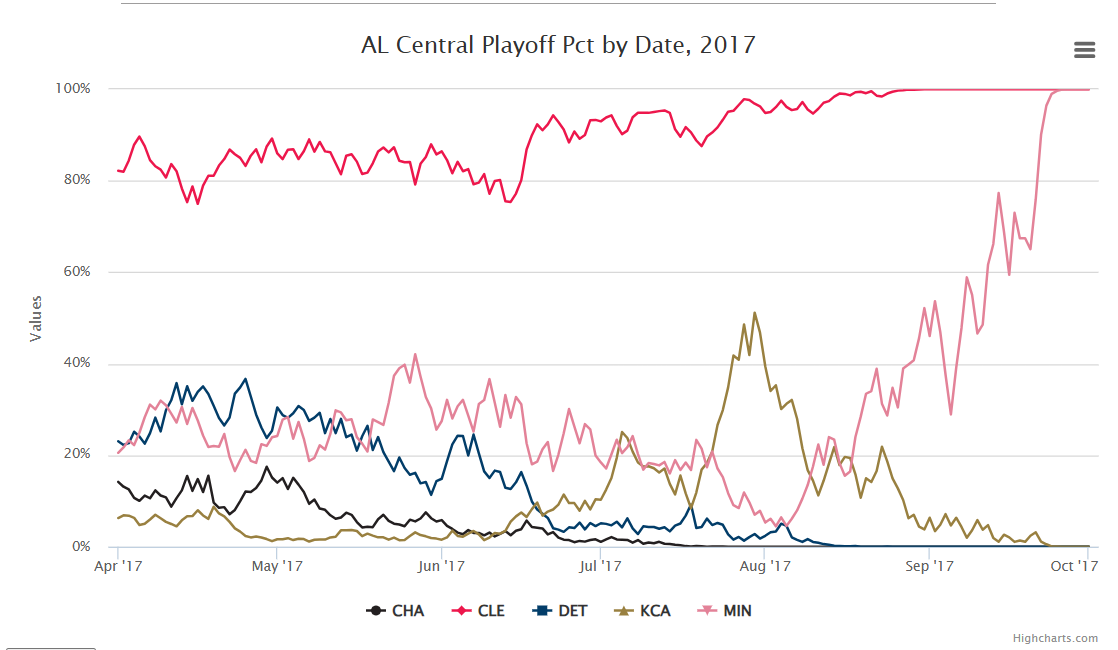
At the same time, baseball history is filled with teams that looked finished on paper before the games started. The difference between 31.7% and 26.6% is meaningful in a model, but over 162 games, it can be erased by one breakout season, one unexpected rookie, or one dominant stretch from a star player. In 2017, they entered the season with a similarly unimpressive chance to make the postseason, according to Baseball Prospectus. They shocked everyone that year, and they have the latent talent to do so again. That’s the bet Minnesota is now making.
Losing López changes the ceiling, and it certainly complicates the path. But it doesn’t eliminate it. If the Twins are going to defy expectations, they will have to do it the hard way with internal growth, health from their core players, and impact from prospects knocking on the door. The projections have adjusted. Now the organization has to respond.
Do you believe the Twins can beat their playoff odds? Leave a comment and start the discussion.