
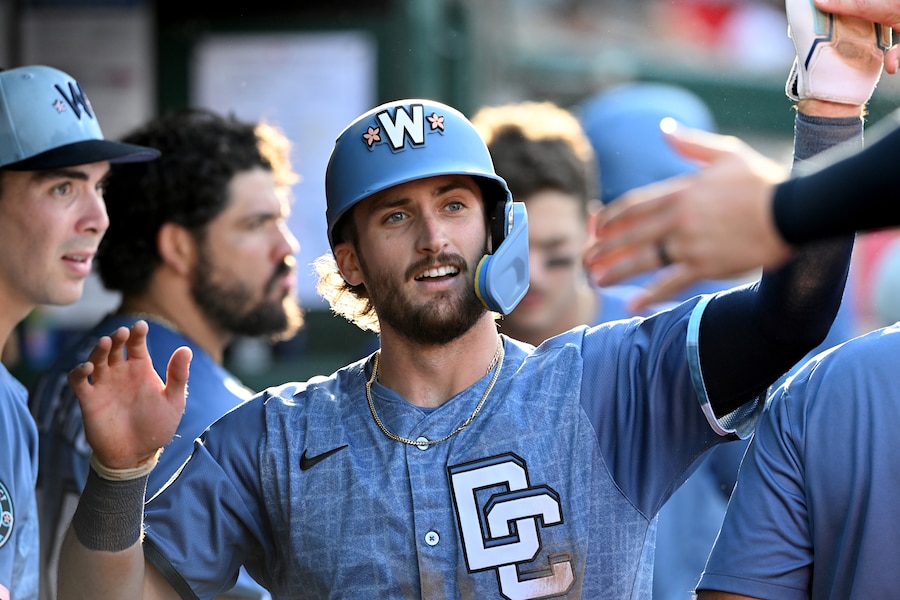
WEST PALM BEACH, Fla. — At the conclusion of a 96-loss season, Dylan Crews spoke of raw emotions. He was not happy. But almost immediately the Nationals outfielder shifted that emotion into fodder for next season.
For Washington to show improvement, Crews said, the club must set the tone from the first day of spring training — “really holding each other accountable from the start.”
In the early days of camp, Crews senses a change. There is a new coaching staff led by manager Blake Butera, and there’s a new president of baseball operations in Paul Toboni. There are new players and new locker assignments.
Perhaps the most important new quality, however, is the feeling Crews has walking around this clubhouse.
“You could just tell right off the bat with the energy everyone is bringing. It’s been great so far,” Crews said.
The initial response to Butera’s hiring generally featured two incredulities. For starters, at 33, he’s younger than some of his players. And, second, Butera hadn’t managed above Single-A.
Could this fresh-faced skipper be the answer for Washington? Could he earn the respect of a clubhouse filled with fellow millennials? The early indications are in the affirmative. What’s more: He has a player in Crews who is ready to shoulder more responsibility and leadership than most would expect from a player of his age and stature.
“We’re figuring this all out together,” Crews said of himself and his teammates, many of whom are in their early 20s. “We were in the minor leagues for not that very long. We’re here and trying to figure it out all at the same time. So I think it’s very important we hold each other accountable. I think the best teams that end up going very far aren’t coached by the coaches. It’s more about the players.
“Players coaching the players, holding each other accountable. When you see something, you speak up and say something. We’re all learning. It’s learning curves for all of us. But I’m seeing a lot of growth from this year to the last couple years, for sure.”
It’s an interesting perspective, and Butera, Toboni and several players said similar things. While Butera will set a tone, his stance works only with buy-in from players.
Of course, the Nationals have heard that line of thinking previously. In June, then-manager Dave Martinez defended his coaching staff by placing the burden on the players to perform.
“It’s never on coaching,” Martinez said, according to The Washington Post. “Never on coaching.”
Martinez continued: “Sometimes you got to put the onus on the players. They got to go out there, and they got to play the game — and play the game the right way. We can’t hit for them. We can’t catch the balls for them. We can’t pitch for them. We can’t throw strikes for them. They got to do that.”
The message is common, but the delivery of it — after Washington’s most disappointing loss to date, against the Miami Marlins — may have created a rift between coaches and players greater than the intended inspirational effect. Ownership of a problem goes a long way. Instead, Martinez was out of a job less than a month later.
Crews did not address that incident. But, when discussing how to classify accountability, and how he hopes to see it manifest within the clubhouse and organization, the 23-year-old said “everything starts from the top and it all trickles down.”
Toboni has a clear outline of how he’d like his organization to operate. It includes an analytical approach to drafting and development, which in turn helps in player acquisition. But it’s also about establishing the culture — and doing so immediately.
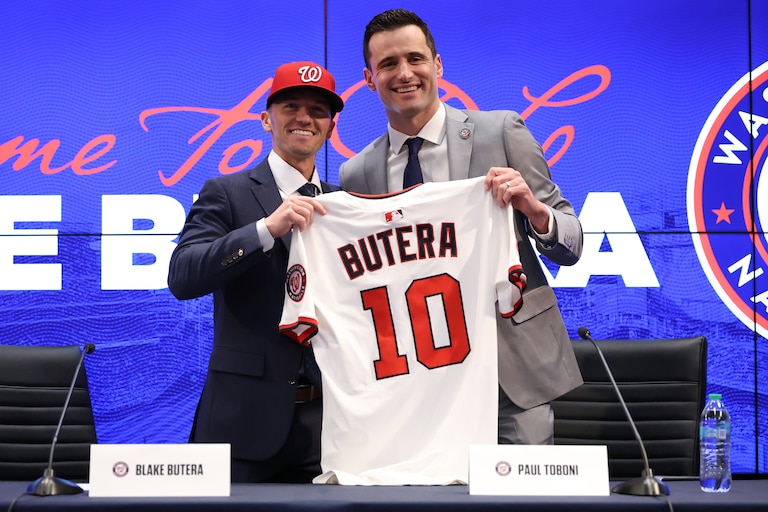 Nationals president Paul Toboni and manager Blake Butera are new to their jobs. (Patrick Smith/Getty Images)
“We want to foster an environment of accountability amongst the player group,” Toboni said. “It’s not up to Blake to be holding these guys’ hands and making them accountable day in and day out. It’s about them creating a culture where they’re holding themselves accountable.”
In that vein, Butera was Toboni’s choice as manager, despite his age and limited experience. The reasons are clear once Butera walks into a room.
“It doesn’t seem like he’s his age,” said right-hander Cade Cavalli, another first-round pick who’s only six years Butera’s junior. “He walks in, there’s a presence in the room. He’s got that swagger about him. He’s confident in himself. We’re a young team, and we’re going to trust in him.”
Added Crews: “He’s very easy to talk to. I think that’s huge, especially as someone we look up to as a manager. You can go into his office whenever you want and say something you want to talk about.”
That presence is important, but when Butera was asked what sort of stamp he wanted to put on Washington’s clubhouse, he deferred to his players. He detailed core values, such as being a good teammate and a hard worker, before circling around to accountability.
In short, Butera wants a clubhouse where players hold each other to a standard — where that doesn’t have to come from the top.
“And with that,” Butera said, “you’re going to see that our players understand that our coaches fully have their backs and support them, to where they feel, when they go out there every night, we’re in their corner.”