
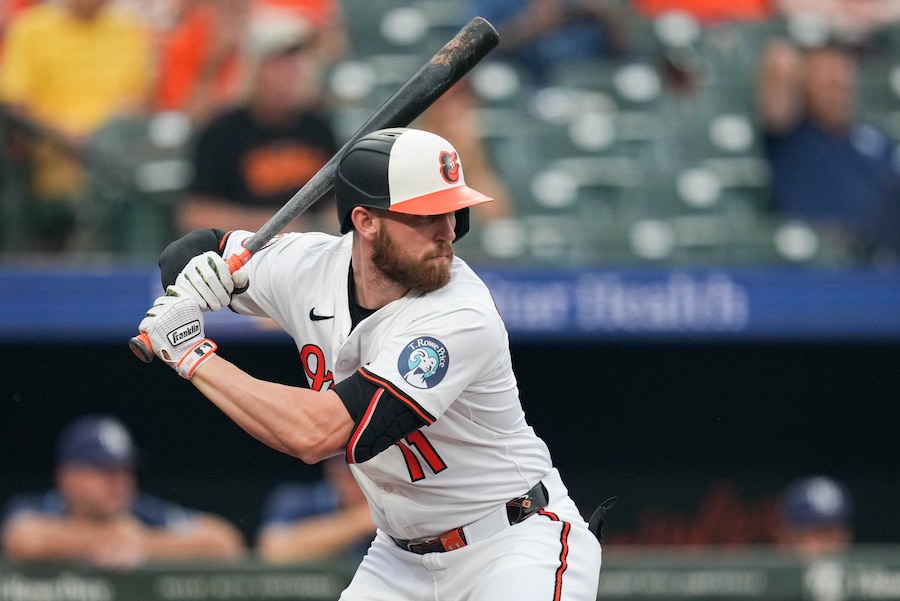
Jordan Westburg was “the glue to this whole thing,” interim manager Tony Mansolino said last year.
His replacement, Craig Albernaz, said last week that Westburg is “extremely important” to the Orioles lineup.
“Westy is such a great ballplayer — the skills, the at-bat quality, what he can bring, the versatility at the plate, and what he brings in the clubhouse to the guys, the way he goes about his business, the way he plays,” Albernaz said. “He’s a quiet leader in that clubhouse.”
There are many reasons the Orioles sputtered out in 2024 and disappointed badly in 2025. Missing Westburg, to me, is always going to be one of the largest contributors, with his fractured hand in 2024 and hamstring and ankle injuries limiting him to 85 games in 2025.
So while the Orioles’ infield depth is certainly being tested with Jackson Holliday’s hamate surgery and now the loss of Westburg for at least the start of the season with an elbow injury, that feels secondary to perhaps a more pressing question: Was enough done, both on the field and off of it, to keep this team intact without the glue that has long held it all together?
Part of being able to answer that is to understand what Westburg brought to the team. Coming up through the minors, Westburg and Gunnar Henderson were on parallel tracks on the left side of the infield, pushing each other to be the one at shortstop and to shine while doing so.
Westburg’s consistency in approach and diligence are something everyone around him has marveled at, going back to Norfolk, when his ability to follow the same routine every day was a source of wonder for teammates. And the way the buttoned-up, all-business Westburg meshed so well with outfielder Colton Cowser, who often tried to get a lighter side from him, demonstrated he can get along with everyone.
When he was out there last year, Westburg played well. He was limited by a hamstring injury in the first month of the season but had an .814 OPS with 13 home runs in 62 games after returning. He’s always played a strong third base.
Replicating that on the field is a challenge. It feels like the Orioles have done well to prepare for it this winter, mostly by adding players with a track record of durability to lower the variance level that impacted this team a season ago.
Anthony Santander was an everyday player who was replaced by a free agent in Tyler O’Neill who has a lengthy injury history. Combined with underperformance from Heston Kjerstad in 2025, the right field spot went from being one the Orioles didn’t have to worry about to one where they hardly enjoyed any production.
They were so undermined by injuries up and down the roster last year that one of the first things you notice about Pete Alonso and Taylor Ward is both how productive they are and how durable they are. Ward missed the last two months of 2023 after he was hit in the face by a pitch but played 156 and 157 games the last two seasons, respectively. Alonso played all 162 games the last two years, and has two injured list trips in his career, each of which lasted the minimum required days.
They’re the types of additions you make even if you don’t have questions about returners like Henderson, Adley Rutschman, Cowser and Westburg, but they certainly are designed to keep things steadier on the field in case things go badly.
Alonso and recent free agent Chris Bassitt are pretty focused on what happens off the field, too. Those two, and Albernaz, would probably argue that one player being the glue of a club — whether that assessment is true or not — isn’t a viable path to a title. All of their efforts so far this spring have been geared toward pulling the team together and creating a unified group that can withstand losses like this one, and empowering the club’s homegrown core to carry themselves in a way that’s truer to who they really are so they can perform that way as well.
If all this seems touchy-feely for a team that has for years taken its cues from its projection models, it is. Handicapping how long Westburg will be out is tricky, which makes understanding what the team needs in his stead tricky as well.
Platelet-rich plasma injections often end up preceding Tommy John surgery where ulnar collateral ligaments are concerned, but Westburg as a position player is perhaps more likely to benefit from it than a pitcher who puts more stress on his arm. This is a fine first option and probably won’t impact 2027 if surgery is required later this season, so rolling the dice and betting on Coby Mayo or a non-roster option at third feels viable in the short term.
Part of that is because this offseason the Orioles very clearly tried to account for what’s happening now by adding some reliability to their lineup, and did so in a way that changes their clubhouse mix and spreads out the leadership and responsibility assignments more broadly.
Early returns, albeit one week into spring training, are intriguing. But after two seasons fell apart without Westburg helping keep things together, the ability of this new-look roster to avoid that a third straight year is about to be tested.