
The conversation about a new Kansas City Royals stadium near Truman Road and Troost Avenue — T&T — is about more than baseball. It is about how Kansas City grows around the places that define it.
T&T sits just a short walk from both the Crossroads and 18th and Vine Jazz District, between arguably the most popular neighborhood in Kansas City and its most historic. Vine is where jazz reshaped global music, where Black entrepreneurs built lasting businesses, where baseball and community came together and birthed our world-famous barbecue. The Crossroads houses many of our most cherished small, creative businesses, art galleries and James Beard award-winning restaurants and bars. It reintroduced many to Kansas City’s downtown via its monthly First Fridays art walks.
The area around T&T has long been a place of connection. It is where neighborhoods meet, where people move between east and west, and where history and daily life intersect. Today, the site includes facilities used by public entities, continuing a long tradition of public-serving uses on this land. That civic role makes the location familiar to generations of Kansas Citians and reinforces its place as shared ground.
Some have raised questions about whether federal funding tied to transit facilities could complicate development of a new Royals stadium. While properties acquired or improved with federal transit funds can involve review under established federal guidelines, those processes are well understood and routinely managed by cities across the country. Working with the Federal Transit Administration to address any federal interest is a normal part of project planning and does not, by itself, prevent redevelopment.
What makes this proposal different is proximity and historic relevance. It allows new investment to arrive without erasing or displacing the places that give the area its cultural meaning. With thoughtful planning, visitors drawn to baseball could easily find their way to the museums, restaurants, music and small businesses that already define the surrounding neighborhoods.
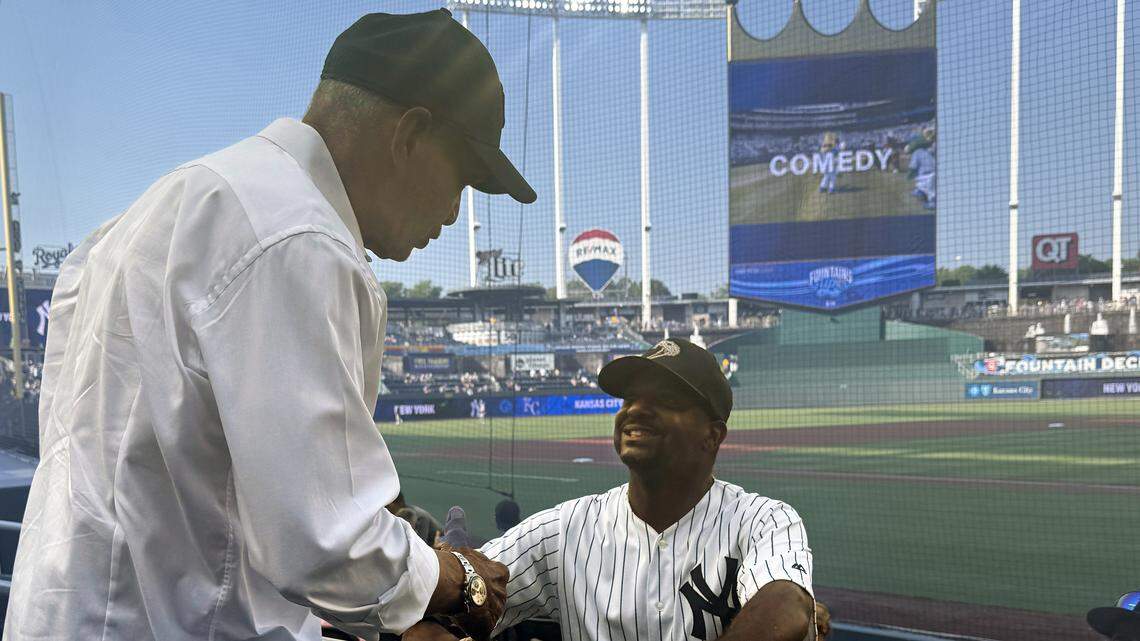
This already happens on game days. In 2025, actor Alfonso Ribeiro brought his youth baseball team to a Royals-Yankees game and then on to the Negro Leagues Baseball Museum. That same day, while talking with Reggie Jackson and a minority owner of the Yankees, it became clear they were doing the same thing: taking their families and grandchildren to 18th and Vine to experience the Negro Leagues Baseball Museum and the American Jazz Museum.
Sign Up for Star Opinion
The Kansas City Star’s Opinion team is hard at work sifting through all the news, both local and national. Get our weekly newsletter straight to your inbox to read our reactions to the biggest headlines in the KC area and beyond.
History of Cowboys, Blues, Monarchs, Athletics
For nearly 140 years, professional baseball in Kansas City has lived east of Troost — from the Kansas City Cowboys and Blues to the Monarchs, the Athletics and the early Royals at Municipal Stadium. Generations of fans gathered there. Teams rose and fell there, and the city’s baseball identity took shape there. The Negro Leagues Baseball Museum and Royals’ Kansas City Urban Youth Academy stand at 18th and Vine because this is where baseball’s fuller story lives.
Kansas City has navigated this kind of moment before. Prior to its redevelopment, Berkley Riverfront was largely disconnected from the rest of the city despite its history and location. Public investment and infrastructure brought it back into the life of the city. That growth did not erase what made the riverfront meaningful. It revealed it, and allowed more people to experience it.
A stadium near Truman and Troost would be served by an 18th Street streetcar expansion, linking it to the Riverfront, City Market, the Central Business District, the Crossroads, the West Side, Union Station and Crown Center, Midtown, the Country Club Plaza and 18th and Vine., Kansas City’s major cultural and entertainment districts would be connected by a single transit line, allowing people to move easily between neighborhoods and share in the city’s energy — connectivity we have not seen since the 1950s.
Kansas City has reached a point where how we invest is as important as how much we invest. Continuous concentration on major public investment in one area without broader reverberation leaves too many neighborhoods waiting their turn. Locating a stadium near Truman and Troost would offer a chance to invest in a way that both connects multiple parts of the city while also spreading the benefits more broadly.
This is not simply a decision about where the Royals play. It is a decision about whether Kansas City continues to build around its cherished history while simultaneously preparing itself for its bright future: placing the Royals on the street named for its most famous son, Harry Truman, while simultaneously breaking the socioeconomic barrier that is Troost Avenue. Cities rarely get the chance to align their future investments with their deepest cultural roots. Kansas City has that chance now — to build a stadium that doesn’t overshadow history, but amplifies it. One that doesn’t divide neighborhoods, but connects them. And one that doesn’t repeat old patterns, but sets a new one.
Michael Collins is founder and CEO of Kansas City development firm Grayson Capital and former CEO and president of Port KC. He co-authored this with attorney and Vine District property owner Shomari Benton and Block & Company agent Bianca Gates.
This story was originally published February 19, 2026 at 5:07 AM.