
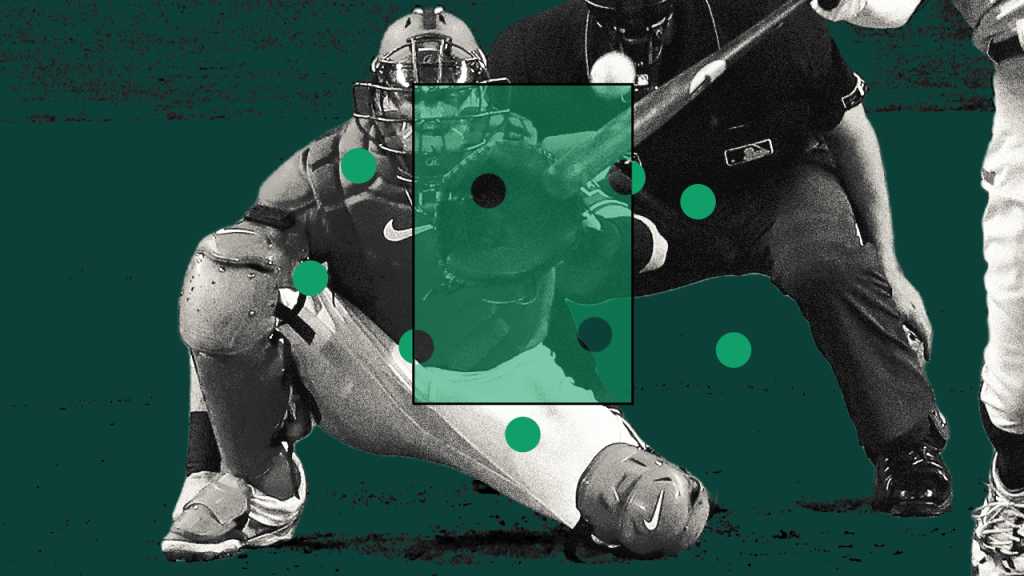
While MLB teams are limited to challenging two pitch calls per nine-inning game, the introduction of Automated Ball-Strike (ABS) reviews will change how fans follow every at-bat this season, albeit in slight ways.
For more than a year, MLB and broadcasters have re-evaluated how pitch location data is shown on TV, now that the virtual zone fans see perfectly represents the invisible one balls and strikes are measured against. Would fans be confused if the persistent graphic displayed a call different than the one offered in real time by the still-very-much-there ump? Would challenges be too boring if viewers already knew whether a pitch nicked the black?
Ultimately, the changes made were minor. The virtual strike zone remains on regular season telecasts, though removing it was among executives’ initial options, according to a person familiar with the decision. One change is that there will be no indicator of whether each pitch flew inside or outside the zone beyond the location that pops up, whereas in the past some broadcasters have changed the color of each ball icon or even added the letter ‘K’ to certain pitches to designate when they caught the plate. Removing that element maintains suspense in the case of challenges. It will also mean fewer fans notice when an umpire gets a call wrong according to the new letter of the law.
The corners shown on-screen now exactly match each batter’s zone (starting at 27% of each player’s height up to the 53.5% mark). Technically, the new strike zone is a two-dimensional plane rising from home plate’s midpoint. The review system uses the same location data as the virtual zone graphics, generated by Sony Hawk-Eye cameras and tracking algorithms, as well as T-Mobile’s 5G network in each ballpark.

Fan research showed that more than 70% of viewers value the visual component that has become ubiquitous over the last decade. Some younger viewers have even showed up to their first in-person games and asked where the K Zone is, much like with football’s first-down line.
“The strike zone box is just something that viewers have come to expect,” YES Network executive producer Jared Boshnack said. “It’s about being able to, in real time, give fans the information that they want, that they expect—and make sure it’s accurate.”
MLB developed an animation to show during challenges; Fox debuted the initial version during last year’s All-Star Game. It will show many inches a ball missed by.
While MLB controls the data underlying the strike zones, each broadcaster has ultimate control over how they appear. YES is among the networks updating their look, going with a more subtle zone during at-bats to contrast with the more concrete box shown during both broadcast replays and official ABS challenges. Boshnack said YES will also continue offering fans an umpire scouting report early on in games. MLB now has a direct hand in the broadcasting of roughly half its teams.
ABS has been tested in the minor leagues since 2022 before being approved for MLB use in September. Starting this year, each team will be able to challenge two ball or strike calls, though reviews can only be initiated by pitchers, catchers and batters, and only immediately after the umpire’s call is signaled, with no assistance from the dugout.
In fact, MLB has gone to great lengths to prevent bystanders from using data to encourage a challenge. Broadcasts shown in stadiums will either run on a short delay or have the virtual zone removed (with the potential exception of the feed available to game announcers in their booth). In MLB’s app, pitch location data will be delayed five seconds, while pitch type and speed will continue to be available in real time. Once a challenge has been called for, fans in the stadium will see the review graphic at the same time as those at home.
Limiting the ability for data to be reviewed before a challenge is issued has the potential to lead to more wrong calls going overlooked—but doing so also prevents one team from developing an unfair advantage through covert signaling.
During spring training, challenges will be available, though the persistent strike zone won’t always be shown on broadcasts. Several teams have aggressively called for reviews to get comfortable with the new process. The full system will officially debut on opening night when the San Francisco Giants and New York Yankees face off in Netflix’s first MLB broadcast.