
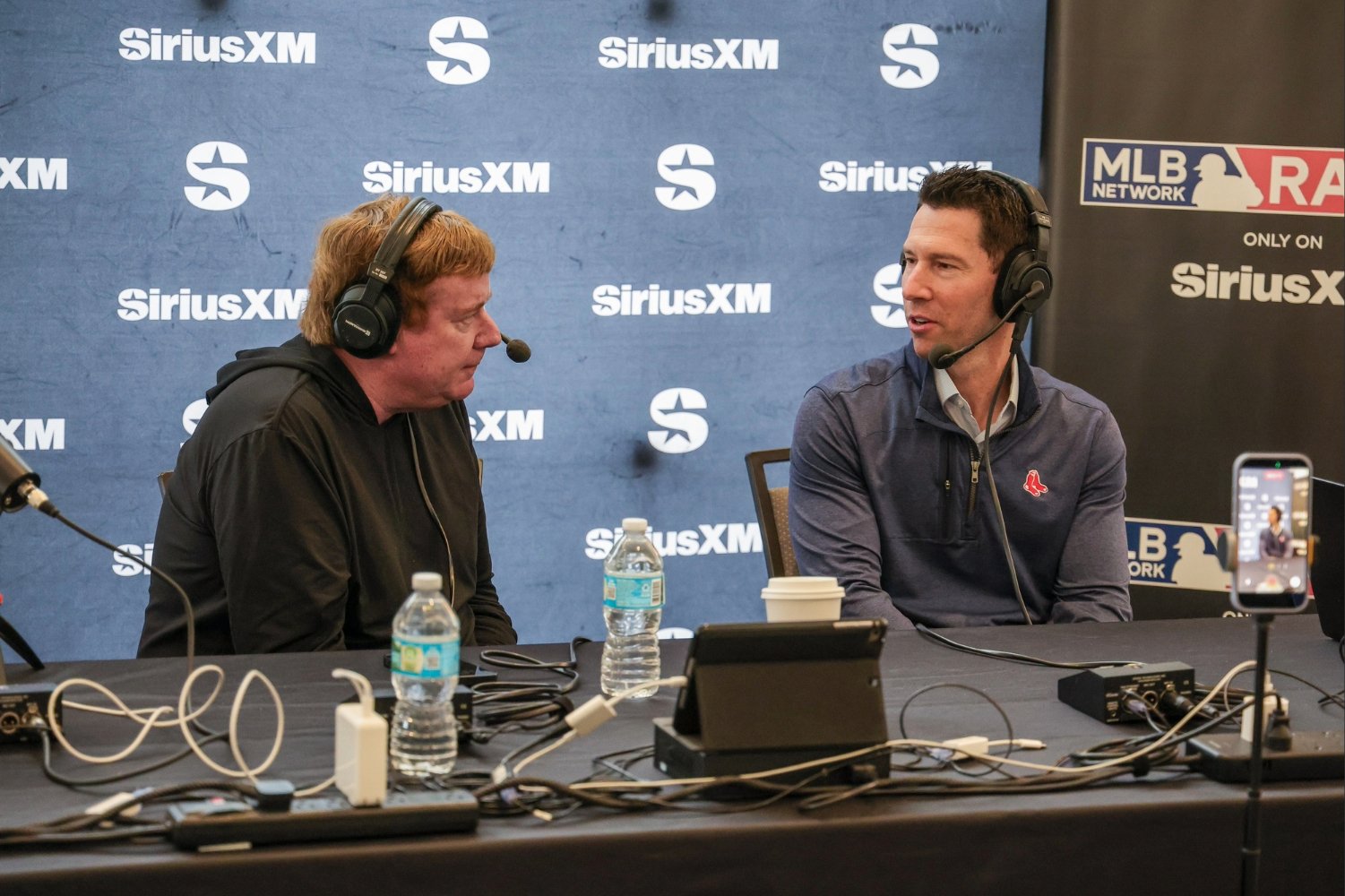
The Boston Red Sox certainly didn’t sit on their laurels this offseason. As of this writing, they’ve completed over 20 different transactions in an effort to solidify and improve the big-league roster. There have been questionable moves, no doubt, but all in all. the team is stronger on paper than they were when they were eliminated from the postseason in October 2025.
What has remained consistent during each offseason that Craig Breslow has been the president of baseball operations is that he’s going to work hard to both make trades and sign free agents to improve the organization as a whole. Since spring training is here and the deals are far less likely to happen between now and the trade deadline, let’s look at both the best and worst deal the Red Sox did, or didn’t, make this offseason.
Best Red Sox Offseason Move: Trading Jordan Hicks
Sometimes the low-hanging fruit is the best on the tree. Jordan Hicks was both a roster roadblock and a money pit for the Red Sox as they looked to improve ahead of 2026. His career in Boston was fairly short lived, only just over half a season after he was traded on Father’s Day, but it was memorable for all the wrong reasons. He sported an ERA of 8.20 with the Sox, working a 7.23 K/9 to go along with a 5.79 BB/9 and a -0.4 fWAR.
He’s a flamethrower that has no idea where the ball is going once it leaves his hand and his blowups in Boston cost the team more games than they helped. He was loudly critical of both the pitching program and the signals the catchers were giving him, so it was fairly clear that he wasn’t long for Boston as the season drug on. He was placed on the injured list in September with right shoulder tendinitis and wasn’t seen again throughout the remainder of the season or the postseason run. Sure, the team had to attach David Sandlin just to eat $8 million of Hicks’ remaining salary to move him, but it was worth it. Sandlin was, at best, the tenth-ranked pitcher in the starting rotation and wasn’t likely to factor into the team’s plans this year.
Sometimes you have to do addition by subtraction, and that’s exactly what the trade that sent Jordan Hicks to the White Sox was.
Worst Red Sox Offseason Move: Not Adding a Power Bat
When the offseason began, Craig Breslow hammered home that the biggest need for the team (outside of another ace) was adding a middle-of-the-order power bat. With spring training now upon us and the first lineups of the year getting rolled out, that clearly didn’t happen.
The Sox have made offensive additions, sure, and most of them are positive, but none of them are the big bopper the lineup is currently missing. The team made a non-competitive offer to Pete Alonso and, reportedly, didn’t offer Kyle Schwarber or Eugenio Suarez any type of contract. There was hope that a trade could be made for a star bat as the offseason wore on, but the big trade came in the form of Caleb Durbin. A welcome addition to play the infield for sure, but he lacks the power we were promised in late October.
Willson Contreras could prove to be a power threat with a swing that seems to be made for Fenway Park, but it’s tough to count on just him to provide that offensive spark the team needs. The team seems to be waiting for Triston Casas to get healthy to provide that offensive pop, but that’s a tall ask for someone coming off a second season-ending injury. A power bat is the missing piece that would put the Red Sox over the top this season, and hopefully they can either find one closer to the trade deadline or Casas proves to be that missing piece whenever he returns.
You could argue that other transactions deserve either the best or worst designation but these two stood out to me as the two that impacted the roster as a whole. The Ranger Suárez contract or Sonny Gray trade also stand out, seeing as they did fulfill Breslow’s promise of adding top-of-the-rotation upside.
What do you think were the best and worst moves the Red Sox made, or didn’t make, this offseason? Sound off in the comments below.