
Spring training optimism is easy to find this time of year, but the Hall of Fame ballot has quietly provided its own jolt of hope for fans of modern-era starting pitchers. The 2026 election delivered a shockwave, when Felix Hernández vaulted from 20.6% of the vote to 46.1% in a single year. No pitcher has ever made a jump that large, and it feels like more than a curiosity. It feels like a course correction.
Nearly six decades passed between Sandy Koufax walking away from the game in 1966 and Hernández appearing on the ballot in 2025. In that span, 32 pitchers retired with win totals between 165 and 199. None of them were elected to the Hall of Fame. Most were not even close. That context makes Hernández’s rise impossible to ignore. It suggests voters are finally grappling with how different the job has become, and perhaps how little pitcher wins matter.
Hernández has been here before. In 2010, he won the American League Cy Young Award with just 13 wins, a result that helped break the stranglehold of pitcher wins as the defining measure of excellence. That moment mattered, and this one does, too. The same evolution that reshaped Cy Young voting now needs to reshape Hall of Fame voting.
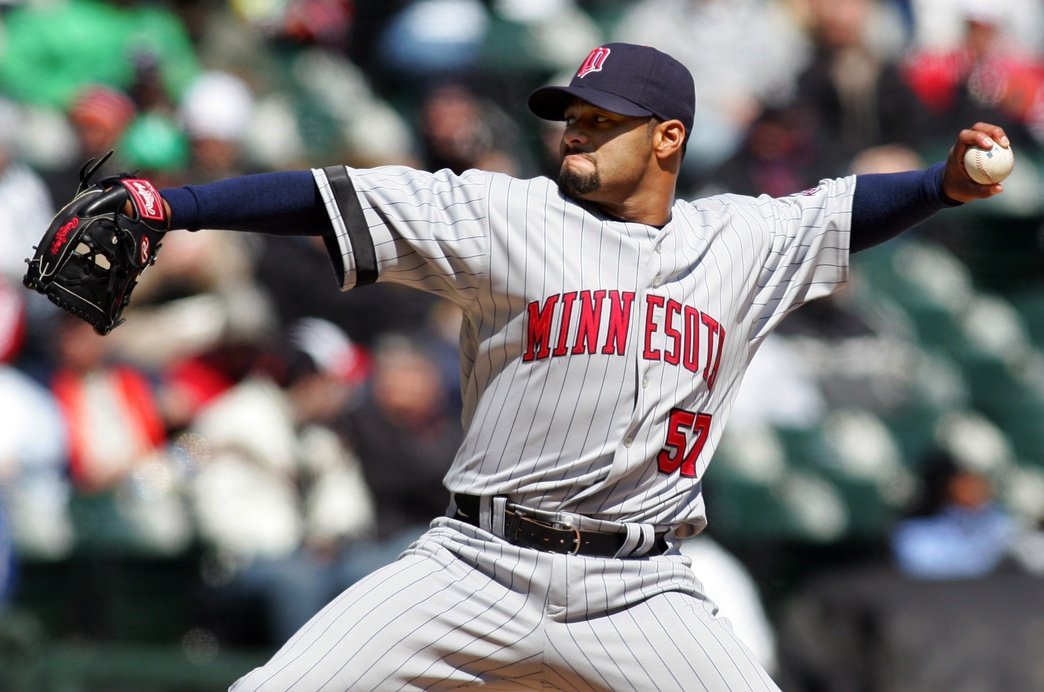
Hernández’s countryman Johan Santana is the clearest example of the importance of that shift. In 2005, Santana lost the Cy Young Award to Bartolo Colón because Colón had more wins. Santana led the league in WAR (according to Baseball Reference), strikeouts, and WHIP, but that didn’t matter at the time. Had he won that award, Santana would have captured three straight Cy Youngs, a feat that historically functions as a fast pass to Cooperstown. Instead, he owns two, and the difference between two and three has loomed far larger than it ever should have.
Hall of Fame pitcher Tom Glavine has openly acknowledged the problem.
“Listen, I’ve had numerous conversations with (his fellow Hall of Famers) about what the Hall of Fame is going to look like,” Glavine said. “And what I tell them is, the days of what guys in past eras have done are gone. I mean, we’ve got to redefine everything, right? So I think that for those of us who are accustomed to what the Hall of Fame is at the moment, that’s going to be a little bit of a hard sell.”
Baseball never stops changing, and no position has been reshaped more dramatically than starting pitcher. The 250-inning workhorses are gone. The march toward 300 wins is effectively extinct. Unless the sport takes a hard turn back in time, those milestones won’t come back. That reality makes direct comparisons to earlier generations unfair and increasingly useless.
It also helps explain why starting pitchers have struggled so badly with BBWAA voters. Only 38 of the 75 Hall of Fame starters were elected through regular BBWAA voting. If the standards don’t evolve, entire generations will pass with few or no starters elected, and the list of well-qualified snubs will keep growing.
Santana already fell victim to that system. His lone appearance on the BBWAA ballot came in 2018, one of the most crowded ballots in history. Chipper Jones, Vladimir Guerrero, Jim Thome, and Trevor Hoffman were elected. Edgar Martínez, Mike Mussina, Larry Walker, and Fred McGriff were still building support. Roger Clemens, Barry Bonds, and Curt Schilling continued to dominate the discussion while siphoning off votes. Santana received 10 votes, 2.4 percent of the number of ballots cast, and fell short of the 5% needed to remain on the ballot. That outcome looks worse with every passing year.
From 2003 through 2009, very few (if any) pitchers matched Santana’s dominance. He was a four-time All-Star, won the pitching Triple Crown, and captured three ERA titles. He won two Cy Young Awards and should have won a third (see above). Santana finished in the top five in Cy Young voting five consecutive times. According to fWAR, only Roy Halladay, a first-ballot Hall of Famer, provided more value during that seven-year stretch. Santana threw more innings, struck out hitters at a higher rate, and posted a lower ERA.
Every pitcher with three Cy Young Awards (besides Clemens) has been elected to the Hall of Fame, or is expected to be elected when eligible. Santana sits just outside that club because of an outdated obsession with wins that the sport itself has already abandoned.
Because Santana fell off the BBWAA ballot after just one year, his path to Cooperstown now runs through the Contemporary Baseball Era Players Committee. That group evaluates players whose primary contributions came from 1980 to the present day, offering a second chance for candidates who were overlooked or misunderstood during their brief window with the writers. It is a different process, one driven more by peer perspective than historical inertia, and it creates an opportunity for voters to reassess Santana’s peak dominance within the context of a modern game that no longer values pitchers the way it once did.
Hernández’s ballot surge suggests voters are finally willing to meet the modern game where it is. If that shift continues, the Hall of Fame can begin to properly honor pitchers whose greatness did not come packaged in round numbers. For Santana, that change in perspective may be the only path left. It just might be enough.
Should Santana be in the Hall of Fame? Leave a comment and start the discussion.
Are you interested in Twins history? Then check out the Minnesota Twins Players Project, a community-driven project to discover and collect great information on every player to wear a Twins uniform!