
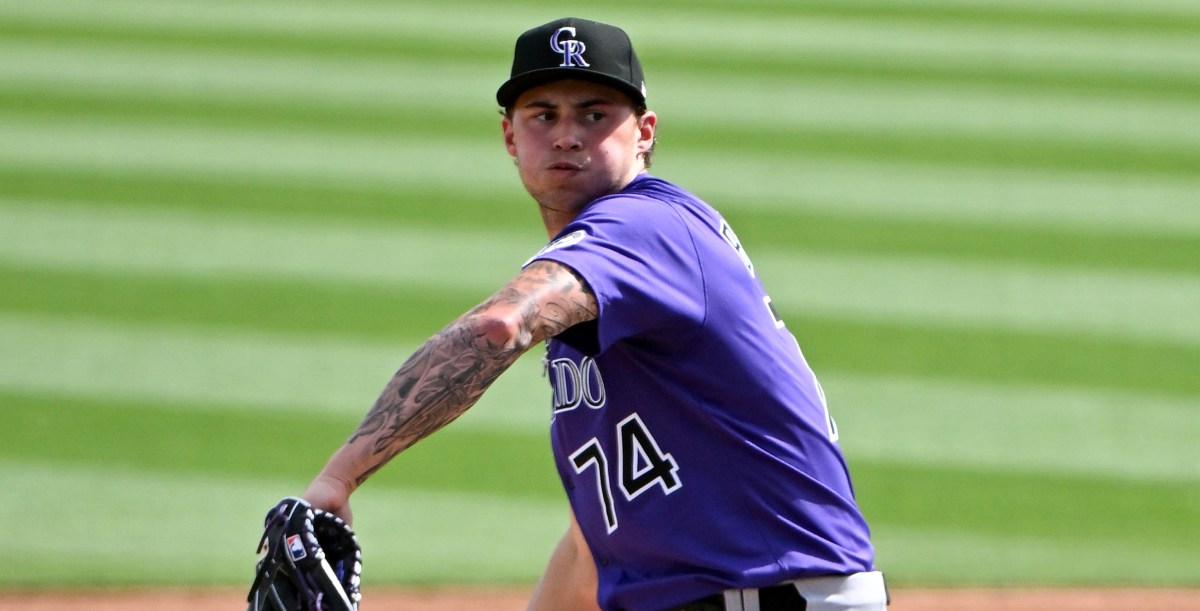
Walks have been an enormous problem for Brecht. He had more walks than inning pitched as a freshman, and 135 walks in 178 career innings for the Hawkeyes. He also had among the best stuff in the 2024 draft class, and has a rare combination of physicality and athleticism.
Brecht will sit 96 (he was 95-98 during instructs) and has touched 101. He has a relatively short stride down the mound for someone as big and athletic as he is, and his generic three-quarters slot has a negative impact on his fastball’s shape and movement. It plays well below an average pitch even though it has plus-plus velocity. Whatever can be done to help Brecht command his fastball or improve its movement will ideally be implemented without altering his slider, which is an 80-grade SOB that evokes Dinelson Lamet‘s upper-80s power breaker. Brecht also has a goofy low-90s changeup with big tail and fade. His secondary pitches diverge in such a way that makes it hard to stay on both of them at the same time.
Built like a marble statue at 6-foot-4 and 235 pounds, Brecht hasn’t been focused on baseball for very long and also hasn’t yet been in a developmental environment that can max him out, though that might still be true because Colorado’s developmental track record for arms isn’t great. The gap between where he is as a pitcher right now and what he could be is very large. There is precedent for teams solving issues like Brecht’s (Carlos Rodón’s command was a mess, too, though maybe not this bad), and he has enormous upside if someone can. Those right tail outcomes are absolutely baked into his FV grade, as is Brecht’s risk. At worst, Brecht looks like a potential late-inning reliever who works off of his secondary pitches more than his fastball. He could be a three-pitch mid-rotation stalwart if he and Colorado can find better control.