
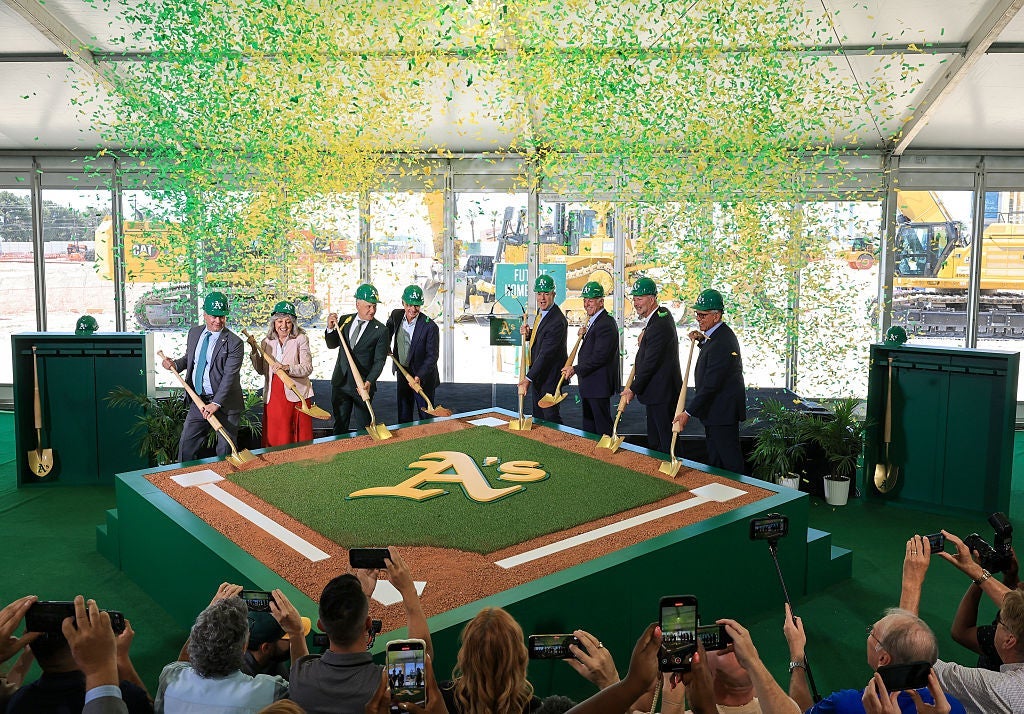
The Oakland Athletics plan to introduce a limited personal seat license program to help fund construction of their new Las Vegas Strip ballpark, where total project costs have climbed beyond $2 billion. The proposal is part of a broader marketing and sales agreement between the Las Vegas Stadium Authority and an A’s subsidiary as officials explore additional revenue streams.
The meeting agenda includes a stadium construction progress update and projected revenues alongside the PSL marketing discussion. According to the preliminary agreement, the Stadium Authority will have the exclusive right to sell or transfer the PSLs.
The proceeds from the sale of these PSLs will go toward developing the stadium. The Stadium Authority was authorized by Senate Bill 1 (2023) to appoint StadCo to market and sell the PSLs under the same structure. SB1 also allocated up to $380 million in public financing for the project.
PSLs require season ticket holders to pay an upfront license fee for specific seats and maintain season ticket purchases, a model more common in the NFL than in Major League Baseball. Buyers gain special access rights to events, including A’s home games, and may forfeit the license if season tickets are not renewed.
Less than 20% of the planned 30,000-seat stadium will be backed by PSLs, with the focus on premium seating areas, such as sections behind home plate. A draft agreement indicates PSLs will target high-end sections, with A’s President Marc Badain emphasizing that approach.
“We researched the market,” Badain said. “We have a [season-ticket] deposit list of over 20,000. We reached out to people. The demand was there, so we’re going to utilize that to help with the project.”
Pricing and specific placements are expected to be announced before spring training games in early March. PSLs are currently used by five MLB teams and multiple NFL franchises, including the Las Vegas Raiders, which have charged up to $15,000 per seat to help fund Allegiant Stadium.
Negotiations over naming rights, in-stadium sponsorships, loan usage, and private financing contributions remain ongoing, with the Fisher family and lenders, including U.S. Bank and Goldman Sachs, previously providing significant financial support.