
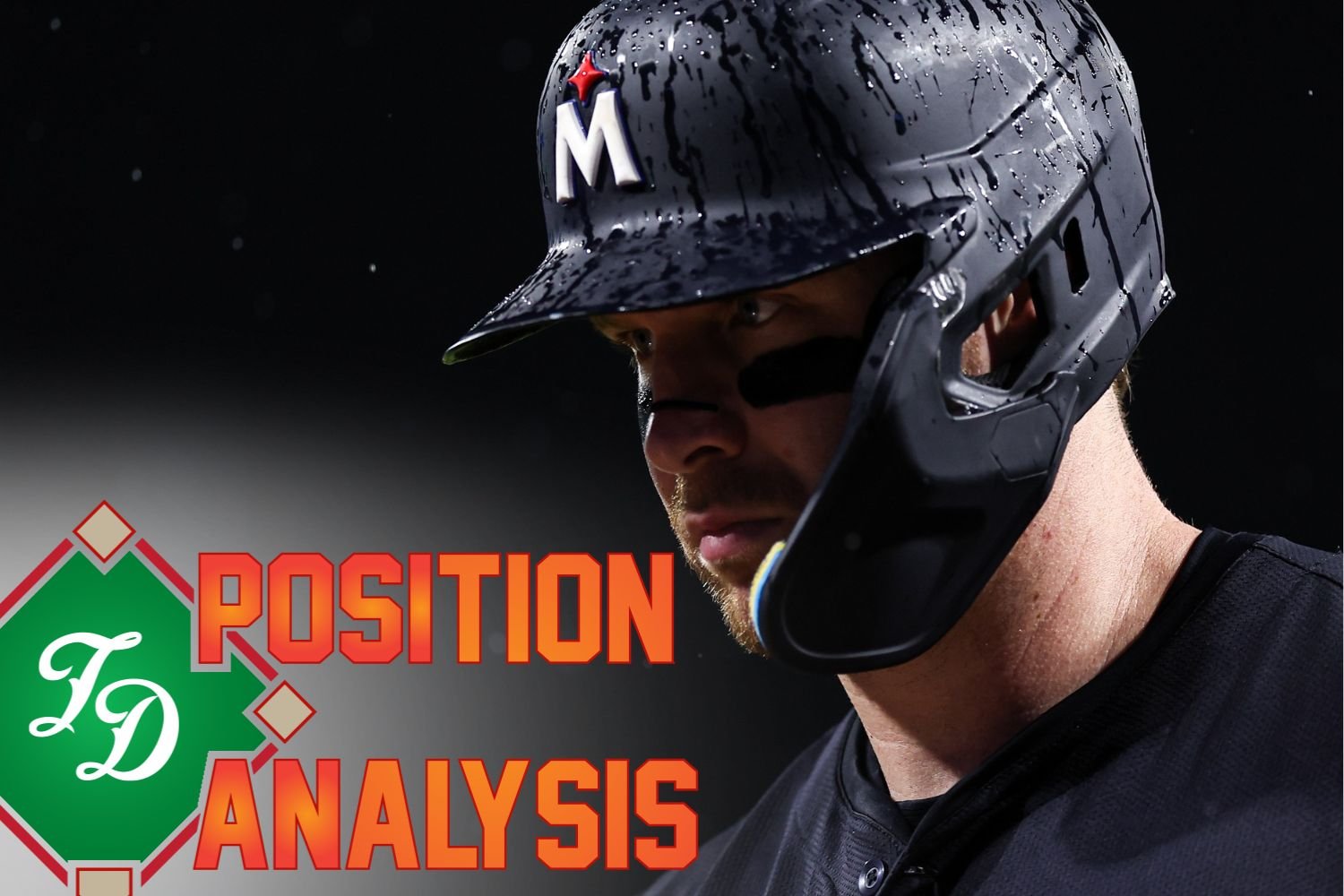
The Ryan Jeffers era at catcher has quietly brought as much stability as any for the Minnesota Twins since Joe Mauer moved off the position in 2014. He’s never been a steadfast regular in the way Mauer was, but Jeffers has been a steady presence behind the plate since his MLB debut back in 2020, when his impressive 26-game breakthrough earned him Twins Daily Rookie of the Year honors during a shortened season. Jeffers ranks fourth all-time among Twins catchers in plate appearances, behind only Mauer, Earl Battey and Tim Laudner.
Entering his final year of team control, and with an extension appearing unlikely, a changing of the guard is afoot at catcher. Here’s where things stand entering 2026.
TWINS CATCHERS AT A GLANCE
Starter: Ryan Jeffers
Backup: Victor Caratini
Depth: Alex Jackson, Noah Cardenas, Andrew Cossetti
Prospects: Eduardo Tait, Enrique Jimenez, Khadim Diaw
Twins fWAR Ranking Last Year: 22nd out of 30
Twins fWAR Projection This Year: 12th out of 30
THE GOOD
If there’s one area where I will give the Twins front office credit for their vision in the past eight months, it’s the extent to which they’ve strengthened the organizational roadmap at catcher.
Last year, there wasn’t any roadmap. The “top prospects” listed in my 2025 position analysis for catcher were Jair Camargo and Diego Cartaya, both of whom ended up being released during the season. The future didn’t just look bleak; with free agency creeping up for Ryan Jeffers, there basically was no future.
The Twins addressed that issue emphatically at last year’s trade deadline. They first acquired Enrique Jimenez, a 19-year-old switch hitter of some promise, from Detroit in the Chris Paddack trade. It was a surprisingly strong return for Paddack, albeit nothing spectacular. Then, the biggest singular prize of Minnesota’s deadline haul came over in the form of Eduardo Tait, another teenager of much higher esteem hailing from the Phillies system.
Jimenez is a legit presence on the Twins prospect radar — Aaron Gleeman ranked him as the 20th best prospect in the organization in his recent top-40 list at The Athletic. Tait is a legit presence on the overall prospect radar — ranked 38th, 54th and 65th by ESPN, BP and MLB, respectively. Catching prospects are always a gamble, especially ones this young, but it’s hard to overstate how much the long-term outlook at this position has improved since this time last year.
The short-term outlook has also received a boost, even as Jeffers nears the end of his team control. He’ll be plenty motivated for a big year, and is in line to be the true primary starter with Derek Shelton envisioning a two-thirds starting share. Jeffers is even more ambitious: “My goal is 120 (starts),” he told reporters this spring. “My body is going to be ready for that.”
The pressure on Jeffers, who’s never started more than 81 times behind the plate, to reach that lofty goal is lowered by the arrival of Minnesota’s biggest offseason pickup: veteran switch-hitter Victor Caratini. His two-year, $14 million contract stands as the largest issued by the Twins in almost three years, reflecting their urgency in securing some sense of continuity at the catcher position.
He’s not just a catcher, and if Jeffers has his way, Caratini will spend a good chunk of time at first base and DH this year. But the newcomer will play plenty, and when at catcher, Caratini’s bat is a standout, massively improving over the precedent set by Christian Vázquez. Minnesota’s catching duo has a solid chance at forming one of the best offensive units in baseball, and that’s maybe one of the more underrated strengths of this year’s Twins team.
Caratini wasn’t the only high-level catching depth added by the Twins during the offseason. Prior to signing him, they made a trade with the Orioles to acquire Alex Jackson in exchange for minor-league utility man Payton Eeles. Jackson has the opposite profile of Jeffers and Caratini — great glove, highly suspect bat — but he brings some balance to the catching mix in that regard.
The hold-up is that Jackson is unlikely to make the Opening Day roster as a third catcher, and he’s out of options. The Twins are seemingly hoping that, if all three players stay healthy through spring camp, they’ll be able to sneak Jackson and his $1.35 million salary through waivers and stash him as depth.
As a backup catcher, Jackson is adequate. As a third catcher waiting on hand in Triple-A, he’d be a really nice asset.
THE BAD
The Twins didn’t lose much of anything offensively with the departure of Vázquez, but they lost a lot defensively. He was clearly the team’s best receiver, and pitchers loved working with him. Jeffers has seen his fielding metrics decline to the point where most models saw him as well below-average last year. Caratini is not considered a particularly strong defensive catcher.
Neither of these guys are disasters behind the plate, they just aren’t standouts, and that speaks to the reality at this position: outstanding offense vs. outstanding defense is an either/or proposition, outside of the true upper-echelon stars. (Like Joe Mauer. And hopefully one day Eduardo Tait?)
For a team highly focused on improving its defense overall, while also bringing along a number of emerging young pitchers, this feels extra important. Defense is difficult to measure and quantify at this nuanced position, but no one can deny its critical impact. Can Jeffers find a way to reverse his sub-par control of the opposing run game? How quickly can Caratini build rapport and earn confidence from his new battery partners? How will both adapt to the new ABS system? These are key questions.
The presence of Jackson and his highly regarded glove do bring a level of defensive assurance, at least from a depth perspective, but again, he’ll be in Triple-A if things go to plan. And if/when he does enter the catching mix, the Twins will have to deal with his bat — one of the worst in baseball over the past handful of years — in the lineup.
THE BOTTOM LINE
Good offense and questionable defense amount to a Twins catching unit that projects as above average but not elite. FanGraphs forecasts them to rank 12th among MLB teams in fWAR at the position, which looks about right to my eye.
The big storyline is whether Jeffers makes it through the entire season as a Twin. The healthier and more successful he is in the first half, the more likely he is to be traded at the deadline by a front office looking to supplement its rebuild. That is, unless the team is surprisingly competitive, and not in position to sell. If that happens, this potentially top-tier catching unit will undoubtedly play a big role.