
Welcome to the tenth and final edition of North Side Baseball’s offseason series covering the 1918 Chicago Cubs. You can find the first nine parts here:
Last time, we dove into the first three games of the 1918 World Series. The Cubs find themselves down 2-1 and are headed to Boston for the final four games of the series against the Red Sox.
A Potential Strike?
According to The Society of American Baseball Research, the players were upset about the new revenue sharing plan set to begin with this World Series. Before the season began, the National Commission agreed to share some of the gate receipts from the first four World Series games with the top four teams in each league.
Because of this new rule, the reduced ticket prices, and low attendance due to the ongoing war, these shares were set to be much smaller than previous years. The players wanted a guarantee of their shares, and were set to meet with the commission after the fourth game when they knew what the full revenue was going to be.
Game Four
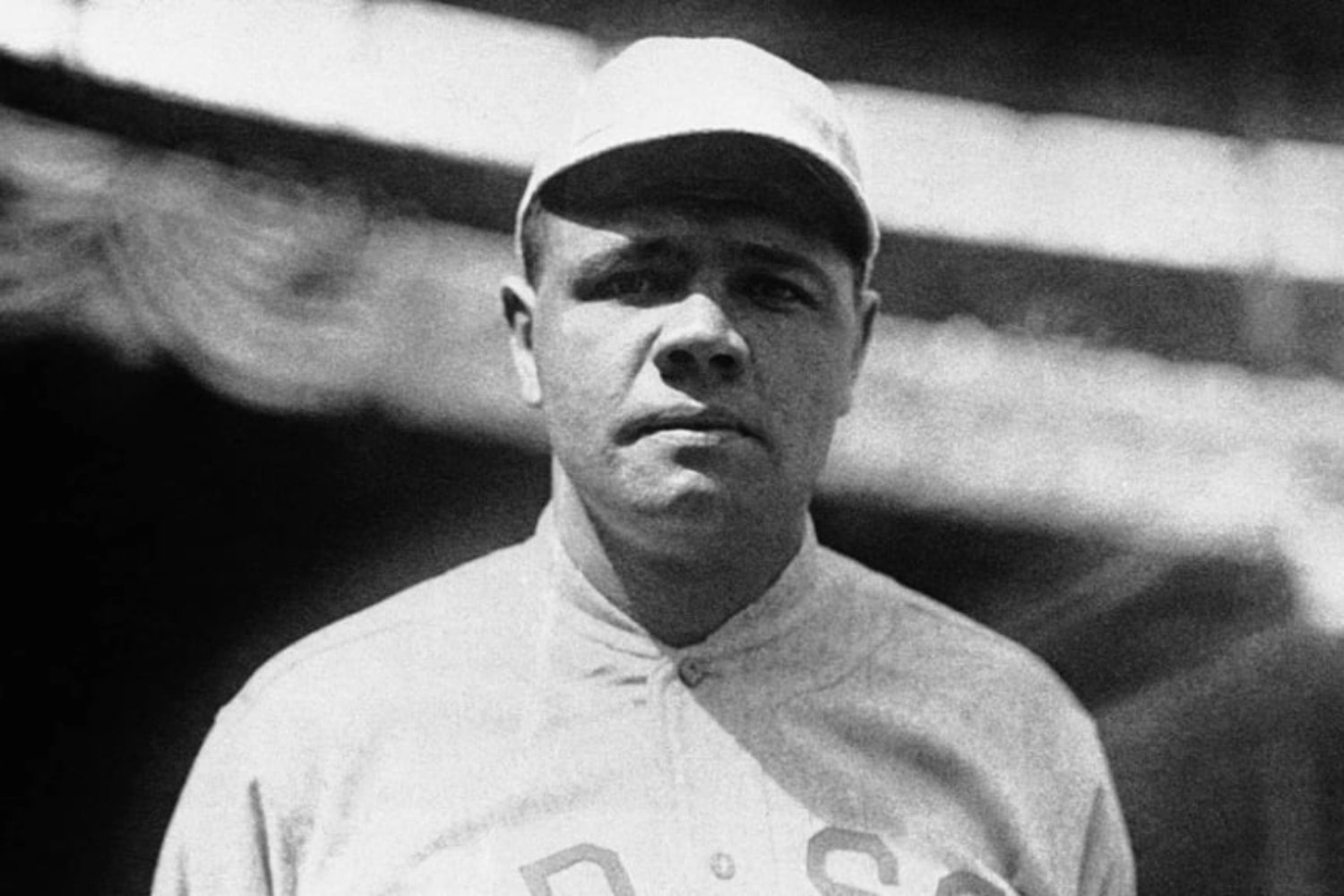
The Red Sox were sending Game 1’s winner, Babe Ruth, to the mound to go up against the Cubs’ Game 2 starter, Lefty Tyler. The game was tied in the fourth inning with men on first and second and two outs. Babe Ruth, still hitless in his World Series career, stepped up to the plate.
Tyler, electing to pitch to the slugger, fell behind 3-0. After coming back to bring the count full, Ruth got a pitch to hit, and let it rip. “Ruth’s smash soared high over Flack’s head and Max was so flustered that at first he took a few steps forward before he realized that the ball was soaring past him,” the New York Times wrote at the time. A triple brought home two runs, and the Red Sox took a 2-0 lead.
The score stayed there until the eighth inning. After a leadoff walk to Bill Killefer, which was followed by a single from Claude Hendrix, who hit for Tyler, the Cubs found themselves in business. A groundout from Charlie Hollocher scored the first run, and then a two-out single from Les Mann brought home the tying run, giving the Cubs some life.
With Tyler out of the game, the Cubs brought Phil Douglas in to pitch the bottom half of the eighth inning. A leadoff single from Wally Schang, coupled with a passed ball, gave the Red Sox a runner at second with nobody out.
Harry Hooper laid down a bunt, and in attempting to throw him out at first base, Douglas threw the ball away, allowing the go-ahead run to score, and the Red Sox to take a 3-2 lead.
Even still, the Cubs wouldn’t go away quietly. Fred Merkle began the ninth with a single, and after a walk to Rollie Zeider, Red Sox manager Ed Barrow took Ruth out of the game and put him into the outfield and instead inserted Bullet Joe Bush to pitch. A bunt from Chuck Wortman forced Merkle out at third, and then a ground ball double play from Turner Barber ended the game. The Cubs found themselves just one loss away from losing this World Series.
Game Five
The players, still seeking a resolution to their shares of the revenue, remained in the locker room after the game was supposed to begin. The game would eventually start an hour late.
“The players of both clubs went on a strike because the National Commission refused to guarantee the prize money provided for under the new agreement which gives $2,000 to players of the winning club and $1,400 to those of the losing club. The players were willing to compromise at $1,500 and $1,000, but the receipts of the first four games, in which the players share, leaves only $890 for the winning players and $535 for the losers,” the Times reported.
It was agreed upon to reopen the discussion after the series and play the game, which pitted Hippo Vaughn against Sad Sam Jones. In the fourth, Hollocher walked, stole second, and scored on a double from Mann, giving the Cubs a 1-0 lead.
The Cubs would eventually extend the lead to 3-0 in the eighth, when Dode Paskert ripped a double to score Flack and Hollocher. From there, Hippo Vaughn did the rest.
Vaughn threw another complete game, this time a shutout. He allowed just five hits, one walk, and struck out four. Following nine innings of one-run ball in Game 1, and nine innings of two-run ball in Game 3, this meant that Vaughn had pitched 27 innings in six days and allowed just three runs.
What an incredible performance to extend the series for the Cubs, who were still behind 3-2.
Game Six
The Cubs, still desperate to keep Babe Ruth out of the Red Sox’s lineup, sent the left-handed pitching Lefty Tyler to the mound. This meant that each of the first six games of this series had been started by only Tyler or Vaughn. The Red Sox sent out their Game 3 starter, Carl Mays.
The game began with nothing more than a few two-out runners until the bottom of the third. Tyler walked both Mays and Dave Shean, and with two on and two outs, George Whiteman hit a line drive to Flack in right field.
According to the Times, “he caught up to the rapidly descending ball and had it entirely surrounded by his hands. Tyler was offering thanksgiving for crawling out of a bad hole when the ball squeezed its way through Flack’s buttered digits. As the ball spilled in a puddle at Flack’s feet, both Mays and Shean were well along on their way home before Flack’s alarm clock went off and woke him up.”
The Cubs, with their backs against the wall, notched a lead off single in the top half of the fourth, and after a one out hit by pitch, they had two runners on with just one out. However, Mann was picked off of first base. After a walk to Paskert and an RBI single from Merkle, the Cubs trailed just 2-1, though the inning as a whole felt like a lost opportunity.
The Cubs would go down the rest of the game without much incident, managing just one baserunner on a walk after that fourth inning rally.
With a 2-1 loss in Game 6 of the 1918 World Series, the Cubs’ season was over.
Aftermath
Because of the war, there was such little fanfare around this World Series, with the Times reporting in their recap of Game 6 that “baseball’s valedictory this afternoon should have been played to the weary strains of Chopin’s Funeral March. The smallest gathering that ever saw the national game’s most imposing event sat silently about and watched Boston win and Chicago lose. There was no wild demonstration of joy when the last man went out.”
The war, it was clear, had taken its toll, and it would take a toll on more than just the atmosphere of this World Series. The previously agreed upon revenue sharing remained, with Cleveland, both New York teams, Pittsburgh, Cincinnati, and Washington all receiving shares, according to the Times. Per SABR, the winning shares ended up being $1,108.45 for the Red Sox, which is the lowest amount ever awarded to the World Series champions. The Cubs received $671 per player.
Thankfully, World War I would end just a couple of months later, on November 11. Baseball players returned home, and the 1919 season was shortened to 140 games to accommodate those returning players. Of course, Grover Cleveland Alexander was among those players, as he joined Hippo Vaughn atop the 1919 Cubs’ pitching rotation.
Some have since wondered if there was a fix in the 1918 World Series in the aftermath of the Black Sox scandal in the 1919 World Series. John Thorn, the official historian for Major League Baseball, was quoted by the Seattle Times in 2011 that “it seems more likely that there would have been a fix than there would not have been.”
A court deposition that was displayed at the Chicago History Museum from Eddie Cicotte, one of the members of the 1919 Black Sox, would suggest that the series was. Cicotte mentioned that his teammates had discussed that “one or several” Cubs were offered $10,000 to fix the series.
There were certainly some very costly misplays and errors that ended up costing the Cubs dearly, Flack’s misplay among them. Of course, we’ll never know for sure.
The 1918 season was ultimately a successful one for the Cubs, even if they came up short at the end. It was a wild ride that I am sure gave so many fans something to think about other than the happenings in Europe.
Are you interested in Cubs history? Then check out the Chicago Cubs Players Project, a community-driven project to discover and collect great information on every player to wear a Cubs uniform!