
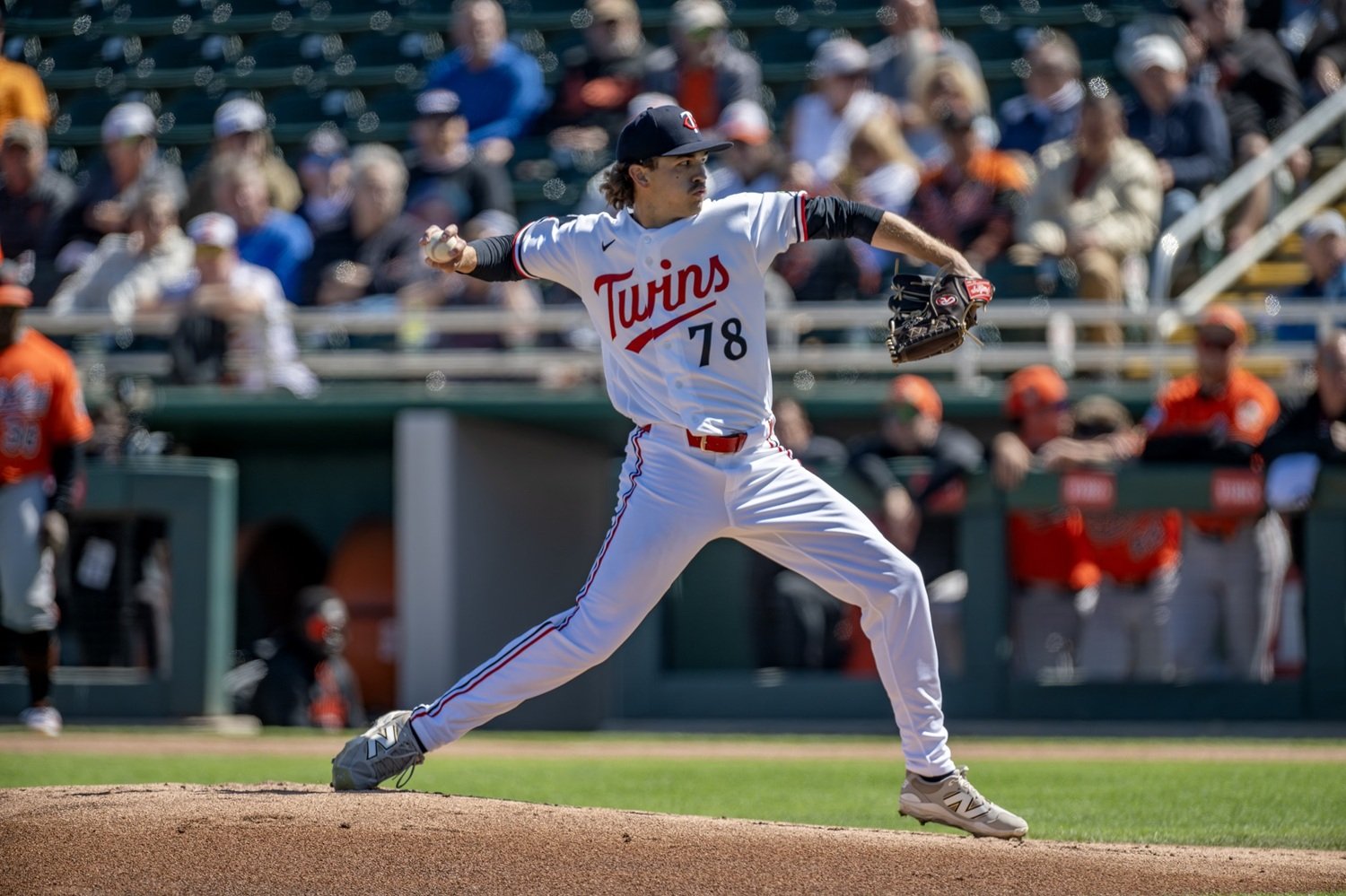
When pitchers and catchers reported to Fort Myers, the optimism surrounding the Minnesota Twins’ rotation was grounded in numbers. This was supposed to be a strength built on both established major leaguers and emerging upper-level prospects knocking on the door. Instead, the depth chart has become something of a stress test before the calendar even flips to Opening Day.
The Twins had eight pitchers in contention for five starting spots when pitchers and catchers reported to Fort Myers. However, Pablo Lopez is out for the year following Tommy John surgery, and David Festa is expected not to be ready for Opening Day as he deals with a shoulder impingement.
That reality has reshaped the conversation around the starting staff this spring. Rather than debating which young arms might have to open the year in Saint Paul, the Twins are now figuring out how many inexperienced starters they can realistically carry while still positioning themselves to compete in a winnable division. The current pitchers in play for starting jobs are Joe Ryan, Bailey Ober, Simeon Woods Richardson, Taj Bradley, Zebby Matthews, and Mick Abel. Beyond that group, there are Connor Prielipp, Andrew Morris, Kendry Rojas, and John Klein.
Minnesota showed this winter that payroll flexibility exists, most notably in its aggressive but unsuccessful pursuit of Framber Valdez. Even so, the current trajectory suggests the organization is prepared to move forward with its six in-house rotation options while keeping its yet-to-debut pitching prospects as the next wave of reinforcement.
“We see a lot of upside,” Twins General Manager Jeremy Zoll said. “We’ll use spring to see what’s going on everywhere. Usually, you see a lull in action for a bit as teams settle in.”
The Case for Trusting the Depth
There is a legitimate argument that the Twins should allow this group to sink or swim on its own merits. Ryan and Ober have proven capable of handling major league workloads when healthy, while Woods Richardson showed flashes of mid-rotation stability last season. Bradley brings electric stuff that could translate immediately, and both Matthews and Abel represent the kind of upside that teams often spend years trying to acquire externally.
Younger pitchers also come with a sense of developmental urgency. Minnesota has invested years in shaping these arms at the minor league level. Blocking their opportunity with a short-term veteran might preserve depth on paper while simultaneously delaying the growth of pitchers who need to face big-league hitters to reach their ceilings.
“You’re trying to find that right balance of ensuring you have enough depth and creating the right opportunities for guys to step forward,” Zoll said. “In a lot of cases, these guys have proven a lot in Class AAA already. You don’t want to have guys in AAA just to say we did. But you never know what’s going to pop up next and constantly are weighing those things.”
The Case Against Standing Pat
Of course, the downside is obvious. Betting on depth is easier when it has not already taken two major hits before March. Lopez was supposed to anchor the rotation, and Festa represented a high-probability early-season contributor. Removing both from the equation places enormous pressure on pitchers who are still adjusting to the demands of a full major league season.
The remaining options on the free agent market include Lucas Giolito, Zack Littell, Patrick Corbin, Tyler Anderson, and Nestor Cortes. While none project to replace the frontline production Minnesota hoped to get from Valdez or the innings stability they lost with López, there is something to be said for a veteran capable of absorbing starts across a full season. That reality leaves the front office weighing a familiar dilemma between protecting developmental pathways for its young arms and adding a more proven option to stabilize the rotation early in the year.
Spring has made one thing clear. Minnesota can trust its pitching depth, but doing so is no longer a philosophical preference. It is quickly becoming a necessity. Whether that necessity turns into a breakthrough season for the next wave of starters or exposes how thin the margin for error has become may ultimately define the Twins’ 2026 campaign.
Do the Twins need to sign a veteran pitcher? Or should the front office trust the team’s rotational depth? Leave a comment and start the discussion.