
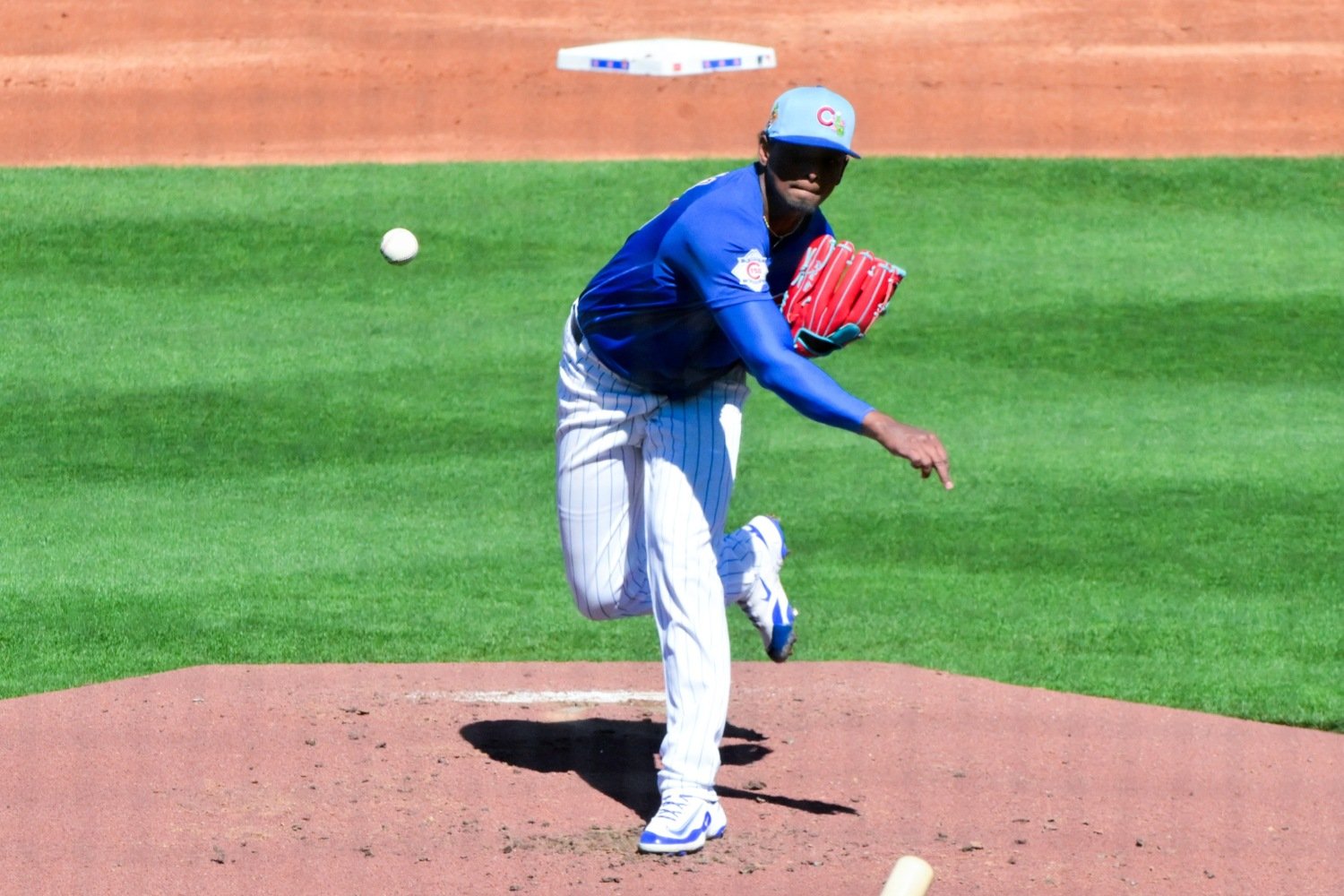
When the Cubs traded for Edward Cabrera in January, many assumed the team would continue the work Cabrera began in Miami last year, under former Cubs assistant pitching coach Daniel Moskos: ratcheting down the usage of his four-seam fastball. For most of his career, despite being thrown nearly 100 miles per hour, Cabrera’s four-seamer has been his worst pitch. Given his arm angle—even the lower angle to which he adjusted last season—he doesn’t have any more ride (that apparent rising action, as the backspin of a fastball defies gravity) than a hitter expects to see. It does run more to his arm side than they’d anticipate, which is good for something, but only if the pitch is well-located and well-mixed with his other offerings. When it isn’t, the heater can get hammered.
Last season, Cabrera favored his sinker over the four-seamer for the first time. It was just part of a broader shift in deployment of his arsenal, which saw him throw his very effective changeup and curveball plenty, but mix in his slider and sinker more, pushing the four-seamer all the way to fifth in his personal pecking order. It was a strategy of avoidance—of minimizing a weakness by making it as small a slice of his game as possible.
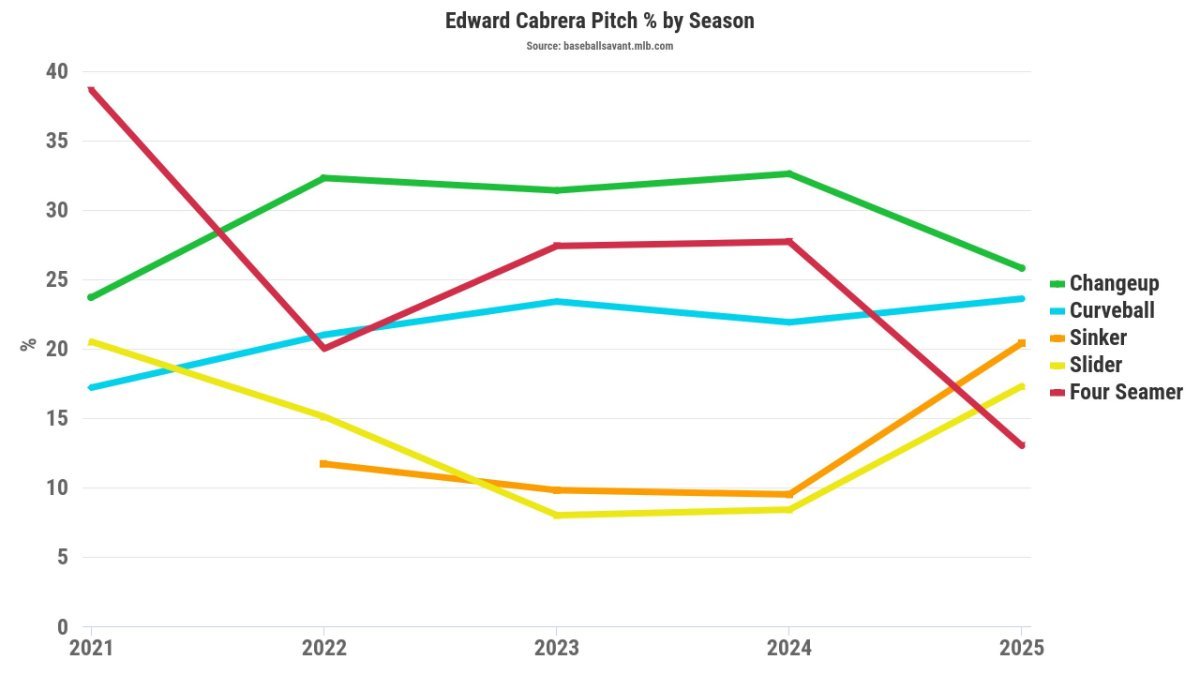
In his first outing of the Cactus League season, though, the four-seamer was Cabrera’s most-used pitch. He leaned on it harder than he has in any season since 2021, his rookie year.
If you’re married to the idea that the Cubs’ optimization plan for Cabrera involves continuing to push him away from the four-seamer, it’s easy to explain that away. Guys work on things during spring. They don’t always behave the way they will when the games count. Admittedly, it would be surprising if Cabrera does lean anywhere near this heavily on the four-seamer come the regular season.
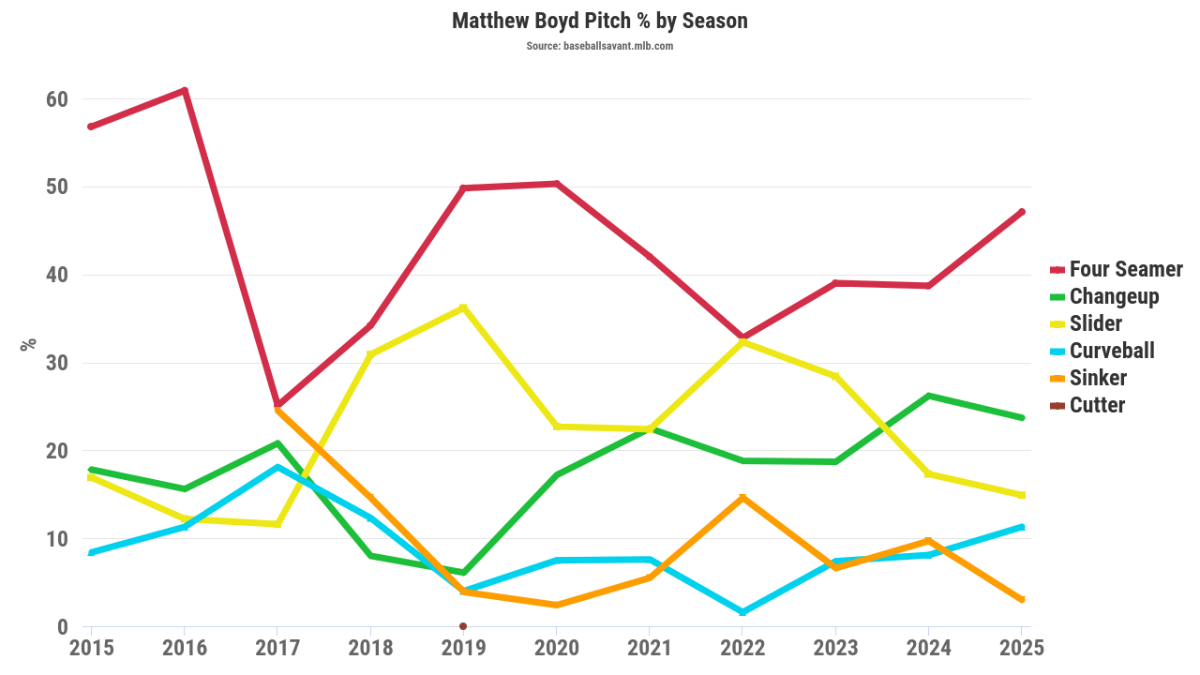
However, you should still take his pitch usage Friday seriously. It wasn’t a fluke, because it’s very much the way the Cubs do things. The last two established, American starters the Cubs brought in (the ones to whom we can easily make a direct comparison) were Matthew Boyd and Colin Rea. Here’s what happened to Boyd’s pitch usage last year.
And here’s the same chart for Rea.
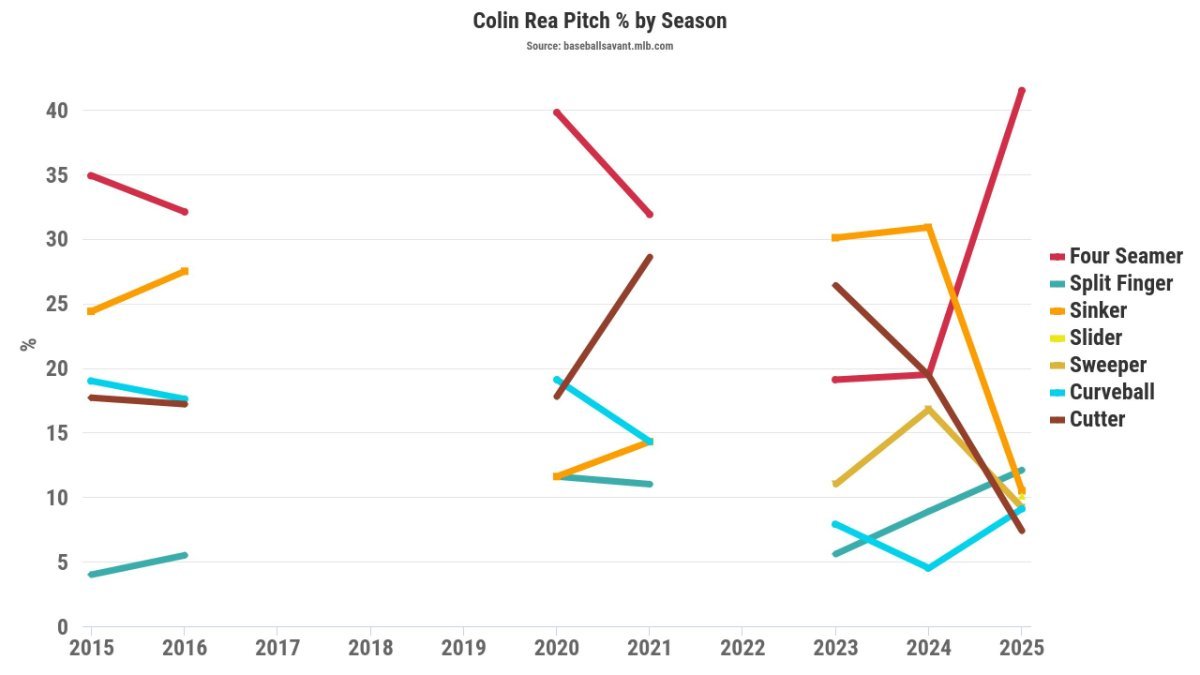
Widening the lens only makes the emphasis clearer. Last season, the Cubs’ four-seamer usage was 40.4%. That was the highest rate of any team in the league, by a significant margin. Last year, Rea said that the first thing the Cubs told him was how his arsenal could work better by working differently, playing off his four-seamer. No team in the majors likes four-seamers like this one does.
Every pitcher is different. Chicago won’t push the four-seamer as hard with Cabrera as they did with Rea; it wouldn’t make sense. Don’t assume, though, that the team will entirely alter its philosophy to suit one new arm. On the contrary, they’re likely to assimilate that arm into their pitching philosophy. Cabrera is about to learn how to use his four-seamer better. If the Cubs didn’t believe fervently that that’s possible, they almost certainly wouldn’t have dealt for him.
One could argue that that approach is overconfident. The Cubs have had plenty of developmental wins lately, but when people in the know list the savviest organizations in the game in matters of pitching, the Cubs are never the first name out of their mouth. Asking a player who just figured out something important and turned a corner in their career to pivot dramatically toward a different plan—one that goes against his documented strengths, no less—is awfully bold. However, this is how the Cubs have had success over the last several years. They identify guys they believe can benefit from a change in pitch mix, and then they help them achieve that benefit—and the four-seamer is almost always at the center of the action.
Besides, there’s always utility in a pitch that sits 97 and often touches higher. Cabrera’s stuff is electricity itself, and the four-seamer carries as much current as anything he throws. The Cubs are unlikely to let the value of that intense an offering go unrealized, even if other pitches net Cabrera more whiffs. He might not stick to it all year, but he’s going throw the four-seamer more often early on, not less so. Get comfortable with discomfort, because if you’d hoped the flamethrower would lean even more into his curveball and changeup, you’re destined for disappointment. The heater powers the Cubs’ attack, and while Cabrera is unusual, he’s not so unique as to be an outright exception to that rule.