
Image courtesy of Mike Watters-Imagn Images
The list of Opening Day starters at second base for the Twins since Brian Dozier‘s departure in 2018 has featured six different names in seven years: Jonathan Schoop, Luis Arraez, Jorge Polanco (x2), Nick Gordon, Kyle Farmer, Willi Castro. (Not listed: Edouard Julien, who’s made a team-leading 159 starts at second since 2023.)
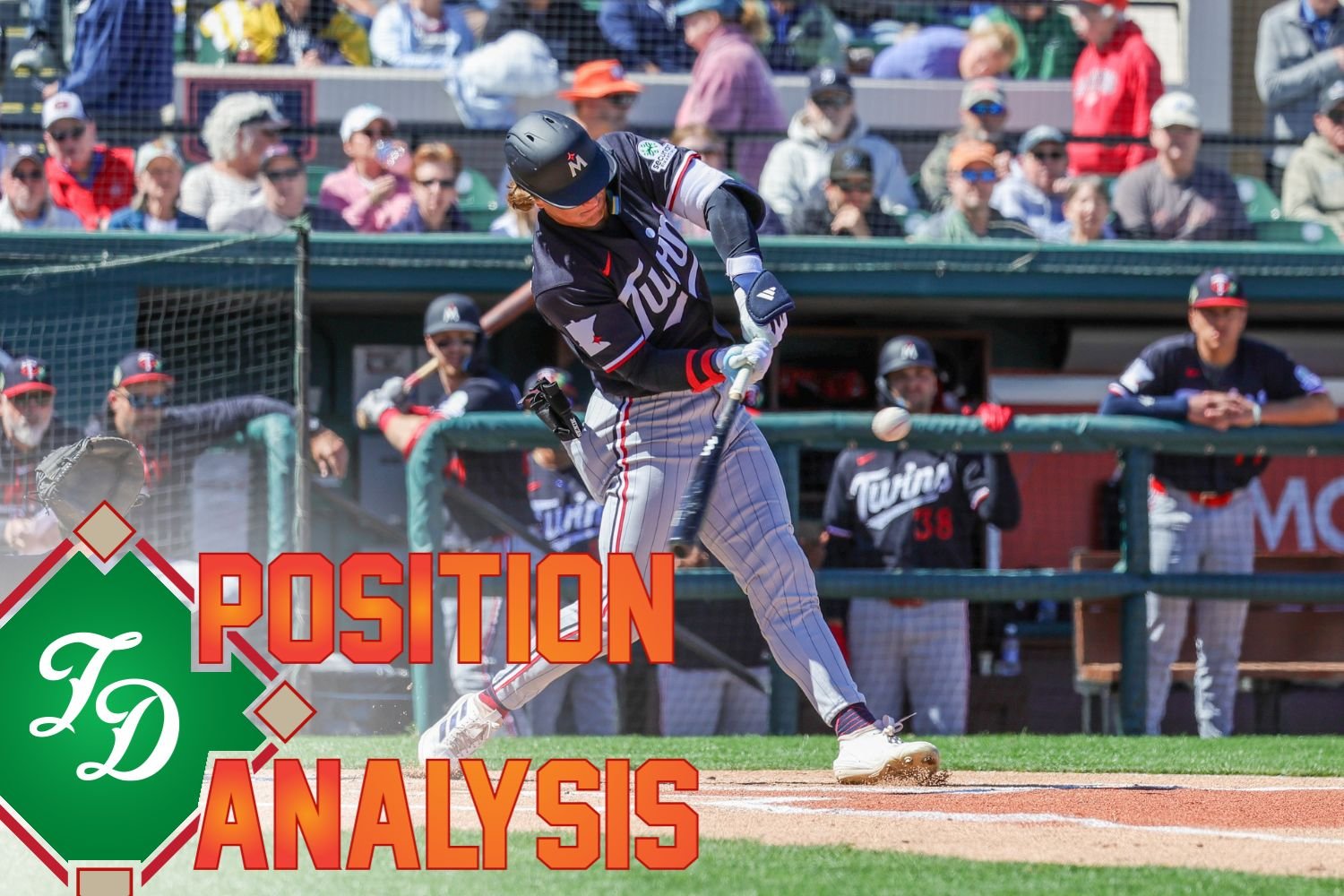
The 2026 season will add a seventh name to that list, but the Twins and their fans are hoping that Luke Keaschall can become a Dozier-esque mainstay at what’s been volatile position for Minnesota in recent years.
TWINS SECOND BASEMEN AT A GLANCE
Starter: Luke Keaschall
Backup: Kody Clemens
Depth: Austin Martin, Tristan Gray, Orlando Arcia
Prospects: Kyle DeBarge, Danny De Andrade, Jay Thomason
Twins fWAR Ranking Last Year: 22nd out of 30
Twins fWAR Projection This Year: 6th out of 30
THE GOOD
Keaschall sure looks like the real deal. He posted 1.6 fWAR in 49 games last year, showcasing an excellent plate approach with a dash of power, plus an electric combo of speed and aggressiveness on the bases. He batted .302, ripped 14 doubles and four homers, stole 14 bases on 17 attempts, and delivered memorable clutch moments on the way to a top-10 finish in Rookie of the Year voting. It was one of the more special big-league debuts we’ve seen from a Twins player.
With that, Keaschall has his clamps on the second base job. As long as he’s healthy, he’ll be out there everyday and probably hitting near the top of the lineup. The team’s outlook hinges greatly on Keaschall, which is a heavy weight to bear for a 23-year-old, but he looked every bit up to handling the pressure last year.
It all starts with the plate approach, and the strike zone control. He doesn’t chase much, keeping the heat on opposing pitchers. He puts the ball in play and lets his legs make noise. And while he didn’t show a ton of power as a rookie, or as a prospect, that’s an area where growth is possible — if not probable. It will be the main factor that differentiates between two outcomes: solid regular or star player. If he can consistently make harder contact, the idea of Keaschall as a future MVP candidate may not be such an audacious take.
Keaschall’s immediate backup is Kody Clemens, but in the bigger picture I think Brooks Lee is next in line. I could envision a scenario where Keaschall ends up in the outfield and Lee shifts to second once the Twins figure out a real solution at shortstop. Second base feels like a spot where Lee and his middling arm could ultimately thrive, provided he figures things out with the bat. Further down the line, speedy Kyle DeBarge, who stole 66 bases in Cedar Rapids last year, is definitely one to watch. Seth recently highlighted DeBarge as Twins Daily’s #17 prospect heading into 2026.
THE BAD
One reason we’re talking about lines of succession behind Keaschall at second base is that he’s not assured of sticking there. His defense graded out poorly as a rookie, in large part because of his 6th-percentile arm strength. In fairness, he was returning from Tommy John surgery, but throwing has never been a real strength for Keaschall. Pair that reality with his exceptional speed, and it’s possible that his best fit could ultimately be in the outfield — something the Twins seem open to exploring.
The other reason it’s important to talk about layers of depth behind Keaschall is that, unfortunately, durability has not proven to be an asset for him either. After an elbow injury ended his 2024 season, Keaschall missed time with an arm fracture and thumb sprain last year, the latter of which required offseason surgery. To an extent these injuries are fluky and isolated, but as a hard-nosed hustle-type player, Keaschall does play a brand of baseball that puts his body at risk.
The drop-off to someone like Clemens or Austin Martin would be pretty immense, since neither of those guys is really suited to be an everyday second baseman. Tristan Gray is a more legitimate infield glove, but hasn’t hit a lick in the majors. Orlando Arcia and Ryan Kreidler could be in the mix here too but aren’t much more inspiring at the moment as replacement-level bats. Let’s just hope Keaschall can stay on the field.
THE BOTTOM LINE
Keaschall is one of the biggest reasons for excitement around the offense, and around this Twins team in general. If he picks up anywhere close to where he left off, he’s the kind of player that can elevate the entire club. A true sparkplug at an up-the-middle position batting near the top of the lineup.
On top of keeping injuries at bay, Keaschall will need to fend off the notorious sophomore regression bug, which has bitten many a young Twins hitter in the past. No one is immune to the adjustments and counter-attacks that major-league pitchers can bring. But Keaschall’s specializations — rarely chasing, rarely whiffing, utilizing all fields, and applying pressure with his speed — will be tough for opponents to solve, even if the power development remains more gradual or capped.
That’s how I see it anyway, and for what it’s worth, projection systems seem to align. FanGraphs has only seven second basemen pegged for a higher WAR in 2027, and they’re all rather accomplished big-leaguers: Ketel Marte, Nico Hoerner, Marcus Semien, Jazz Chisholm Jr., Gleyber Torres, Brice Turang and Bryson Stott.
Is Luke Keaschall really already an upper-echelon MLB second baseman? Let’s find out.
Catch up on the rest of our roster preview series: