
FIFA will sell all tickets to this month’s World Cup qualifying playoffs in Mexico for less than $20, a sharp departure from its controversial prices for the actual World Cup.
The playoffs, set for March 26 and March 31 at World Cup stadiums near Guadalajara and Monterrey, will fill two of the last six spots at this summer’s tournament.
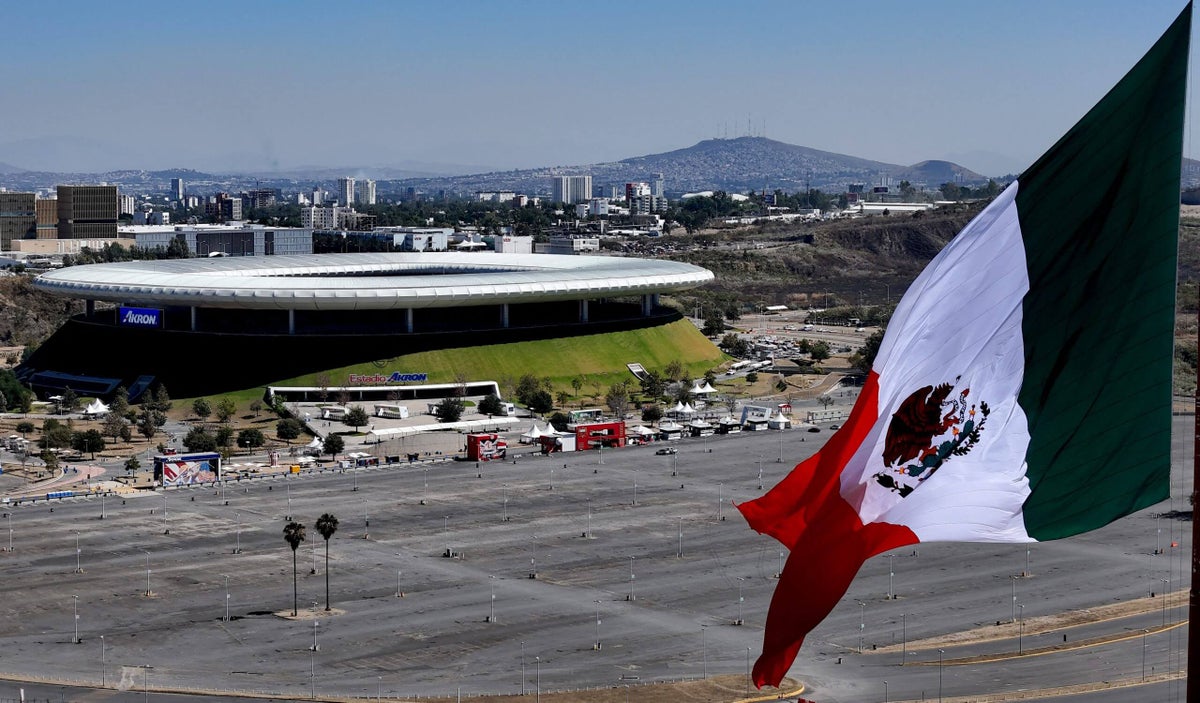
In one, Jamaica faces New Caledonia at Estadio Akron, with the winner advancing to meet the Democratic Republic of Congo five days later. In the other, Bolivia plays Suriname at Estadio BBVA, with the winner facing Iraq.
FIFA launched ticket sales for both on Tuesday morning, with all tickets to the semifinals priced at 200 Mexican pesos, which is roughly $11.30; and all tickets to the finals at 300 Mexican pesos, which is roughly $17.50.
The opening of sales was significant for two reasons.
First, it is the clearest signal yet that the playoff in Guadalajara will go ahead as planned. Concerns arose last week after the killing of Mexican drug lord Nemesio “El Mencho” Oseguera Cervantes triggered retaliatory violence in Guadalajara and surrounding areas of Jalisco state. But FIFA mostly quashed any suggestions that World Cup matches would have to be relocated. Order has largely been restored. With tickets on sale, the playoffs will almost certainly proceed as planned.
And the second piece of significance was the ticket prices.
FIFA, soccer’s global governing body, has drawn international condemnation throughout its 2026 World Cup ticketing process. Its initial prices — almost all hundreds of dollars, up to $6,730 for the top ticket to the final — were multiple times those at any previous World Cup. It then raised many prices in November and December, and only lowered a small proportion of supporter ticket prices amid backlash.
Its qualifying playoff ticket pricing is not necessarily a response to backlash. It is more just a different approach to a different event.
The playoffs are the first of their kind. Previously, intercontinental qualifying playoffs were normally contested as two-game, home-and-away series between two nations. These are the first with a semifinal and final at neutral sites.
It is therefore difficult to gauge demand. On one hand, they are high-stakes games attached to the World Cup brand. On the other hand, they are being held far away from all six participating countries; and all six teams have relatively little popular appeal. It’s unclear if they will be able to fill stadiums, the Estadio BBVA and Estadio Akron, that seat around 50,000.
The more affordable prices will help attract locals and also reward fans from the six countries who travel to Guadalajara or Monterrey for the occasion — rather than try to maximally exploit their interest.
Those from Suriname and New Caledonia will be hoping to see their nations clinch a World Cup berth for the first time. For Iraq, the DR Congo and Jamaica, it would be their second berth; and for Bolivia, it would be the second since 1950.
The tickets are available to anyone on FIFA’s website on a first-come-first-served basis, and all lumped in to one single category — rather than split into four categories or offered as a specific seat in a specific row and section. The process contrasts with the lotteries that have, to this point, defined the World Cup ticketing process.
As for those actual World Cup tickets, FIFA has said the next opportunity to purchase tickets on the primary market — as opposed to the resale market — will be a “last-minute sales phase” in April.
But it also launched an unexpected sales window last week, with tickets to at least 64 of the the tournament’s 104 games available. This led experts to believe that some matches — though not the marquee ones — have more tickets still available than FIFA’s public messaging has suggested.
The World Cup begins June 11, and will be played across 16 cities in Mexico, Canada and the U.S..