
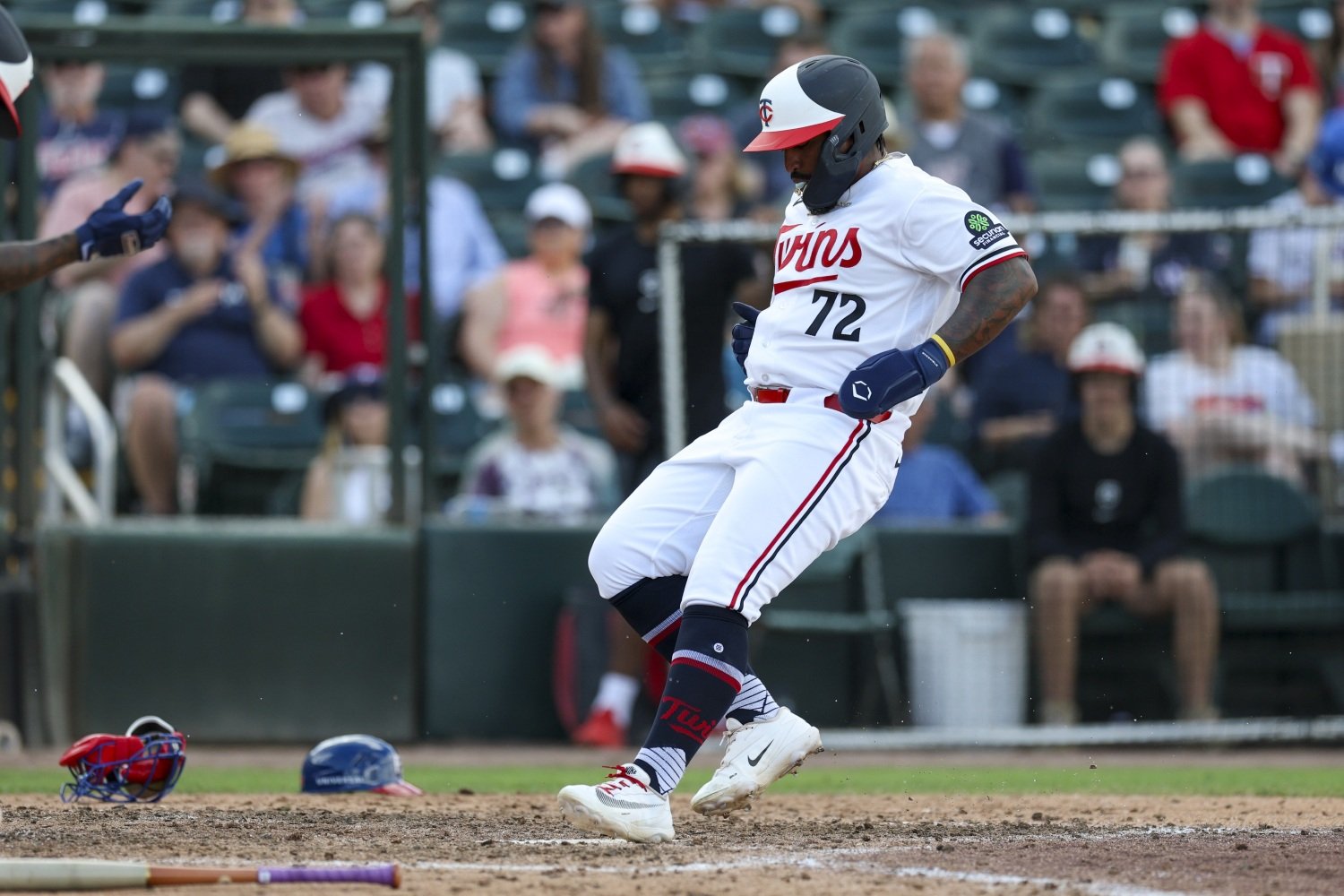
Acquired from the Seattle Mariners in the Jorge Polanco trade, Gabriel Gonzalez hasn’t generated quite the same level of buzz as some of the other young outfielders in the organization. But while most of the attention has centered on Walker Jenkins and Emmanuel Rodriguez, Gonzalez quietly put together a season that not only stacks up with both of theirs, but in some ways even surpasses their performance. His combination of contact ability, plate discipline, and athleticism makes him one of the most intriguing bats in the Twins’ upper minors heading into 2026.
Gabriel Gonzalez
Age: 21 (DOB: 01/04/2004)
Bats/Throws: R/R
2025 Stats (High-A, Double-A, Triple-A): 549 PA, .329/.395/.513, 38 2B, 3 3B, 15 HR, 8 SB
ETA: 2026
2025 Ranking: #20
National Top 100 Rankings
BP: NR | MLB: NR | ATH: NR | BA: NR | ESPN: NR
Gonzalez climbed from High-A to Triple-A as a 21-year-old, and never slowed down. He began the season at High-A, quickly establishing himself as one of the most consistent hitters in the system. His performance earned a promotion to Double-A, where he continued to hit at a high level, slashing .344/.429/.509 and proving he could handle more advanced pitching without letting his approach break down. By the time he reached Triple-A St. Paul, Gonzalez showed he could maintain his performance against older, more experienced arms, posting a .316 average across 148 plate appearances. It wasn’t a one-month hot streak; he was a consistently productive hitter from April through September.
What to Like
Gonzalez’s offensive profile is built on elite bat-to-ball skills, which carried him to standout results across three levels in 2025. He slashed .329/.395/.513, with 15 home runs and 56 extra-base hits in 123 games, showcasing a blend of contact ability and gap power. His 148 wRC+ in the minors underscores just how impactful he was offensively last season.
He consistently controlled the strike zone and attacked pitches in a way that created constant offensive pressure. Gonzalez struck out at just a 14.6% clip, while drawing enough walks to fuel his near-.400 on-base percentage. That combination of plate discipline and contact skills gives him a high floor as a hitter and makes him difficult to defend against.
What separates Gonzalez from many other prospects is how he handles adjustments. His smooth progression from High-A to Double-A to Triple-A shows a hitter who can adapt quickly to better competition, without letting results dictate approach. Even at Triple-A, where pitchers have better command and more advanced secondary stuff, Gonzalez continued to make consistent contact, barrel balls when appropriate, and put himself in a position to reach base.
Beyond his bat, Gonzalez adds value on the bases. While he isn’t known for his speed, he swiped eight bases in 2025 and has successfully stolen a base on 75% of his career attempts. He can put additional pressure on defenses with his baserunning and supplements his offensive skill set by creating extra opportunities to score.
Defensively, Gonzalez has the athleticism and arm strength to stick in a corner outfield spot long-term. While there’s still room for refinement in routes and consistency, his range and arm give him the tools to be an above-average defender. With his right-handed bat, he provides flexibility to the Twins’ outfield, especially in a system loaded with left-handed-hitting outfield prospects like Jenkins and Rodriguez.
What to Work On
There are reasons Gonzalez hasn’t cracked national Top 100 lists. He isn’t built like a traditional power-hitting corner outfielder, at 5-foot-11, and his batted-ball profile reflects that. His fly ball rate sits around 31%, naturally limiting his home run ceiling. He’s likely never going to be a 30-homer threat.
Triple-A data illustrates this concern. In a small sample of 109 balls in play, Gonzalez posted an average exit velocity of 87.6 MPH and a 33.9% hard-hit rate. Both figures would rank poorly when compared to major-league hitters. While he flashes raw power at times, it isn’t consistent enough yet. The next step offensively is generating more frequent hard contact, and perhaps lifting the ball slightly more to unlock additional extra-base damage. Even a modest uptick in average exit velocity would make evaluators view his overall profile more favorably.
What to Look For in 2026
All signs point to Jenkins, Rodriguez, and Gonzalez beginning 2026 together at Triple-A St. Paul, creating one of the most intriguing outfield storylines in the system. Jenkins and Rodriguez may carry higher upside, but Gonzalez’s 2025 production positions him as the most polished hitter of the trio. While expecting another .329 average might be ambitious, hovering around .300 is very realistic given his track record and bat-to-ball skills.
If he pairs that production with even a modest increase in hard contact, it will be difficult for the Twins to keep him in Triple-A for long. He’s hitting a whopping .500 (albeit in just 10 at-bats) this spring, and his average exit velocity on nine balls in play is 95.5 MPH. When call-ups inevitably begin, don’t be surprised if Gabriel Gonzalez forces the issue.
Interested in learning more about the Minnesota Twins’ top prospects? Check out our comprehensive top prospects list that includes up-to-date stats, articles and videos about every prospect, scouting reports, and more!