

In his two innings of work Wednesday against the Brewers in Maryvale, Jaxon Wiggins looked like a big-leaguer with front-of-the-rotation upside. He allowed just one baserunner (a walk) and struck out two. His fastball sat at 98 miles per hour and nearly touched 100. His hard slider (or cutter, depending on whom you ask) looked good, and his curveball continued to flash depth that makes it scary.
Perhaps most importantly, Wiggins showed the ability to fill up the strike zone with that fastball, which has not just velocity but plenty of carry and life on it. He got just three whiffs from a contact-oriented Brewers lineup, but he also delivered seven called strikes, including six on the heater. If he can throw enough strikes to limit walks and put hitters into two-strike counts, he’ll rack up plenty of strikeouts, even against teams who specialize in the avoidance of them.
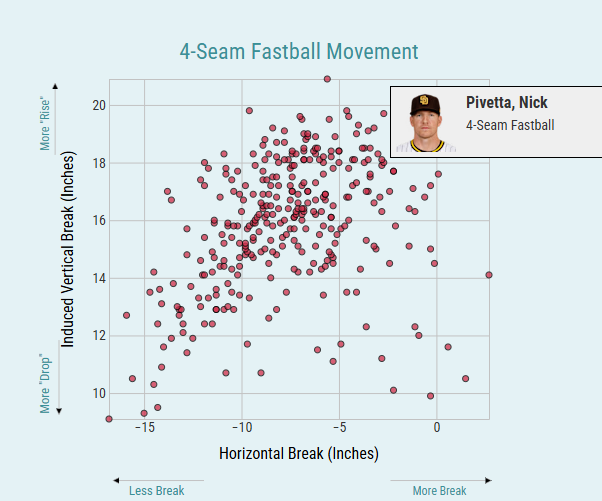
Wiggins’s easiest comp might be Nick Pivetta, of the Padres. Like Pivetta, he throws hard, with a high-rise heater, and like Pivetta, he has huge break on his curveball. To get a sense of how extreme Pivetta is in terms of pitch movement, consider this plot of pitchers who threw a qualifying number of four-seamers last year.
Now, contrast that with a plot of the movements of curveballs thrown by pitchers who fired enough of them to qualify.
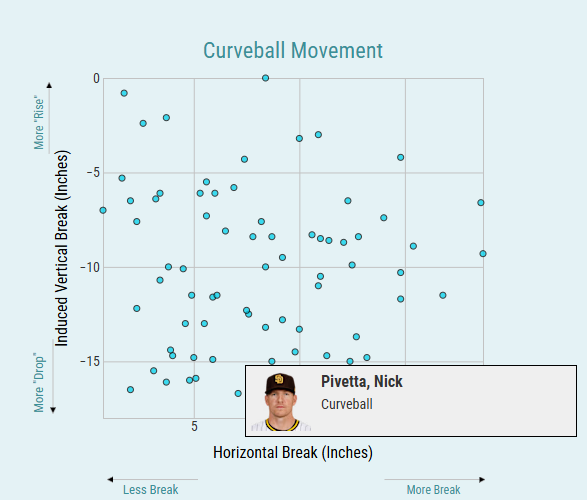
Stretching the vertical movement differential that way is good. It creates the chance to miss bats. However, Pivetta loses a little bit of the theoretical, in-a-vacuum value of his high-rise heat and big-breaking curve because he works from an extreme over-the-top angle. That makes his pitches’ vertical movement less deceptive—less unexpected—than it would be from even a slightly lower slot. As it happens, Wiggins pitches from that slightly lower slot.
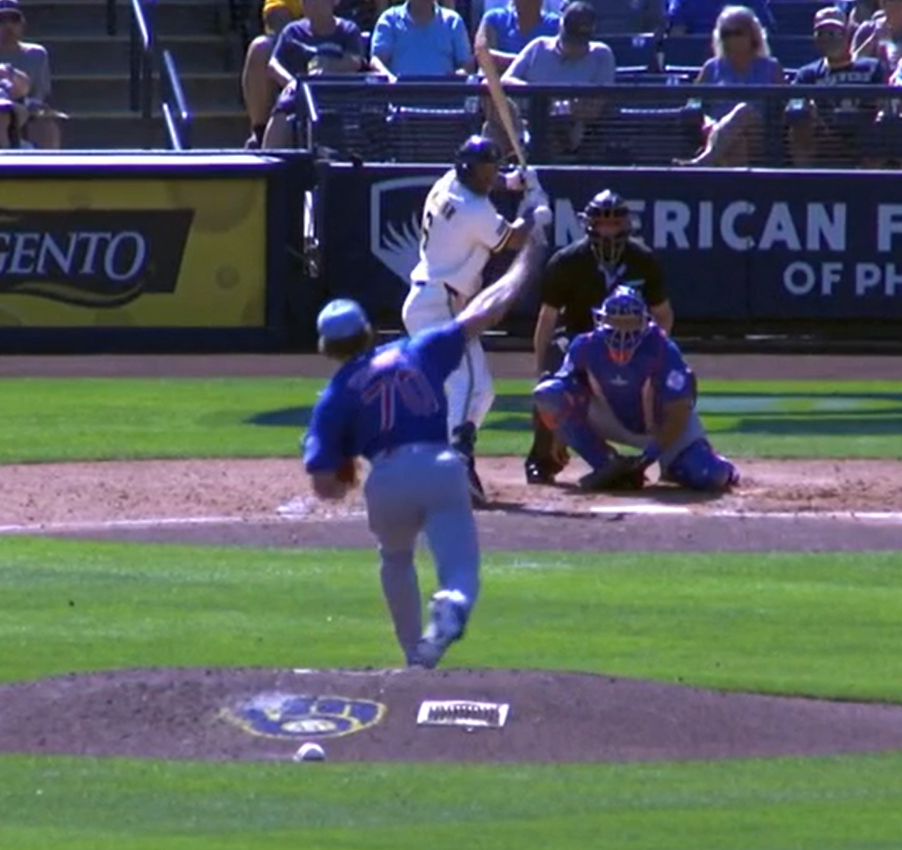
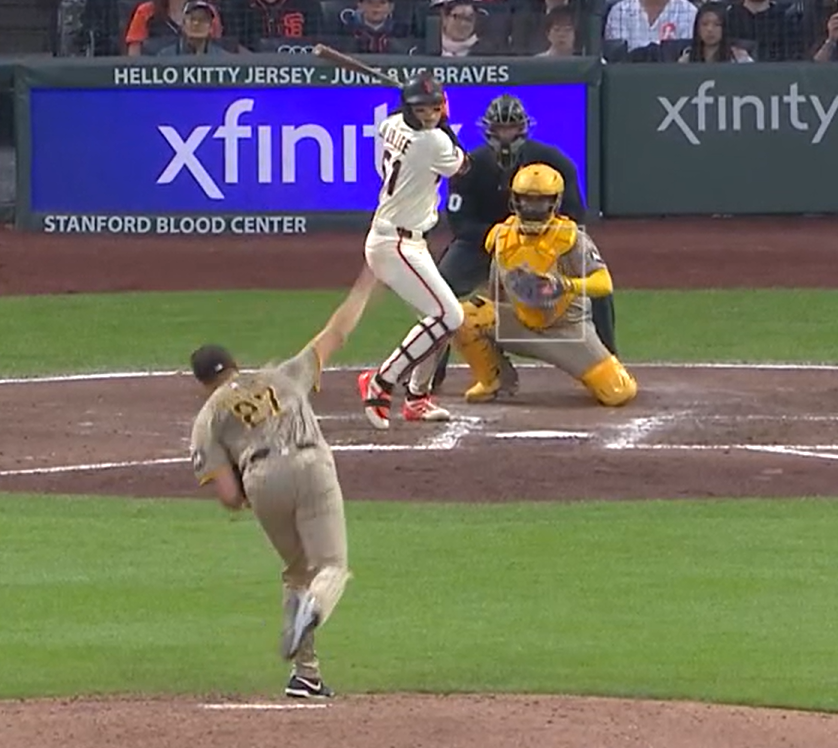
With just a hair less spine tilt and a slightly less exaggerated overhand action, Wiggins makes the interaction between his curveball and his fastball more deceptive than Pivetta’s. However, that’s not the only effect of that change in slot. There’s a cost to it, in that Wiggins’s fastball runs quite a bit more to his arm side than does Pivetta’s. The latter is a cut-ride shape, which allows Pivetta to keep it over the plate and to attack both sides of the zone with it when his command is good. Wiggins will always struggle to execute his four-seamer to the glove side, which introduces a limitation.
However, there are also benefits of that lower slot that go beyond the ride on the fastball being more surprising to the hitter. Wiggins’s second pitch isn’t the curve; that’s his third or fourth option. Rather, he leans hard on his hard slider or cutter, and that pitch works better because he doesn’t come so completely over the top that he’s locked into only vertical movement separation.
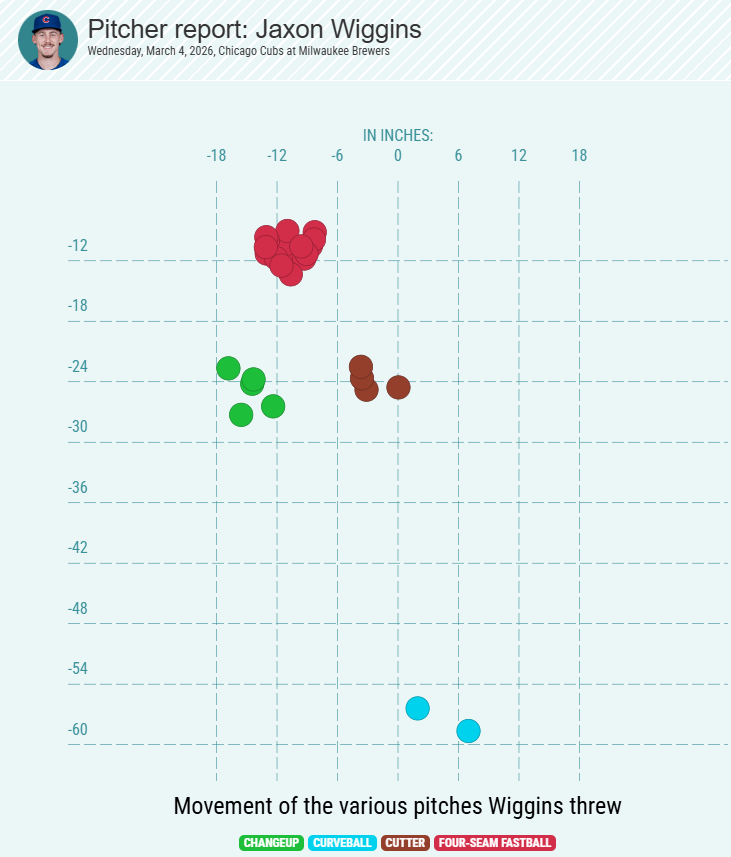
That changeup is also unlocked by not having such a high arm angle. Wiggins is never going to have Pivetta-caliber cut on his heater, let alone anything like what teammate Cade Horton does with his power cutter/four-seamer. However, like Horton (and unlike Pivetta), Wiggins has the makings of four good pitches that each hit one cardinal direction on the movement compass. His arm slot permits that vicious four-seamer to set up both breaking balls and the changeup.
That’s not to suggest, however, that he’s ready to show up in the majors and have Horton-like success. To his credit, he’s taken the critical first step in controlling his arsenal, by learning to throw his fastball for strikes. He can locate the slider/cutter well enough to get outs, too. However, both his change and his curve are wildly inconsistent. He doesn’t know how to change his targets on those offerings, or even to consistently attack any one quadrant with them. He’s at least two big developmental mile markers from Horton Territory:
Throwing those two pitches for strikes with life, forcing hitters to honor them; and
Learning to consistently throw strike-to-ball versions of them that induce chases for weak contact and whiffs, as well as the versions that land in the zone and compel the hitter to prepare themselves to swing.
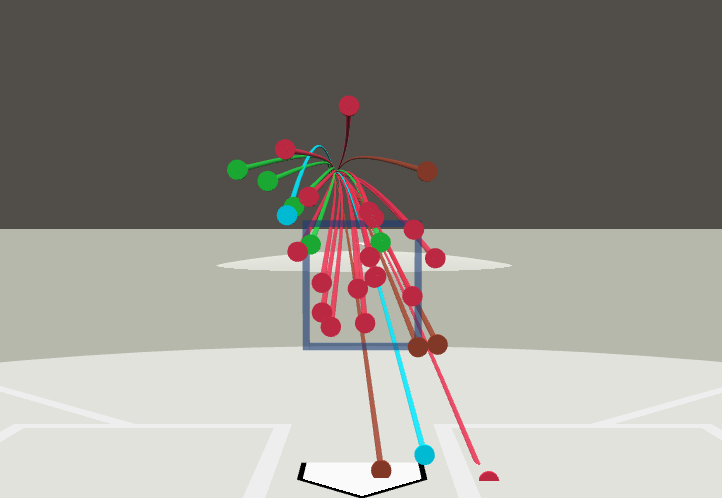
On a remarkably talented pitcher’s developmental checklist, these items can get checked off surprisingly quickly. Wiggins might be doing all of this well enough to come up and dominate within a few months. Right now, though, he’s merely tantalizing. The chance to rapidly become an ace is there, but the current reality is a long way from that hoped-for eventuality. Wednesday was a lovely glimpse of what’s to come, but also a reminder that it’s not yet here.