
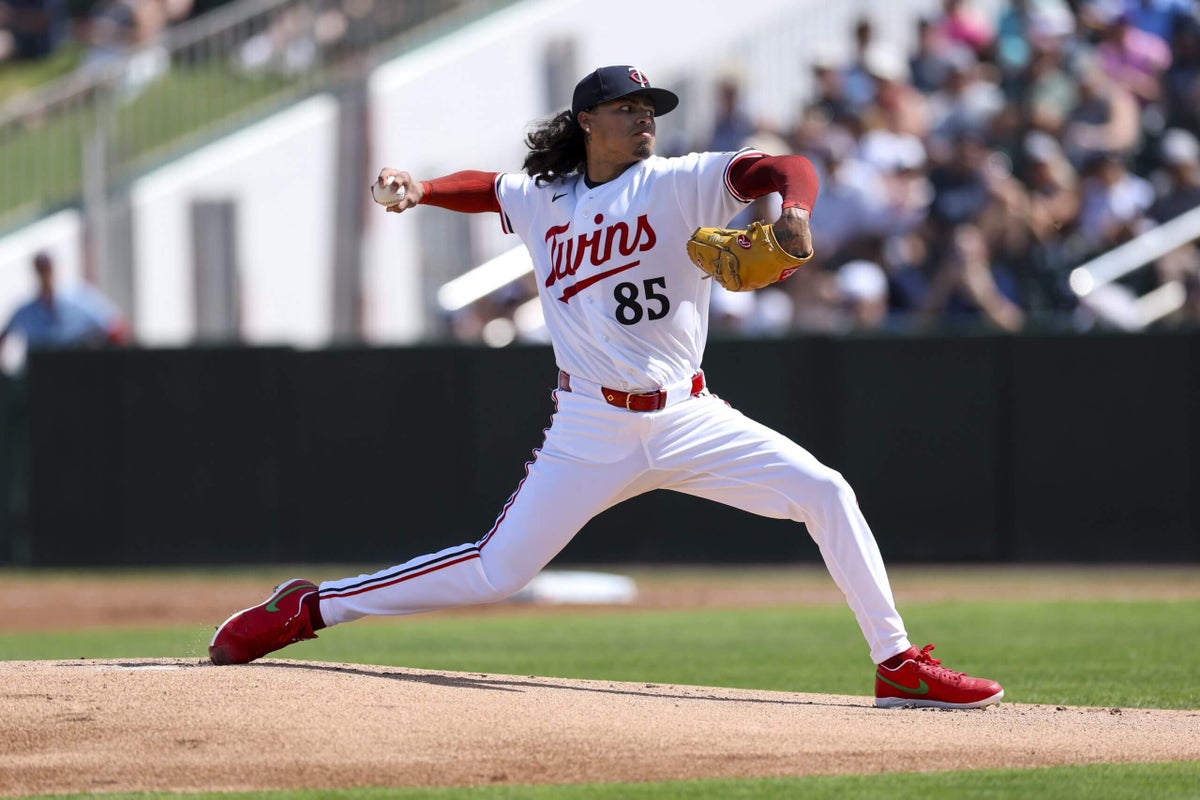
FORT MYERS, Fla. — Pitching in relief late last season provided Marco Raya with a sense of how an attack-first mentality is critical to the role. The experience also showed the Minnesota Twins rookie how his body would handle the physical side of that adjustment.
But one aspect of relieving that only comes with time and experience is learning how to get over a bullpen blowup and be ready to pitch the next day.
A starter his entire career, Raya converted to relief at Triple A late last season and was informed he’ll be a reliever this year.
Regardless of where he starts the season, the Twins want Raya to glean as much knowledge as he can from veteran teammates this spring. The club believes the four veterans acquired late in the offseason can only be a positive influence on Raya, 23, and other young pitchers, such as John Klein and Connor Prielipp, both of whom are being built up as starters.
“There is no better coaching that will happen than player-to-player or peer-to-peer,” Twins manager Derek Shelton said. “I love the fact that they’ve all pitched in big games and they pitched in the ninth inning, they pitched in high-leverage on really good teams, championship teams, World Series teams. But yeah, I love the personalities. I love the banter.”
As the start of camp neared, the Twins had no true late-game relief experience. They hadn’t recovered from a July sell-off that resulted in the trades of five back-end relievers.
But beginning with the Jan. 23 signing of former Twins closer Taylor Rogers, the club acquired four pitchers over 22 days who are adept at pitching in high-leverage situations.
On Feb. 12, the Twins signed two-time reliever of the year Liam Hendriks and traded for Anthony Banda, who made eight World Series appearances the past two years. Two days later, the Twins signed Andrew Chafin, who’s posted a 3.03 ERA over the past five seasons pitching in high-leverage situations.
Rogers emphasized to Shelton he’d coach younger teammates as long as it felt natural.
“I’m open to whatever they’re looking for,” Rogers said. “I don’t think the person coming in saying they’re going to lead is the leader. That comes over time and is developed. If it develops that way, great, but I don’t think you just show up and say you’re going to be the guy.”
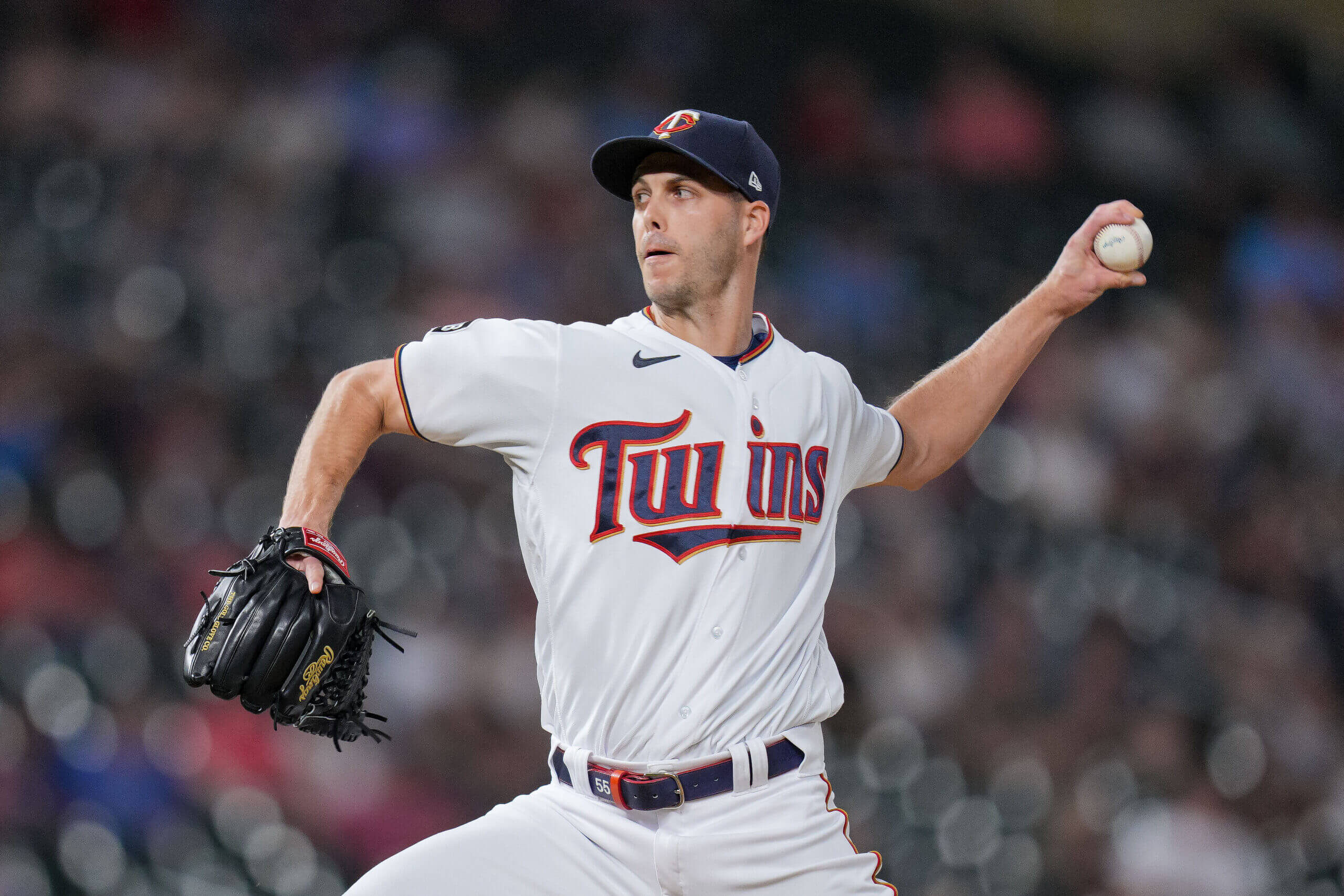
Taylor Rogers is back with the Twins and ready to help his young teammates. (Brad Rempel / Imagn Images)
Chafin also said he’d pick his spots carefully.
“I try to pull them to the side as much as I can, ‘Hey, do you want me to tell you what I see and what I can do to help you?’” Chafin said. “If they say yes, then I help them. If they say no, then well, whatever. I don’t give a s—, it’s your career. There are so many things that I’ve learned throughout the years that if I would’ve known that coming into this s—, oh my goodness, things would’ve been a little bit less stressful.”
Having never pitched more than 97 2/3 innings in a season over his first three years, Raya suspected the Twins always viewed him as a reliever. After July’s trades, Raya was not surprised when the Twins asked him to convert to the bullpen.
“I had an idea,” Raya said. “I was open to it. … When they advised me I was moving to the ‘pen, I said, ‘Let’s run with it.’”
Raya’s biggest hurdle to reaching the majors is his control. He averaged 9.6 strikeouts per nine innings in his minor-league career, but also produced 4.1 walks per nine. The hope is that Raya’s good repertoire plays up in the bullpen and he attacks hitters more aggressively.
That didn’t immediately happen in 2025. Raya’s walks jumped a tick in relief.
After a rough bullpen debut July 25 and three more starts, Raya permanently moved into relief Aug. 21. He showed slight improvement, posting a 4.90 ERA in his final 18 1/3 innings versus a 6.27 ERA in the previous 80 1/3 innings.
Working on a three-day schedule, Raya also started tinkering with new routines. He’s still trying to figure out the strategic differences between starting and relief, and how to prepare more quickly for an outing.
“You get one or two minutes and just come in and be ready when you step on that rubber,” Raya said. “I’ve been working on that and getting that intensity a little higher. … Just routines and body movements on the mound, all the detail work.”
Raya likes how his body responded to throwing more frequently. He also recognizes his inexperience and the value of conversations with experienced relievers.
“At first, I didn’t have too much of an idea,” Raya said. “Guys like Banda, Hendriks and Chafin that have been doing it for a long time, it’s fun to pick their brain and see how they go about their routine. There’s so much knowledge in this clubhouse.”
Banda likes working with Raya, who grew up in Laredo, Texas, about 150 miles inland from the veteran’s hometown of Corpus Christi. He enjoys the pitcher’s personality and the way Raya can spin a ball.
“There’s a lot to like about him,” Banda said. “You see talent like that and what’s the issue? Maybe overthrowing, putting a little too much pressure on himself. That’s what spring is for. … It’s getting the wrinkles out.”
The first two outings of Raya’s spring couldn’t have gone better as he attacked the zone and struck out four batters over two scoreless innings against the Minnesota Golden Gophers and Detroit Tigers.
But Raya’s third outing last Friday went poorly.
The first of four walks issued against the New York Yankees was the result of overthrown fastballs and a full-count pitch clock violation. Raya didn’t survive the inning, allowing five runs while recording one out.
“You learn how to flush it,” Banda said. “You take that and learn from it. You apply it to your work and you just get back to work. Everybody has an off day. Everybody gets their butt kicked in this game. Learn what happened.”
Raya appeared to apply the lesson before his next outing, a Wednesday appearance against Team Puerto Rico.
Three batters in, the game appeared to speed up on Raya after an infielder’s throwing error and a hit batter brought pitching coach Pete Maki to the mound for a lengthy conversation. But Raya quickly recovered, inducing an inning-ending double play only four pitches later.
Raya’s response is what Banda hoped for as the young reliever adjusts to the daily grind of the bullpen.
“You’re trying to make an impression, trying to make the team,” Banda said. “I 100 percent get it. The thing is, you have to take it one day at a time. This could be an eye-opener to what’s really sticking out. You shift the focus from a (rough) game like that to where you’re at. You know you have a game every single day. If you get your butt kicked, process it and flush it because you have to be ready for the next day when your name is called again.”