
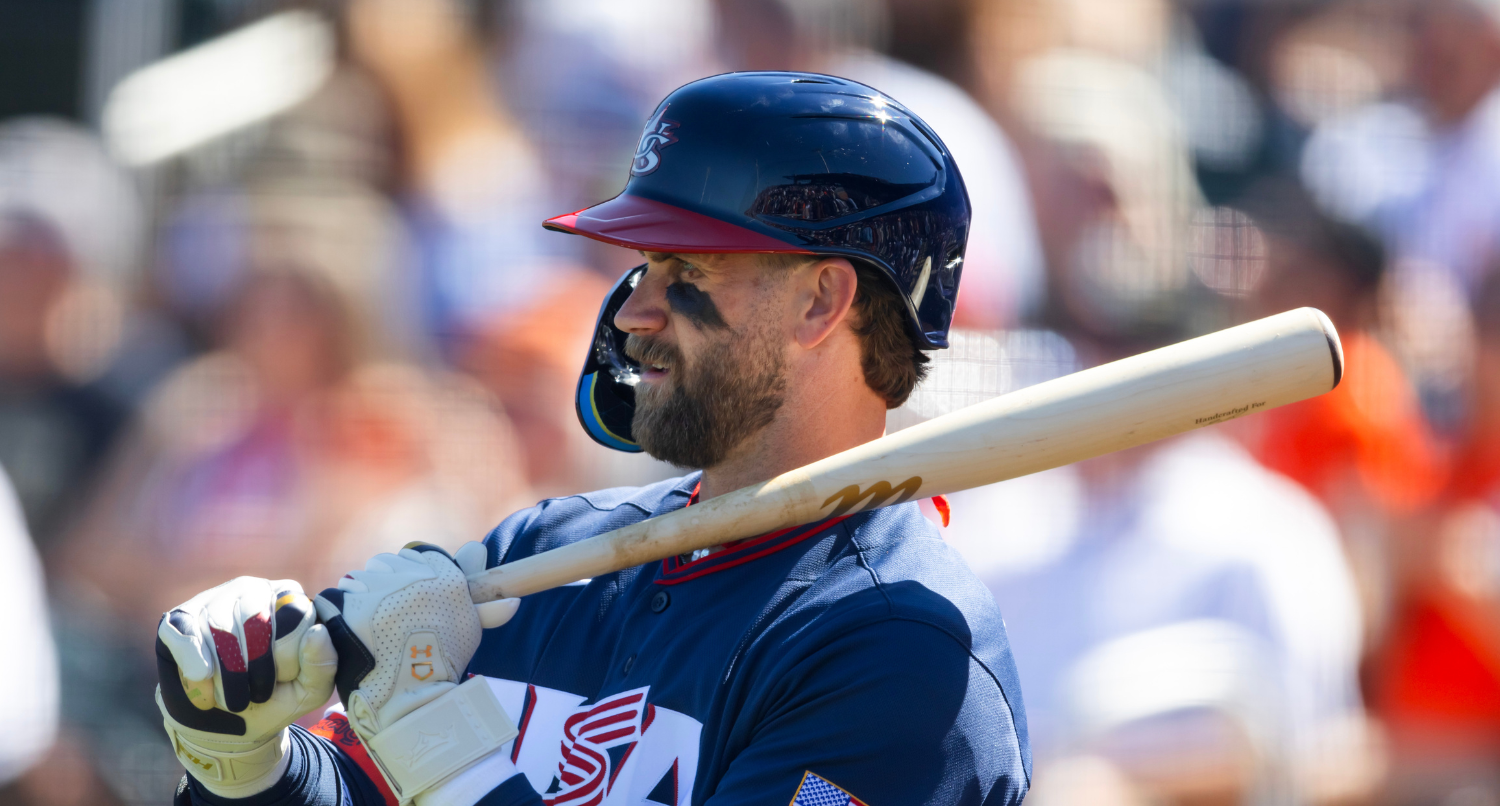
Bryce Harper wants to play in the 2028 Olympics.
He’s been fighting for it his whole career, he said recently, and with the Los Angeles Games less than two and a half years away, he’s hoping MLB and the players’ union can reach an agreement that allows the best players in the world to compete for gold medals on home soil.
“I’ve been fighting for LA28 for a long time,” Harper said. “I think my whole career I’ve been trying to get something started or something coming up. Obviously, the WBC has been great, but it’s not the Olympics, right? That’s no disrespect to the WBC or anything, but everybody knows that when the Olympics are on, everybody’s watching. It doesn’t matter what sport it is; it could be the most random sport, and it’s got all the fans watching it.”
Bryce Harper: “The WBC’s been great, but it’s not the Olympics… It’s no disrespect to WBC or anything, but everybody knows that when the Olympics are on, everybody’s watching… I’m hoping LA28 happens…” ⚾️🎙️🇺🇸🌎 #WBC #MLB
(via @JeffSkversky) pic.twitter.com/do4KvrGKwN
— Awful Announcing (@awfulannouncing) March 7, 2026
MLB commissioner Rob Manfred opened the door last July to allowing MLB players to participate in the 2028 Olympics, But the obvious problem — and one the NHL faced prior to the 2026 Winter Olympics — is that the Summer Olympics fall during baseball’s regular season, which is why MLB didn’t allow participation from anyone on a 40-man roster when baseball was contested at the 2024 Paris Olympics.
The league clearly sees an opening to extend its All-Star break to accommodate Olympic participation, but actually making that happen requires agreement from team owners and the players’ union in the next collective bargaining agreement. The current CBA expires after the 2026 season, with many forecasting a lockout when it does.
“I’m hoping LA28 happens,” Harper said. “I’m hoping the next CBA agreement something can happen where teams and players can come to an agreement on taking that two-week break, especially being in our home country. It would be great for baseball. You talk about growing the game, and being able to grow it at the highest level would help out tremendously.”
The World Baseball Classic will, by all accounts, be another great success, but does it have the global platform or cultural reach of the Olympics? The WBC still operates in the shadow of March Madness and doesn’t command attention outside dedicated baseball fans and in countries like Japan, Puerto Rico, and the Dominican Republic, where baseball is a cultural force. The Olympics are different. Harper’s right that when the Olympics are on, everybody watches, regardless of the sport. The recent Milan Cortina Winter Olympics proved that again, with massive viewership for everything from figure skating to hockey to curling.
People who have never watched a luge race in their lives will stay up until 2 a.m. to watch someone slide down an ice track on a glorified cafeteria tray. That’s the scale of the Olympic platform. That’s the audience baseball would be playing for in LA 28 — not just the diehards who know Harper’s career slash line — but the casual fans who barely recognize his name.
The WBC has proven that people will watch meaningful international baseball. But the WBC happens in March, when baseball is competing for attention. The Olympics happen in July, when baseball owns the calendar but has never figured out how to own the moment.
Harper will be 36 years old when the LA Olympics begin, almost certainly in the final years of his career, still chasing the one thing baseball won’t let him have. Whether the sport gives it to him depends on whether the people running baseball can recognize that this opportunity might not come around again.