
1890
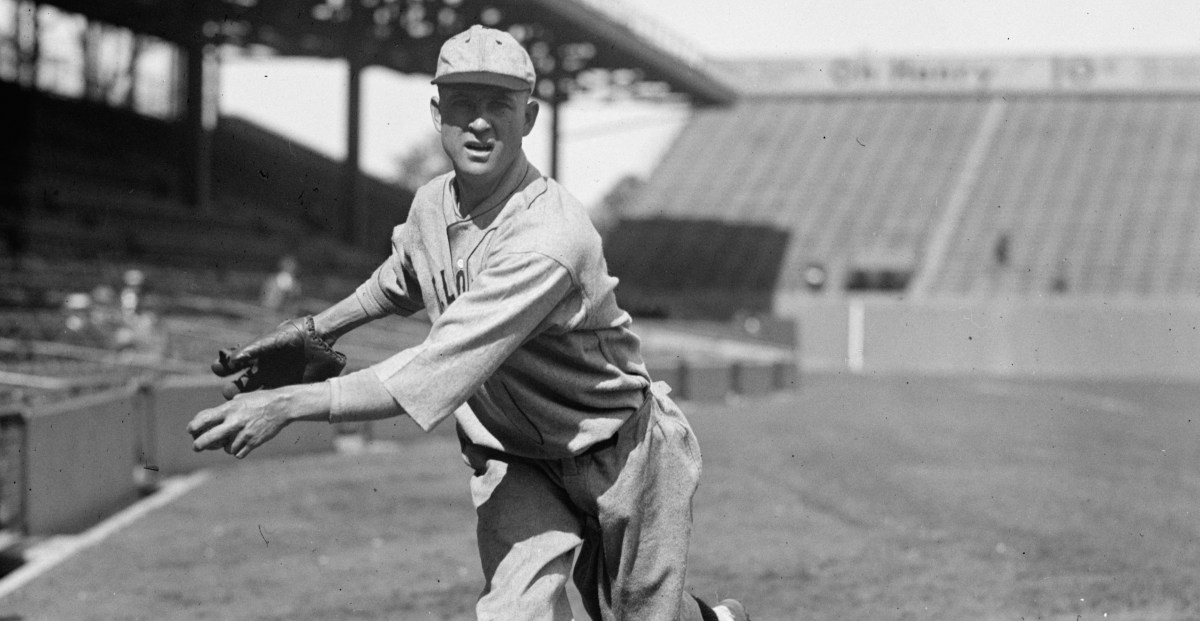
Pioneering reliever and spitballer Dave Danforth was born, in Granger, Texas.
A relative rarity as a college-educated (Baylor University) player in the 1910s, Danforth was signed by the A’s in 1911, and while bouncing back and forth between Philadelphia and minor-league Baltimore, Danforth completed a dentistry degree at the University of Maryland.
After two years as a non-practicing dentist/Louisville Colonels minor league hurler in 1914-15, the White Sox signed Danforth for the 1916 season. He made a legendary mark in the bullpen in Chicago’s storied 1917 season: The southpaw led the AL with 50 appearances and all of the majors with 26 finishes and nine saves (he also started nine games, one of them a complete-game shutout). All that added to a value of 3.3 WAR, which still ranks tied for 13th-best in franchise annals.
Oddly though, that was the only one of his four White Sox seasons yielding positive WAR. Manager Kid Gleason hoped to move Danforth into the starting rotation in 1919, but he was crushed for five earned runs in the first inning of his season debut and was shelled in long relief his next game out; he saw only 13 games from there, and no action after July.
The White Sox apparently released Danforth after his -2.9 WAR season in 1919. He made it back to the majors with the Browns, stitching together a strong final four MLB seasons in more of a swingman role, earning 9.3 WAR with St. Louis.
Nicknamed Dauntless Dave for his ability to manage arm pain, Danforth returned to the minors to pitch in seven more seasons, to age 42. After ending his baseball career, Dr. Danforth practiced dentistry in Baltimore until retirement.
1903
Future White Sox coach and manager Kid Gleason was involved in the first intraleague (American-National) league trade ever, after the 1902 peace treaty is struck. Second baseman Gleason went from the Detroit Tigers to New York Giants, in exchange for second baseman-manager Heinie Smith. New York flipped Gleason to Philadelphia, where he was a regular for four more years, until the age of 40.
Gleason coached for the Phillies upon retirement, then had two stints with the White Sox (1912-14, 1916-17). He managed the club from 1919-23, having the unfortunate timing of being a rookie manager overseeing the Black Sox scandal.
Coincidentally, 21 years after this trade and just five after the Black Sox scandal, the manager of the Cincinnati Reds club that upended the White Sox in 1919, Pat Moran, died from Bright’s disease, at the age of 48 and while still Cincinnati’s active manager.
1953
The White Sox brought back pitcher Earl Harrist for a second tour on the South Side, and it turned out to be significantly less successful than his first.
Harrist had a mildly-successful season back in 1947, pitching to a 3.56 ERA (103 ERA+), going 3-8 but earning five saves. He was traded to Washington during the 1948 season.
After then moving to the Yankees and Browns organizations, the White Sox bought Harrist from St. Louis with the intent of using him late in games (he’d matched his 1947 career high of five saves with the Browns in 1952). However, Harrist was simply awful this time around with the White Sox, ballooning to a 7.56 ERA in just seven appearances before the club cut him loose on May 23.
Detroit grabbed him and gave Harrist another eight games, but despite laboring until 1958 in the minors, the righty would never see the major leagues again.
1959
Bill Veeck and his partners (including Hall-of-Famer Hank Greenberg), officially announced they had bought the White Sox. Veeck owned 54% of the team, with Chuck Comiskey retaining his 46%.
At the introductory press conference, Veeck jokingly told the media that “you can have 54% of the coffee!”
It was remarkable timing for the new owners, who steered the White Sox to their first AL pennant in 40 years, finishing 94-60-2.
2011
The Arizona Diamondbacks hosted the White Sox in their old spring training ballpark (Kino Veterans Memorial Stadium in Tucson), with the proceeds benefiting a fund in memory of Christina Taylor Green, the granddaughter of baseball executive Dallas Green. Christina was one of six murdered in a shooting spree on January 8, at a town hall meeting with U.S. Representative Gabrielle Giffords at a supermarket near Tucson.
The young Green, born on Sept. 11, 2001, was a Little League player (following the footsteps of her minor league pitcher father and ex-MLB pitcher grandpa) and a student leader. She was at the Giffords gathering to observe government in action.
The result of the game hardly mattered, but the White Sox won, 12-1, with Edwin Jackson earning the decision.