
Welcome to the big leagues, Tony Vitello.
We do things a little differently up here.
As the Giants wind down camp in Scottsdale and barrel toward Opening Day, the new skipper is about to get a crash course in Major League Baseball’s front-office bureaucracy.
The 26-man roster that runs onto the grass at Oracle Park on March 25 isn’t Vitello’s final call.
That heavy responsibility lies squarely on the shoulders of Buster Posey and Zack Minasian.
But you better believe the front office is going to pull the new manager aside and ask for his input. When they do, Vitello has a golden opportunity to set a defining, uncompromising tone for his tenure.
He should ignore the spreadsheets, completely bypass the hand-wringing over minor-league options, and simply advocate for the absolute best players to be on his big-league team. Age, pedigree, and contract status be damned.
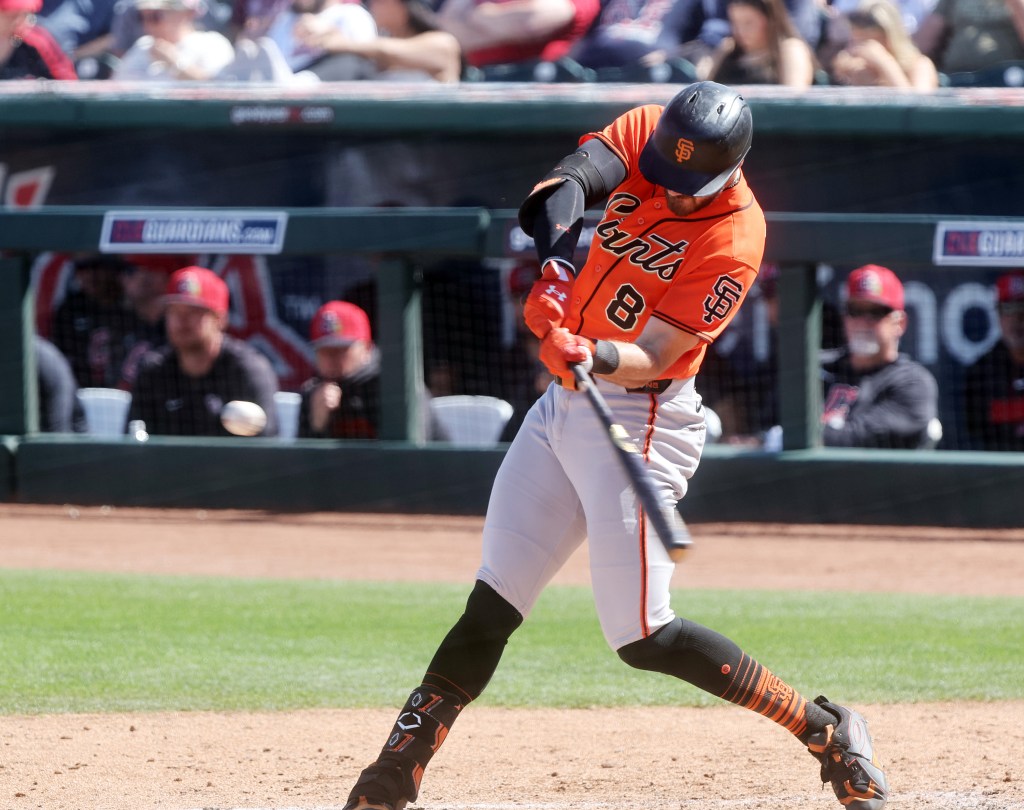
This isn’t to say Eldridge is a guaranteed superstar from Day 1, or that he’s a completely flawless selection. But look at what he’s doing. Going into Thursday’s Cactus League game, the kid is slashing .259/.412/.556. Yes, that comes with an uncomfortable 32 percent strikeout rate, but the raw offensive upside is undeniable. When you stack those numbers up against a guy like Jerar Encarnación — who is sitting on exactly zero walks and a pedestrian .412 slugging percentage this spring — it seems incredibly obvious that the kid is the right choice to be the opening day designated hitter.
But this is modern baseball, where front offices treat “optionality” like a religion.
What, you thought that was gone with Farhan?
The catch is that Eldridge has minor-league options. Encarnación does not. Neither does Luis Matos. So, the path of least resistance for the front office is to stash the promising kid in Sacramento, hold onto the out-of-options veterans, and comfortably avoid making a tough, decisive move until the more seasoned players fail. They might be able to get them through waivers in a couple weeks.
It’s an agonizingly safe way to run a baseball team.
Things can flip. Encarnación or Matos could play well enough to demand a roster spot. Eldridge could, in turn, do nothing but strike out between now and the Giants’ final day in Arizona next week.
But right now, under the criteria of “best player for the team”, Eldridge has to be on this big-league roster.
He’s not just hitting the ball; he’s absolutely obliterating it with exit velocities that put Brandon Aiyuk’s drives in front of Levi’s Stadium to shame. His glove has been better than expected at first. His left-handed swing has stood up against left-handed pitching.
He’s shown (so far) that he’s ready for the challenge of the big leagues.
Bat him seventh or eighth, and the Giants’ lineup goes from pretty good to one of immense potential. Sorry, but Encarnación or Matos can’t make that claim.
There are front-office arguments for leaving Eldridge in Sacramento to start the year, but baseball ones?
As of right now, I’m not hearing them.
Alas, those front-office arguments so often win out.
Perhaps this is why so few Giants spring training games are televised — so we can’t lay eyes on the team and see the preposterousness of ruling by spreadsheet.
Look behind the plate. Daniel Susac is probably the best option to back up Patrick Bailey to start this season. But he was always the favorite to win the job because he’s a Rule 5 draft pick, meaning if he doesn’t make the big-league roster, the Giants will be forced to send him packing right back to the Athletics (wherever they might be).
And don’t even start me with the bullpen construction.
The Giants open the 2026 season against the Yankees in less than two weeks. It’s Opening Night, under the lights, with the whole world watching on Netflix. (Nope, it still doesn’t sound right.)
The fundamental question Posey, Minasian, and Vitello need to answer right now is simple: Will they put the best team they can possibly assemble on the field to face Aaron Judge & Co., or will they field the team that best avoids conflict and gives the front office more “optionality”?
Can this franchise honestly afford to keep playing that game?
Because it seems obvious to me that the Giants — whether you look at their best-case or worst-case scenarios — are going to be playing a whole lot of tight, low-margin baseball games this season. Turning just four or five of those tight games from narrow losses into hard-fought wins could fundamentally change the entire campaign. You don’t win those games by stashing your most dangerous bat — someone who can fundamentally change the bottom of the team’s lineup — in Triple-A to manipulate the waiver wire under the guise of strikeout abatement.
There are zero guarantees in this crazy sport.
But here’s one from me: Getting cute won’t work for the Giants.