
They’re sometimes throwing against minor leaguers in a split-squad game. They’re not stretched out to five innings yet. They might be working on an inferior pitch. They might be veterans with a spot safely secured on a pitching staff who just don’t care that much about results right now. There are all sorts of reasons to question any spring training pitching statistics.
And yet, they’re still throwing, at least semi-competitively. They’re still showing us new pitches or new shapes or new pitch mixes. Some of these pitchers impressing in the spring are actually in the midst of what will be a breakout season. There is some signal from spring data, especially when you look at the way the pitches move through space. That carries over to the regular season pretty well, even if velocity might change as pitchers stretch out further.
With that in mind, here are the top 15 starters with at least 100 pitches thrown this spring so far, ranked by Stuff+, which judges pitches by their physical qualities alone.
Top Spring Starters by Stuff+
PlayerPitchesS+L+P+
131
123
114
138
130
119
91
109
115
119
111
126
132
118
122
132
155
118
124
135
100
117
121
136
123
116
106
116
120
116
96
111
108
116
117
124
149
115
117
130
That’s a surprise at the top of the list! Los Angeles Angels right-hander Walbert Ureña sits 99 with his sinker and reminds some people in Angels camp of José Soriano, but the 22-year-old had only a tiny taste of Triple A last year and could work on adding more swing and miss to his elite ground-ball profile. There are also clearly at least a couple veteran pitchers who are just feeling froggy in shorter outings on here — Chris Sale, as an example, hasn’t changed much in his arsenal.
But there are also a few pitchers on this list, as well as other pitchers who have made significant improvements this spring, who deserve more attention.
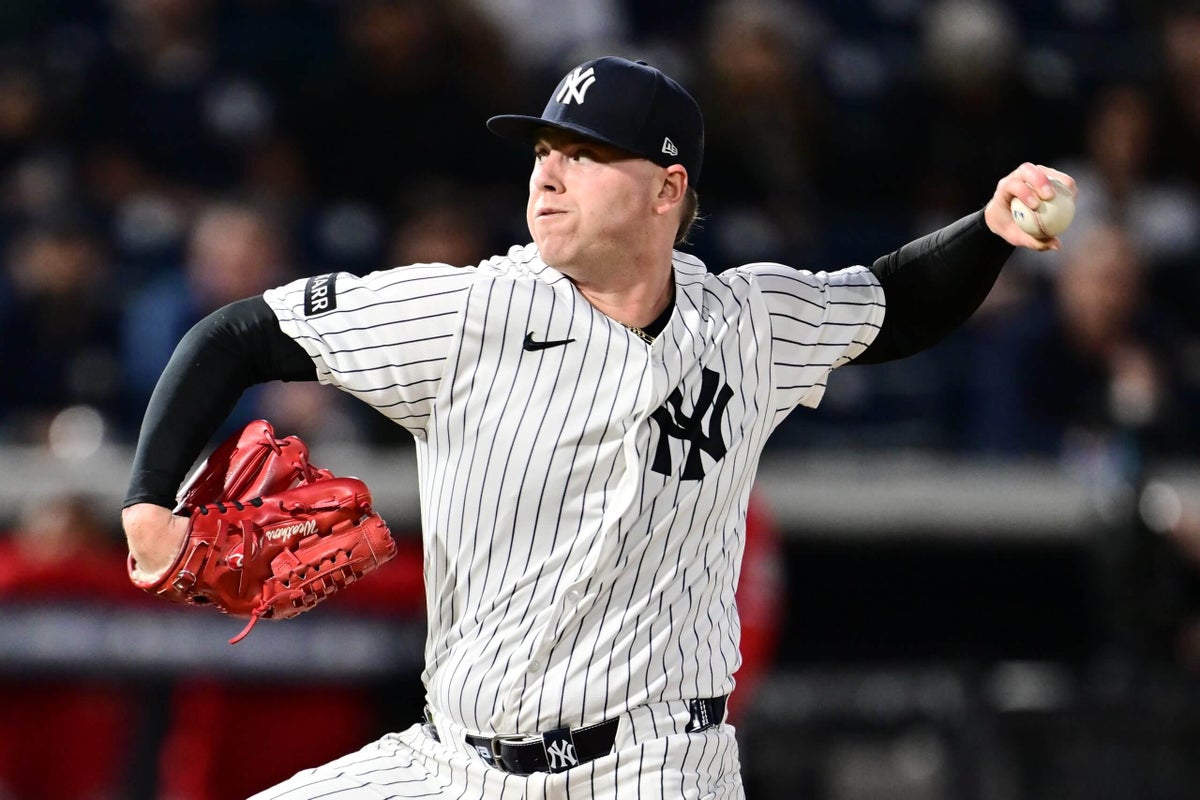
Ryan Weathers, LHP, New York Yankees
Since Weathers came up with the Padres and until this moment in spring with the Yankees, he has changed so much as to be nearly unrecognizable in his current form.
He’s:
Added more than 4 mph on the four-seamer
Added an inch of ride to the four-seamer
Added 3 mph to the sinker
Added three inches of glove-side movement to the sinker
Added 3 mph to the slider
Added three and a half inches of drop to the slider
Added an 85 mph sweeper
Added 2 mph to the changeup
Added 10 inches of drop to the changeup
That’s intense. His first spring outing got everyone’s attention, but his second outing wasn’t as good by results. Still, this spring his strikeout and walk rates are pristine, his ground-ball rate is through the roof, and his arsenal looks optimized for success. He has a terrible injury history and hasn’t topped 100 innings since 2023, but for now he’s soaring up rankings lists.
Clay Holmes, RHP, New York Mets
There are the physical aspects of Holmes’ pitches that have improved this spring, that’s one thing. He’s added more fade and drop on his sinker, another six-plus inches of drop on his changeup, and has made his sweeper more of a frisbee with less drop. All of these things contribute to his pitches scoring better by Stuff+.
They should really work well in tandem, especially since he’s added a curveball. Now he can play the deeper curveball off the frisbee sweeper or throw the harder slider — that’s three breaking balls that might look similar out of the hand and do completely different things thereafter. The curveball looks like it will work better against lefties than the sweeper, so he’s improved against lefties, at least theoretically.
But then there’s another wrinkle that Holmes is throwing at batters that could really ramp up the deception. Generally, he’s moved closer to the first base side of the rubber to alter the way the pitches are coming into the plate. It’s made his sinker seem more severe at the very least. And now he’s playing with his place on the rubber. From pitch to pitch.
Here, Holmes moves right-ward on the rubber and then throws the same pitch again to the same batter. That has to be confusing to the hitter. Adding some deception to his increased stuff could let Holmes take a real step forward in his second year as a starter, and he was already pretty decent last year.
Mike Burrows, RHP, Houston Astros
One of the revelations from Stuff+ research was how important release point was to the outcomes for pitches. Basically, pitchers need to surprise hitters by showing them shapes that aren’t predicted by their arm angle. Now, we’re seeing the average arm angle drop, year to year. Maybe those things are linked. Because Burrows, like Holmes, moved on the rubber (more towards third base, in his case) and also dropped his arm angle a little.
That has helped his four-seamer and curveball play up, with both up above average in Stuff+ for the first time in his career. Nobody this spring has a hit off of either pitch. Even if the fastball is being devalued across baseball, that’s a good sign. His most-used pitch is better. The new arm angle has possibly devalued his changeup, which is down by Stuff+, but that might still be a good trade-off.
Overall, the new arm slot could be a positive for Burrows, as it improves two of his worst pitches into positives. This kind of process is why — as a fantasy player, fan or baseball executive — you might be more intrigued with pitchers with many pitch types. There are more pathways to success this way.
Hunter Barco, LHP, Pittsburgh Pirates
Speaking of having a lot of pitch types, Hunter Barco has completely revamped his arsenal by adding three new pitches this spring.
New is the sweeper. It may not get the most sweep out there (only 10 inches), but that’s eight inches more than his other slider and definitively a different look. Even after the Stuff+ revision tamped down the numbers on sweepers, it’s a pitch that does well in that model.
New is the changeup. Barco already threw a splitter, but this new changeup has 13 more inches of fade than his split-finger and hums along a couple ticks harder. The newest trend in baseball might just be pitchers with multiple changeups. Credit Paul Skenes.
New is the sinker. This one might not make it to Opening Day because it’s being hit pretty hard right now and Stuff+ doesn’t love it. Regardless, having multiple fastballs is still a good trick to pull, so even if he ramps down the usage during the regular season, it’ll be a good wrinkle.
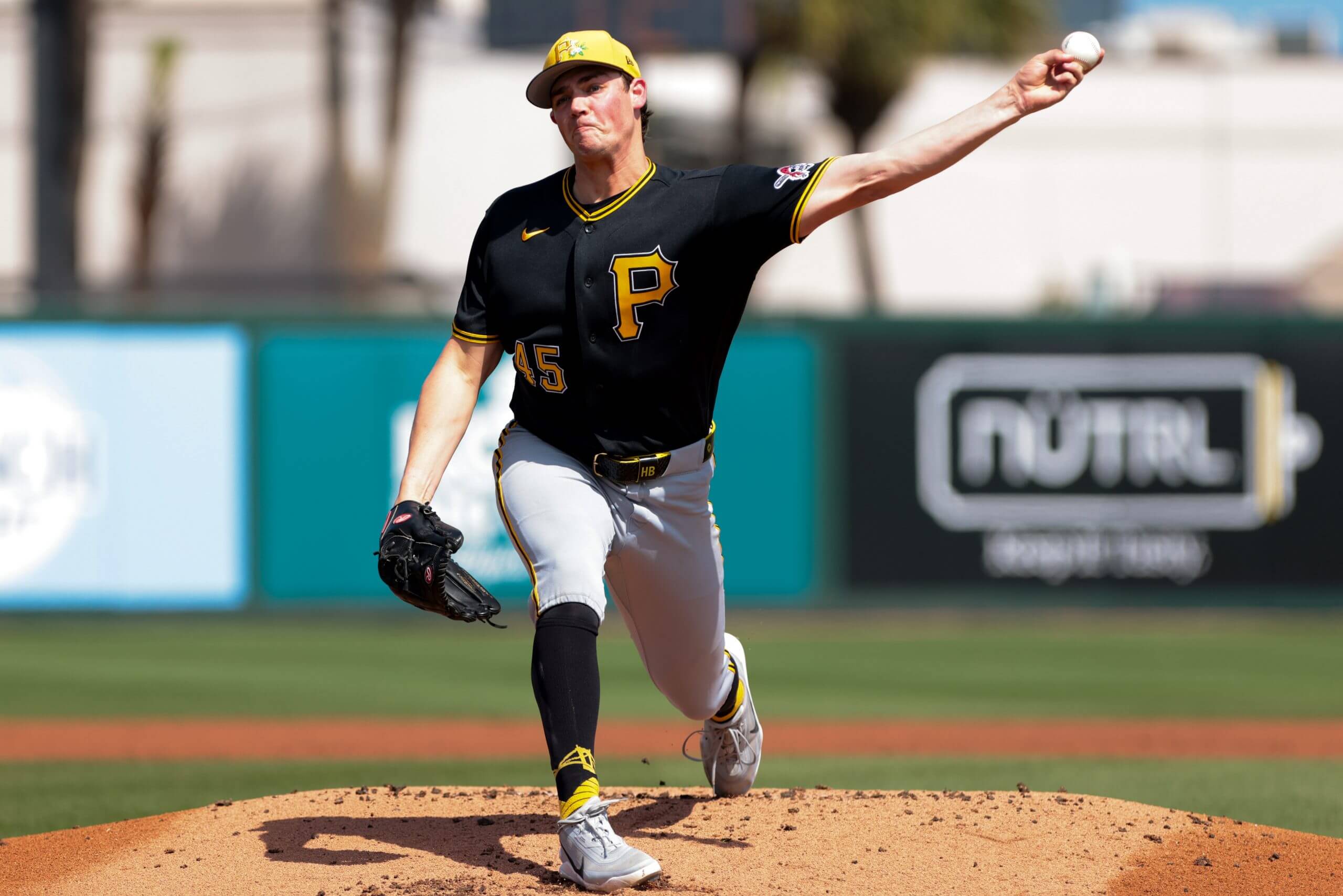
Hunter Barco is throwing multiple changeups like his rotation-mate Paul Skenes. (Sam Navarro / Imagn Images)
Here’s how the new arsenal looks according to the Stuff+ model.
Hunter Barco’s new arsenal
Pitch typePitchesS+L+P+
Four-Seamer
66
109
111
113
Sinker
26
99
68
76
Slider
19
107
99
101
Changeup
10
88
87
77
Splitter
10
119
77
78
Sweeper
7
115
147
175
Barco seems very likely to take the fifth starter job in Pittsburgh and run with it.
Matthew Liberatore, LHP, St. Louis Cardinals
Once upon a time, no model liked Matthew Liberatore. He came up from the minor leagues with below-average Stuff+, middling fastball velocity and poor strikeout minus walk rates. Some of his ERA estimators for the first two years of his career were over five. He spoke to me of “taking his career into (his) own hands,” and sounded frustrated.
Since then, he’s gone to work. He’s raised his release point. He’s added a cutter. He’s added a little velocity. He’s made his fastball even a little more different than his sinker. He’s throwing his curveball four ticks harder. He’s getting more drop on the slider. Only four starters have improved their stuff more this spring when compared to last year.
It’s a wide, six-pitch arsenal with command now. He has five pitches that are above average by stuff, and five pitches that are above average by location. He’s the Cardinals’ Opening Day starter in a great home park.
Sometimes you just need to give guys more time.
Will Warren, RHP, New York Yankees
Stop me if you’ve heard this one before. Will Warren has … changed where he stands on the mound. He’s moved over a foot towards third base.
There are other things that he’s done. He’s added a half-tick of velo that might be gone by the time he has to go deeper into games. He’s added a little ride on the four-seamer. He’s throwing the sweeper with less movement but two more ticks of velocity, which should be an improvement that sticks around. His curveball is also straighter but two ticks harder.
The two pitches that have improved the most by Stuff+ with his shift on the rubber? His fastball and curveball. Maybe something as simple as moving towards first base improves those two pitches.
If Warren really has an OK four-seamer and curveball this year, that could change everything for him. His sinker and sweeper are real weapons against righties, and he’s been looking for better pitches against lefties.
Dustin May, RHP, St. Louis Cardinals
Do you remember the old Dustin May? Gingergaard? The one with multiple fastballs with great velocity? The one who paired great strikeout and ground-ball rates?
He might be back.
May’s velocity is up almost three ticks, which is enough to expect him to have better velocity this year than last. His changeup is harder. He’s brought the curveball out of the dustbin. He almost has two more inches of ride on the four-seamer, which is a pitch that was a differentiator for him when he was at his best.
Why isn’t his strikeout rate better this spring if this is the case? It looks like he’s spraying that revamped four-seamer a little.
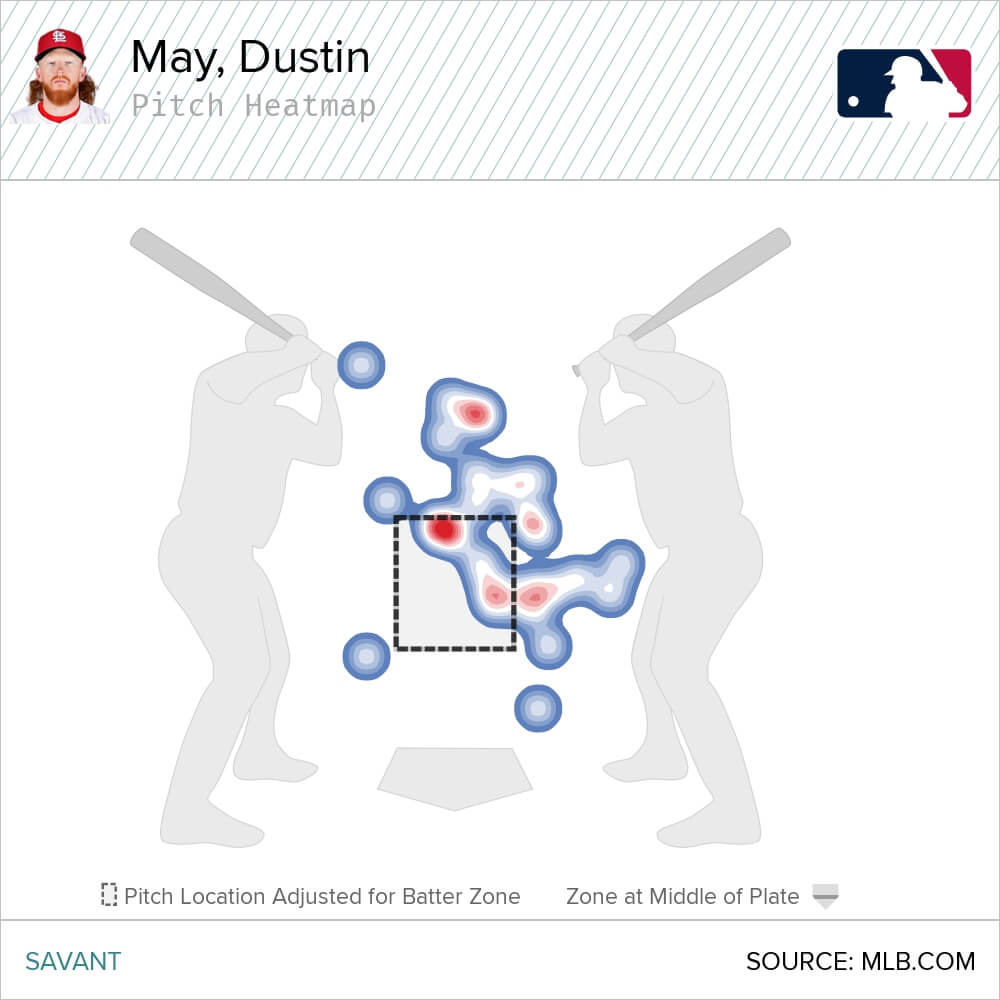
He has a little command work to do over the next few weeks if he’s going to get back to being the guy who had ERAs in the twos with great strikeout rates and paired a lethal sinker/sweeper righty-killer combo with a great fastball/curveball duo against lefties.