
If a professional athlete tells you they don’t care about their rating in the latest video game, they’re probably lying.
Whether it’s Madden, MLB The Show, or NBA 2K, player ratings have become part of the culture of modern sports. Athletes who receive high ratings wear them like a badge of honor, while those who feel disrespected by a low number often take it personally. Players pay attention to them, and fans probably care even more.
Advertisement
And yet every year, it becomes painfully obvious how strange—and sometimes uninformed—these ratings can be.
We now have our first look at the player overall ratings for MLB The Show 26, and a glance at the Chicago White Sox roster tells you everything you need to know.
The only two White Sox players with an overall rating above 80 are shortstop Colson Montgomery (83) and right-handed pitcher Shane Smith (81). That much is fair enough. The White Sox have plenty of intriguing talent, but many of their young players still need to prove themselves over the course of a full major league season before demanding widespread recognition.
In fact, the ratings for both Montgomery and Smith feel pretty reasonable. And other players such as Austin Hays (75), Chase Meidroth (74), and Lenyn Sosa (71) also seem to fall in a fairly logical range.
Advertisement
But once you start comparing certain White Sox players to one another, the flaws in MLB The Show’s rating system quickly become apparent.
Take Luisangel Acuña, for example. The game has him rated as a 76 overall—the fourth-highest rating on the White Sox roster. That’s a difficult number to justify considering Acuña posted a .567 OPS in 95 MLB games last season and owns a career .667 OPS at the Triple-A level.
Despite that track record, the game rates Acuña higher than players like Kyle Teel, Seranthony Domínguez, Austin Hays, and Grant Taylor. That simply doesn’t add up.
It raises even more questions when you start looking at the rest of the roster. How is Acuña a 76 overall, while Derek Hill and Brooks Baldwin both sit at 70, yet Miguel Vargas is only a 68 and Edgar Quero comes in at 67?
Advertisement
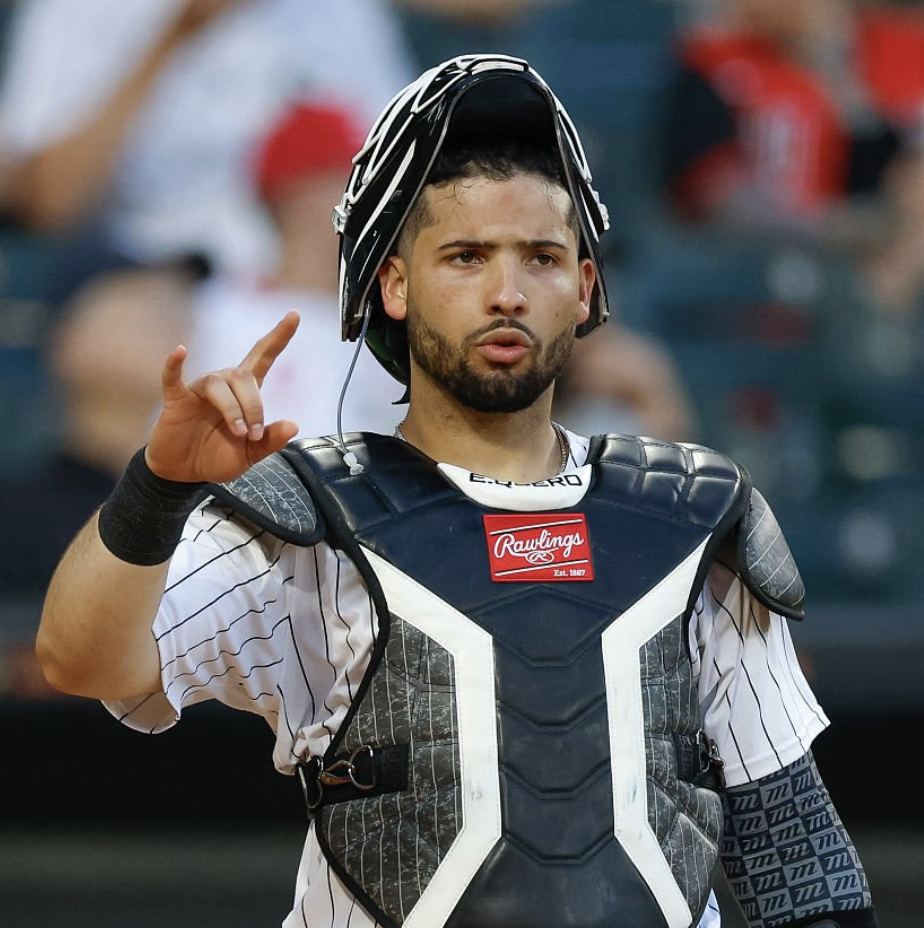
Quero even has a lower rating than Korey Lee. And to be clear, that’s not meant as a knock on Lee at all. But if you’ve been paying attention to the White Sox farm system and the expectations surrounding Quero as a prospect, that comparison is hard to take seriously.
The inconsistencies don’t stop there. If you look at the potential ratings across the organization, the picture becomes even more puzzling. Of the 41 White Sox players listed in the game’s database, not a single player has a potential grade higher than a B.
That seems wildly off-base for one of the more intriguing young teams in baseball—a club with several promising players already at the major league level and multiple Top 100 prospects still developing in the minor league system.
In the grand scheme of things, of course, none of this is a huge deal. It’s a video game.
Advertisement
But for White Sox fans who might have been excited to jump into MLB The Show 26 and build a franchise around the organization’s young core, it’s a little disappointing to see those players represented with such questionable ratings.
Anyone who has watched Tanner McDougal pitch knows he’s not a 55 overall player with C-grade potential. McDougal has real talent, and if you project forward a few years, he’s someone who could absolutely factor into the White Sox pitching picture.
Yet if you were to simulate a few seasons into the future on MLB The Show 26, the game would likely treat him as an afterthought.
Considering how advanced sports video games have become—and the incredible amount of data and technology available today—you’d think the rating systems would reflect a more accurate understanding of the talent across the league.
But at least for the White Sox in MLB The Show 26, that doesn’t seem to be the case.