
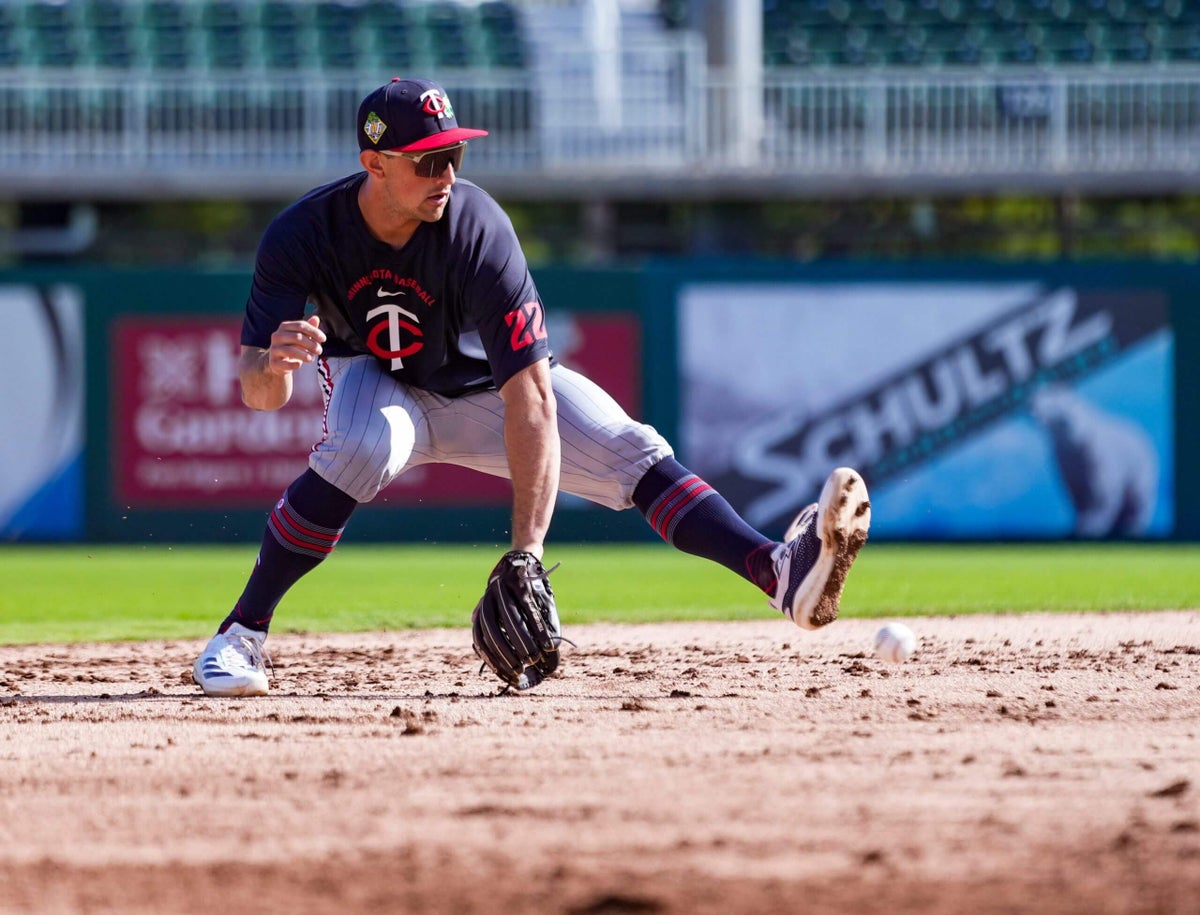
FORT MYERS, Fla. — Brooks Lee didn’t lose weight. He simply redistributed it in an attempt to heed the Minnesota Twins’ message for him.
“I look thin,” Lee said. “Everyone keeps saying I lost weight, but I’m the same weight. It’s just body shape changes, which is awesome.”
Knowing there was a strong chance he’d be their starting shortstop in 2026, the Twins implored Lee to get quicker and more agile this offseason. A longtime shortstop, Lee possesses good hands and an accurate arm. But when he took over at shortstop following the Carlos Correa trade last July, Lee didn’t get to enough ground balls to prove he’s a long-term solution at the position.
Striving for improvement, Lee set out to transform his body. He labored through an intense explosive training program that a strength and conditioning coach designed to make him quicker.
After he was convinced doing so wouldn’t hurt his troublesome back, Lee lifted weights like never before and ran consistently. Though he still weighs in at 215 pounds, he feels like he’s running faster than ever.
Whether Lee’s revamped body composition produces the desired results won’t be known until the regular season. But Lee thinks the effort he put in this offseason met expectations and was what he needed to become a better player.
“You can tell I’m lighter on my feet,” he said. “It translates to everything. Straight ahead speed, I never thought I could get better at it. But it is something I got better at.”
When it comes to foot speed, Lee could really only go up.
Baseball Savant lists his 26.1 feet per second sprint speed in 2025 in the 19th percentile of all major leaguers. Baseball-Reference ranked Lee’s 34 percent extra bases taken last season as tied for 113th out of 146 qualified hitters.
Lee’s back issues made him a station-to-station plodder for a team trying to be more aggressive on the bases, while also restricting him on defense.
As a shortstop, Lee ranked 23rd of 37 defenders with minus-one Outs Above Average. His success rate (68 percent) and estimated success rate (69 percent) on infield plays both ranked 37th.
“The more you can improve your range, agility and quickness, the better off you’re going to be,” Twins general manager Jeremy Zoll said of the message to Lee. “From a fundamentals perspective, the catch and throw is really strong. The more he can improve his ability to get to as many balls as possible — it’s only going to help his value as a player.”
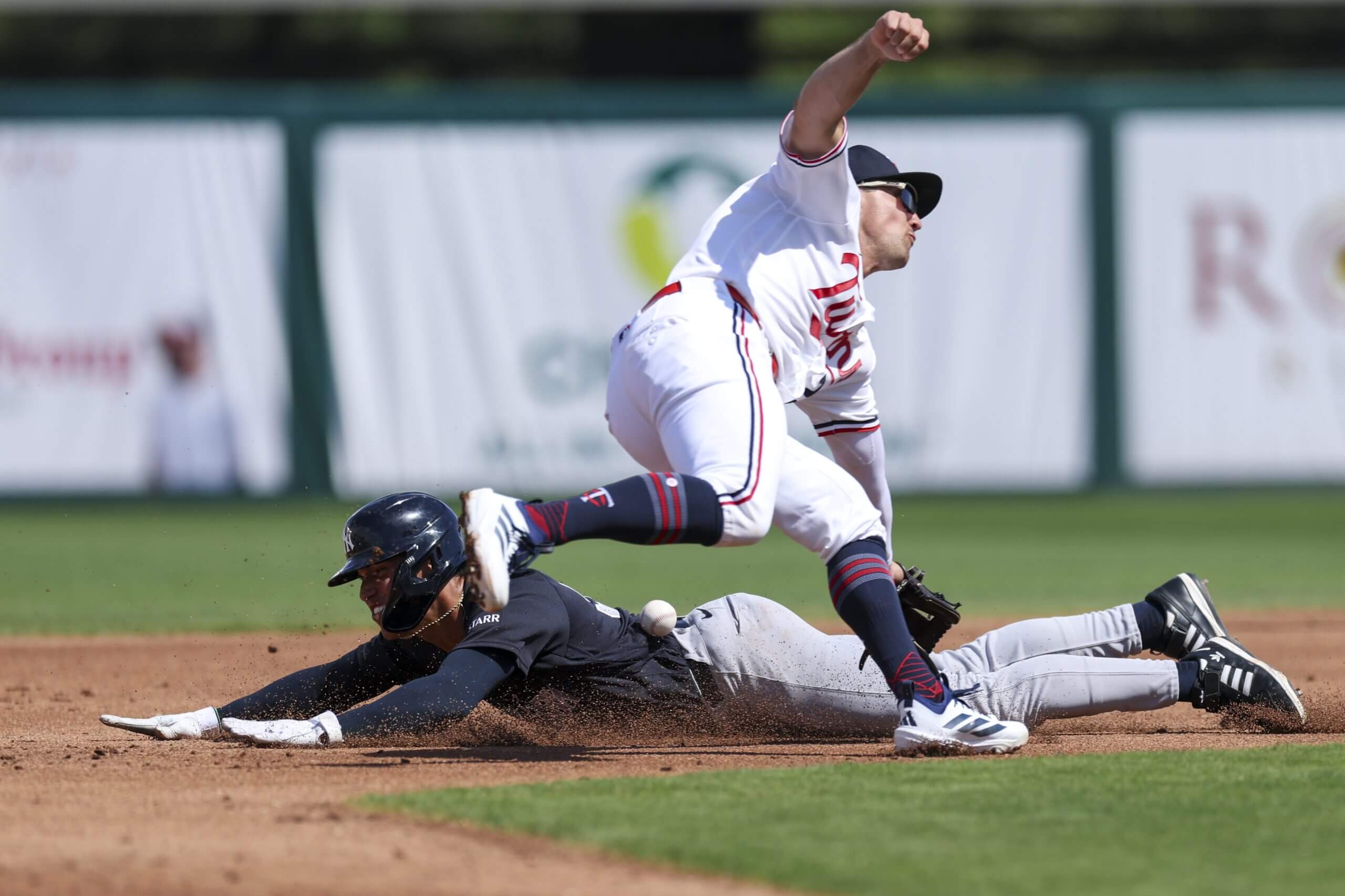
To remain at shortstop, Brooks Lee needed to make some major changes. (Nathan Ray Seebeck / Imagn Images)
The Twins spoke to Lee about his offseason plan during his exit interview in late September. To remain at shortstop, he needed to improve lateral foot speed and direction changes.
What Lee heard didn’t surprise him. The advice made sense.
Upon returning home to California, he met with Chris White, a fellow product of Cal Poly-San Luis Obispo and a former football player in Canadian and Arena leagues. White, now a private strength and conditioning coach, also ran track in college.
Among other things, White tested Lee on force plates, vertical and broad jumps and running 90 feet. He reviewed Lee’s range of motion in the shoulders, hips, back, ankles and knees to get a sense of what they could address in his weak points in a relatively short window before the start of camp.
The two first became acquainted when Lee was a teenager hanging around the Cal Poly college baseball team — his father Larry still coaches the Mustangs — and White was coaching at the school and working on his masters.
Lee had heard good things about White, and the plan laid out intrigued him.
“I couldn’t do front squats,” Lee said. “I couldn’t do step-ups. Couldn’t overhead squat or deadlift. Everything. I (had done) just dumbbell work. I never really used the bar. I couldn’t clean. I was scared to because of my back. He said, ‘You have to do these things in order to be quick and it’ll probably help your back.’ You have to push it. … (The back) could ruin my career. But he taught me really well how to do everything. We were really smart about it.”
After spending the first month becoming comfortable with the workouts, Lee and White continued to build to strengthen Lee’s core muscles. Lee reached what White described as the “power phase” in the final month of the program.
In one instance, Lee did 425-pound repetitions of quarter-front squats. White then added 50 pounds and challenged Lee to hold for 20 seconds. Lee said his cheeks had never been redder.
“We’ve got some good faces on the camera,” White said with a laugh. “He worked his tail off. He dreaded some of those days because we were picking on his weaknesses and they’re very difficult. But to his credit, he grinded them out and he did very intentful work.”
Said Lee: “I thought I was going to pass out. … I never would have thought I could put that up and be able to hold it.”
With an emphasis on getting as explosive and as quick as possible, Lee lifted four days a week and ran twice a week. As the program progressed, he added two days of conditioning work and sprinted twice a week.
The Twins strength and conditioning staff remained in the loop.
“He put in a s—load of work,” said Ian Kadish, Twins senior director of player performance. “He looks really, really good. It was cool for him to go through that evolution and hear from him and some of the other staff members of the effort he put in. He’s in a really good spot.”
Two scouts from opposing teams who’ve seen Lee this spring said he’s in noticeably better physical shape. One scout who described Lee’s defense as well below average is skeptical the changes will help.
In 13 spring games, Lee’s opportunities have been limited. He’s played 76 innings and has had 33 total chances, with two errors in his last 13 innings. Still, infield coach Ramon Borrego is impressed with what he’s seen so far.
“I’m loving what I’m seeing with his first step,” Borrego said. “He’s been getting good jumps on everything. I’m so happy with what I see right now from him. He doesn’t have many chances to show what he’s been working on in the offseason. But what I see when we’re working early is he looks way better.”
Lee saw clear improvement in his running as the offseason progressed and he thinks it will translate. His top speed to first base from the left side last season was 4.26, his only time under 4.3 all season. But toward the end of the training sessions, he said he was turning 4.2s when running to first base and 4.25-4.3 from the right side.
“I felt like I was flying,” Lee said. “Balls hit to me, I’ll make the play. But it’s the ones I don’t get to. So just try to get to more balls. And that’s kind of the focus.”
Now that Lee is in shape, he and White are discussing maintenance. The long baseball season can test anyone. Playing games every day for 7 1/2 months is full of physical and mental challenges.
“I told him, ‘You’ve built this armor, you can’t stop doing what you just did,’” White said.
Knowing how much better he feels in the field and what everyone is saying, Lee says he’s motivated to continue following advice.
“(Learning) never stops,” he said. “(Explosive training is) something I wasn’t aware of. … I got to a lot (better) this offseason, but later in the year is when you kind of start breaking down. You’ve got to stay on top of it, make sure that you’re not being lazy about it.”