
In 1997, Doris Kearns Goodwin wrote a powerful memoir of growing up in Brooklyn during “an era of pure delight” for New York baseball. In her book, she lovingly recounts the springs of optimism and autumns of anguish. The title she chose was “the simple slogan that served Dodger fans as a recurring anthem,” now adopted by baseball fans everywhere. Wait Till Next Year.
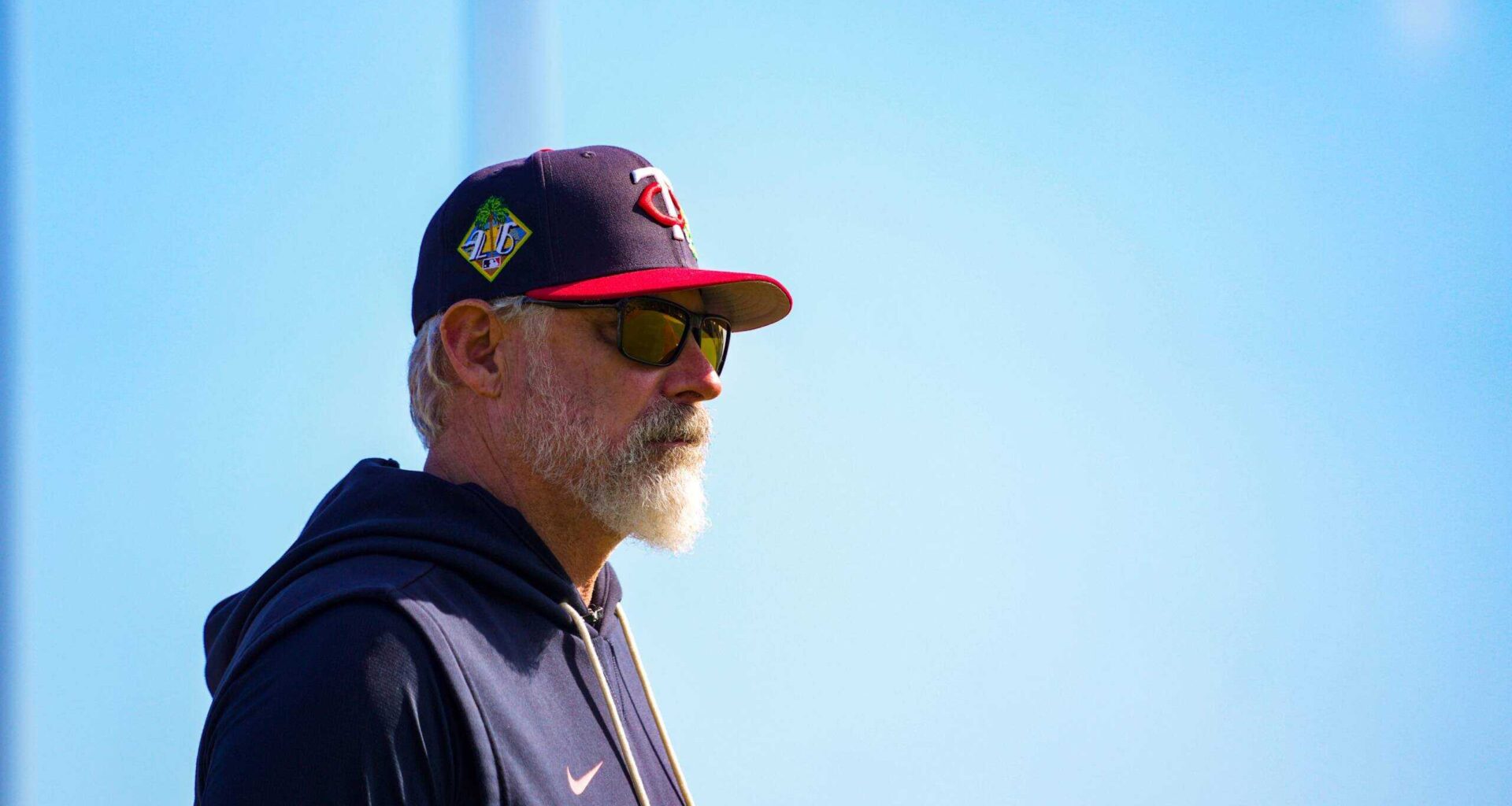
For the Minnesota Twins, next year they will meet a week from Thursday in Baltimore. My advice to new manager Derek Shelton, should he be inclined to ask for it, would be this: Spend the month of April preparing the dugout to win the summer. Take the first month to experiment, and when May arrives, go from there.
What Derek Shelton Can Hope to Accomplish in April
I will always marvel at the length of the baseball season. Every year, I feel like I’m getting away with something: The promise of 162 baseball games over the span of 182 days, midsummer entertainment nearly every day for half the year. Whether or not that’s good for the sport remains a matter of debate, especially given the expanding playoff field. Billy Beane famously defended MLB’s marathon: “When you play 162 games, you eliminate a lot of random outcomes.”
Shelton can use that approach to his advantage as he learns to manage the Minnesota Twins. For him, April 2026 is the upturned puzzle box, a chance to learn the nature of each specific piece and orient them toward each other. He knows what he wants to assemble, but not necessarily how. Shelton can play with the lineup and make good on the message he began his first spring training as manager with:
On May 1, Shelton will have managed 32 games, or just 19.7% of the season. Even if the Twins finish April disastrously — let’s say 10-22, far below their projected seasonal clip of .454 — that gives Shelton 130 games to carve an admittedly optimistic path to the wild card. It will likely take 87-89 wins to get there, requiring the Twins to play .543 ball over the course of the season.
That’s only 15 wins more than the projection — not even 10% of the games. That’s two-and-a-half game-winning decisions per month. A clever 8th inning substitution. Forcing an opposing defense to make a play. A few early steps from a well-prepared, confident outfielder. A timely Matt Wallner moon shot onto Target Plaza, if that’s not too much to hope for.
But let’s be clear: Even a wild-card appearance will come dearly bought. All four AL Central opponents have something to offer over 162 games. The Detroit Tigers boast the best rotation in the division. The Cleveland Guardians are a consistent winner with an experienced manager and recent playoff success. The Chicago White Sox made a major move in the international market the Kansas City Royals deepened their late-inning pitching.
Anchoring them is one of baseball’s most exciting on-field leaders:
To compete within the Central Division and the wider American League, Mr. Shelton must feel free to have April to explore, to weed out randomness with patience and design, and, when the metrics don’t feel right, to learn to trust his judgment as a Major League Baseball manager.
I submit the following for Mr. Shelton’s consideration:
Keep Lewis and Buxton Healthy
Much has been made of Byron Buxton’s career-bests in 2025, and the gateway to those numbers is the 542 plate appearances he made over the 126 games in which he appeared. Royce Lewis managed 403 PA to 106 GP, but failed to approach Buxton’s production. His future as Minnesota’s own version of Bobby Witt Jr. or José Ramírez remains doubtful.
Shelton does not have to rush them into April’s rigors, especially considering that one of them will play in the WBC final later tonight. He can show some restraint in not playing them every day, which can only assuage fears and lessen the likelihood of injury. A slow April will allow Lewis and Buxton to ease into their roles as the fuel for Minnesota’s offensive engine, currently under reassembly.
Experiment with the Whole Field
Restraint with Minnesota’s talent anchors will work doubly well. It allows Shelton to iterate on his new lineup and see what makes them most dangerous. Luke Keaschall leading off on Buxton’s off days? Wallner’s power threat from the 7-hole? I’m spitballing here, but Shelton will need some time to find the possibilities against divisional favorites such as the Boston Red Sox, Toronto Blue Jays, and New York Mets.
Journeyman Josh Bell slashed .387/.537/.548 in March, and we’ve talked extensively about our collective excitement at Alan Roden’s March performance. But spring training’s warm grounds are not chilly April series in Minneapolis, which will prove far more instructive to Shelton than split-squad double headers in Florida.
Build a Concrete Pitching Rotation
The Twins took Mick Abel as the centerpiece of the trade that sent Jhoan Duran to Philadelphia. Still, Joe Ryan is the unquestionable ace of Minnesota’s starting staff. That simplifies things for the rest of the rotation, but decisions remain. April’s the time to make them.
Abel, Bailey Ober, Zebby Matthews, and Simeon Woods Richardson all appear to be in line to earn a starter’s job. Cole Sands spot-started three games last July, allowing only 1 run in five total innings. However, those numbers suggest a place in the bullpen rather than a spot in the rotation.
None of this accounts for Pablo López, whose contributions would have moved that 89-win mark far closer. It’s wise to ask who, among the still-rostered pitchers, can take his place to similar effect. Other options may emerge, but by May 1, the Twins will have the opportunity to set their starting pitching behind Ryan and provide crucial consistency at the most important position.
Nine days from the start of the 2026 season, I find myself thinking of July 31, last year. My wife and I were sitting in a brewery on San Diego’s Coronado Island, enjoying the hours before our first trip to Petco Park and watching the trade deadline news.
I was wearing my favorite Twins cap, the navy-and-white Sunday alternative, and with each piece of devastating news, I found myself fielding more and more good-natured comments from the San Diego Padres fans who had likewise gathered to watch. I won’t say they offered pity or condolences. Still, as the “fire sale” became a reality and more than a few strangers consoled me with a pat on the back, I had to ask: What exactly are we waiting for next year?
In 9 days, the wait ends. A new season will start, and with it, new manager Derek Shelton’s first chance to coach a winner. It will take patience; it will take time. But if, in those 162 games ahead, he can find just 15 extra wins borne of both, then perhaps October 1 will afford him the chance to again share a message with his team, perhaps on staving off anguish and making good on early spring optimism.
Best of luck in 2026, Mr. Shelton. We believe in you.