
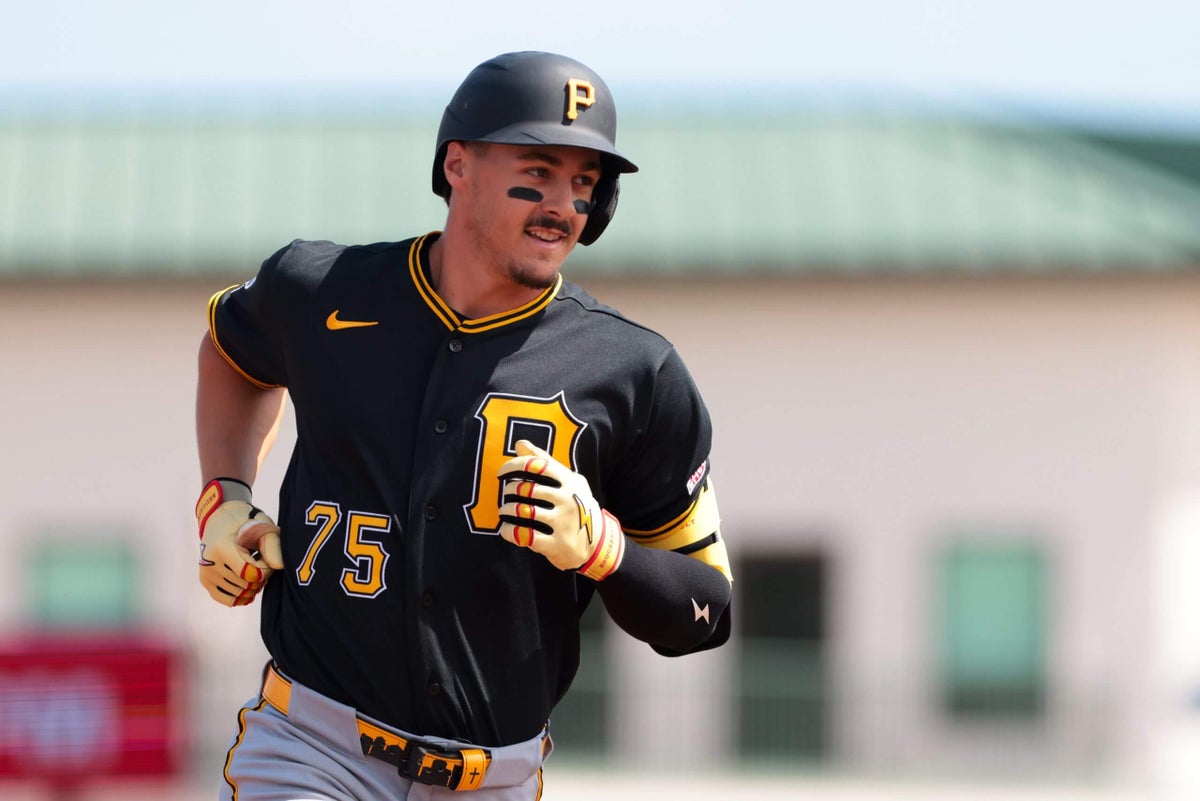
In Pittsburgh, the wait will continue.
The Pittsburgh Pirates reassigned Konnor Griffin, an ascendant 19-year-old shortstop ranked as baseball’s top prospect, to minor-league camp on Saturday. In spring training, as Griffin battled for the club’s starting shortstop job, he was vying to become the first teenager to start on Opening Day since Adrian Beltré in 1999, and the first to debut on Opening Day since Ken Griffey Jr. in 1989. The likelihood of that outcome disintegrated as Griffin hit .171 in Grapefruit League play — though he did slug four of his seven hits for home runs.
The Pirates and Griffin have had conversations about a long-term extension in recent days, multiple league sources confirmed to The Athletic.
Pittsburgh is expected to start the season with Nick Gonzales at shortstop. A 2020 first-round draft pick, Gonzales has a .675 OPS over parts of three seasons with the Pirates, playing primarily second base.
It remains a matter of when, not if, Griffin will get the call to the majors this season. The Pirates are entering a crucial year. They have endured seven consecutive losing seasons and must make the most of Cy Young Award winner Paul Skenes’ remaining years of club control. This winter, the Pirates flirted with several top free agents before settling for moderate improvements to their lineup: Brandon Lowe, Ryan O’Hearn, Marcell Ozuna and Jake Mangum.
All along, Griffin represented the team’s greatest potential offseason upgrade.
The Pirates have long lacked star power at shortstop. Their last All-Stars at the position were Jack Wilson in 2004 and Jay Bell in 1993. Their other Opening Day shortstops since Bell: Isiah Kiner-Falefa, Oneil Cruz, Kevin Newman, Erik González, Jordy Mercer, Clint Barmes, Ronny Cedeño, Mike Benjamin, Pat Meares, Lou Collier and Kevin Elster. None had Griffin’s ceiling or arrived with a modicum of the attention being paid to this 6-foot-4 shortstop.
The Pirates drafted Griffin ninth overall in the 2024 MLB Draft. The first high schooler to come off the board, Griffin signed with Pittsburgh for $6.53 million. At the time, there were concerns about whether Griffin could hit for contact against high-level pitching. Every other tool was already present. Here’s what The Athletic’s Keith Law wrote after the draft: “Griffin does have superstar upside — it’s 30-30 potential with plus defense somewhere up the middle — for a club that can develop his bat and has the patience to let him move at his own pace.”
The Pirates have struggled to bring along position players as prospects, but Griffin quickly made strides in streamlining his swing — and his pace, it turns out, was approaching hyperspeed. After entering last season ranked as Law’s No. 84 prospect, Griffin turned in a .932 OPS at Single A, .942 OPS at High A and .961 OPS at Double A. Between those three levels, he hit 21 homers and stole 65 bases. By midseason, Griffin had snuck into Law’s top 10.
In Law’s preseason top-100 list from January, Griffin was firmly No. 1. “I think he’s the most exciting prospect we’ve had in the minors since Mike Trout,” Law wrote, “and I think he’s going to end up one of the best players in baseball once he gets established.”
Getting established will take time. Griffin has played 21 Double-A games and has no Triple-A experience. He is likely to face a tremendous learning curve when he reaches the majors. Weighing Griffin’s projected production against the likelihood that he struggles to find his footing, the Pirates determined that delaying his arrival was worth the risk of costing the team some early-season wins.
If the Pirates promote Griffin within the first two weeks of the regular season, they would still be in line for a Prospect Promotion Incentive (PPI) draft pick if he wins NL Rookie of the Year or places in the top three in National League MVP voting. In 2024, the Pirates called up Skenes too late to receive PPI compensation when he won the NL Rookie of the Year and finished second in Cy Young Award voting. Skenes earned a full year of service, and the club left a draft pick on the table.