

SCOTTSDALE, Ariz. — One way or another, the San Francisco Giants will be part of history Wednesday. They will either be on the right or wrong side of the first challenged ball-strike call in MLB history.
If their six-week preview in spring training was any indication, chances are good it will go in their favor. That is, as long as Patrick Bailey is tapping the top of his catcher’s mask.
“I kind of figured he’d be good at the ABS system,” reliever Ryan Walker said.
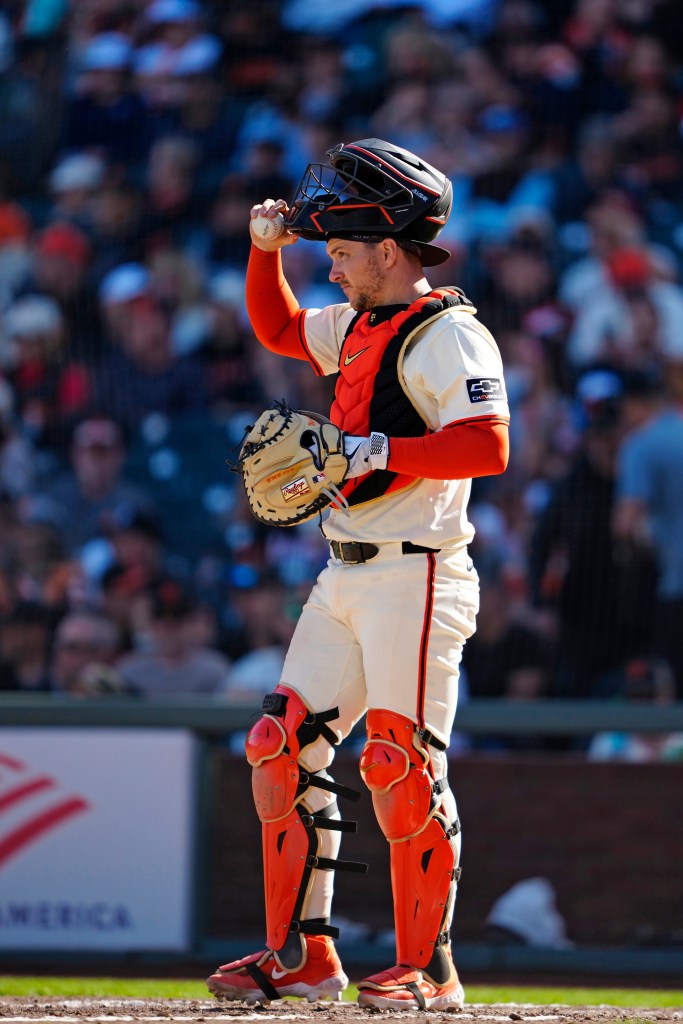 Giants’ Patrick Bailey has been successful challenging ABS system since it was implemented during spring training. Getty Images
ABS stands for Automated Ball-Strike, and teams will be allowed to challenge at least two pitches per game using the same Hawk-Eye cameras that feed Statcast data to determine if a pitch landed in a strike zone based on a batter’s height.
“I’ll never challenge,” Walker said. “I have Patrick Bailey back there.”
There was some concern when the league considered implementing a fully automated strike zone — robo umps — that it would eliminate Bailey’s value as the best in the game at stealing strikes through pitch framing. The compromise has seemingly had the opposite effect.
Bailey has proven as adept as anyone at knowing which pitches to challenge.
“My thing is just don’t get it wrong,” Bailey said. Theoretically, a team could challenge every pitch — if it kept getting them right. Challenges are only lost when they fail.
“It’s kind of a stupid thing to say, but if you get it right, you don’t lose it, so that’s kind of been my philosophy this spring — just getting it right.”
Seven other catchers were right this spring as often as Bailey. None of them did so in as few attempts as Bailey, who had a 10-for-14 success rate. The only backstop with a higher rate of overturned calls in as many attempts was Freddy Fermin of the Padres, who went 12 for 16.
With Bailey back there, Giants pitchers have largely just been along for the ride.
“We’ll probably just leave that up to Patty,” said reliever Spencer Bivens, who attempted one challenge — and lost. “I think we’re just going to leave it to him,” added starter Landen Roupp, who said Bailey “knows the strike zone like the back of his hand.”
Not to mention, Bailey makes everything look like a strike from 60 feet, 6 inches away.
“Patrick’s too good back there,” Walker said. “He fakes me out all the time.”
First-year manager Tony Vitello has been careful not to show his cards as far as the Giants’ philosophy for how to deploy their challenges. Pitchers surveyed by The California Post said there hasn’t been much discussion about ABS strategy. In hitters meetings, Vitello has shown images of the pitch and situation on the scoreboard as examples of when or when not to tap.
Ideally, he said, the Giants would reserve at least one for the late innings.
“I think it affects the game in a lot of ways,” Vitello said. “I’ll leave it at that.”
There are loads of possible wrinkles that will only reveal themselves as teams and players adjust to the new system. Bailey could, in theory, use his pitch-framing prowess to trick a batter into an errant challenge. Vitello noted that during one spring game, the biggest cheers from the home fans came when the Giants’ opponents exhausted their two challenges.
“The challenge system, it’s interesting, there’s some strategy behind it,” veteran starter Robbie Ray said. The biggest challenge for Ray, who attacks the top of the zone with his fastball, is adjusting to a strike zone that changes batter-to-batter.
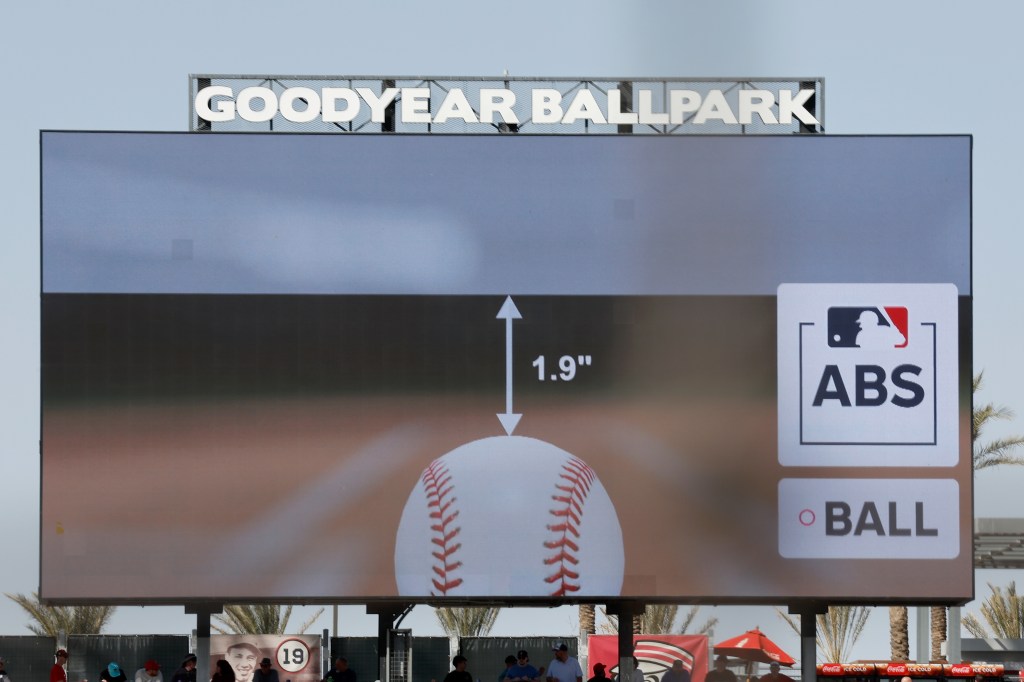 There are loads of possible wrinkles that will reveal themselves as teams and players adjust to the new ABS system.
He theorized that teams could even get creative with their lineup construction, alternating heights instead of handedness to keep pitchers and catchers on their toes.
“The zone kind of changes every single batter,” he said. “That’s why I think relying on Patty or whoever’s catching back there is more of the route that you would go.”
Daniel Susac, a Rule 5 pick who looks like he’ll be the other catcher on the Giants’ roster, went 4 for 8 on challenges this spring. He had all last season to adjust to the system, playing in the Triple-A Pacific Coast League where it was being tested.
Sign up for the California Morning Report newsletter
California’s top news, sports and entertainment delivered to your inbox every day.
Thanks for signing up!
“I think the biggest learning part is knowing how to not be emotional with it,” he said. “Just because you struck out on a pitch doesn’t mean you should challenge it.”
It’s easier to take a more clinical approach when it doesn’t affect your on-base percentage or ERA. That’s one reason catchers issued 96% of the 956 challenges on defense, and probably why they had a 59% success rate, opposed to 45% from batters.
“I mean, we have the best view of anybody,” Bailey said. “I’d say even more so than the umpire. So I think catchers should be pretty good at it.”
Forget a game of inches. Some challenges this spring have been determined by as little as a 10th of an inch.
“We’re pretty blessed to have him at that spot,” Vitello said of Bailey, a two-time Gold Glove winner. “I think, if anything, it will accentuate the type of player he is.”
The process takes seconds. Either the batter, catcher or pitcher touches the top of his head to initiate a challenge. An animation appears on the scoreboard showing the location of the pitch. The home plate umpire announces the result over the stadium loudspeakers.
It will be novel for fans experiencing it for the first time, but challenges have become a routine part of every game just since the system went online at the start of spring training.
Across 414 exhibitions this spring, there were an average of 4.3 challenges per game.
Of his aptitude so far during spring, Bailey chuckled, “There’s no value right now.” But beginning Wednesday at Oracle Park, the challenges will count for real.
“It’s kind of a cool deal,” Vitello said. “I wasn’t sure how I felt about it. I think the strike zone is small. I think everybody agrees on that. But it adds a new exciting part of the game. And there’s some strategy involved.”
Download The California Post App, follow us on social, and subscribe to our newsletters
California Post News: Facebook, Instagram, TikTok, X, YouTube, WhatsApp, LinkedIn
California Post Sports Facebook, Instagram, TikTok, YouTube, X
California Post Opinion
California Post Newsletters: Sign up here!
California Post App: Download here!
Home delivery: Sign up here!
Page Six Hollywood: Sign up here!