
Garion Thorne breaks down his top three deep sleepers to keep an eye on for 2026 Fantasy Baseball drafts.
We’re on a high alert, people.
While there’s still technically two days of Spring Training baseball left, many teams closed up camp this past weekend and are headed home. In fewer than three days, there will be actual, meaningful MLB action on our televisions. That means we’re in the thick of fantasy baseball draft season, too. I can help with that.
While the term “sleeper” is always controversial, for the purposes of this article, any player being selected, on average, outside the first 300 picks of the National Fantasy Baseball Championships (NFBC) will qualify as not only a sleeper, but a “deep” sleeper. Cool? Cool.
Here are three fantasy baseball assets that could define — or save — your upcoming draft.
2026 Fantasy Baseball: Deep Sleepers
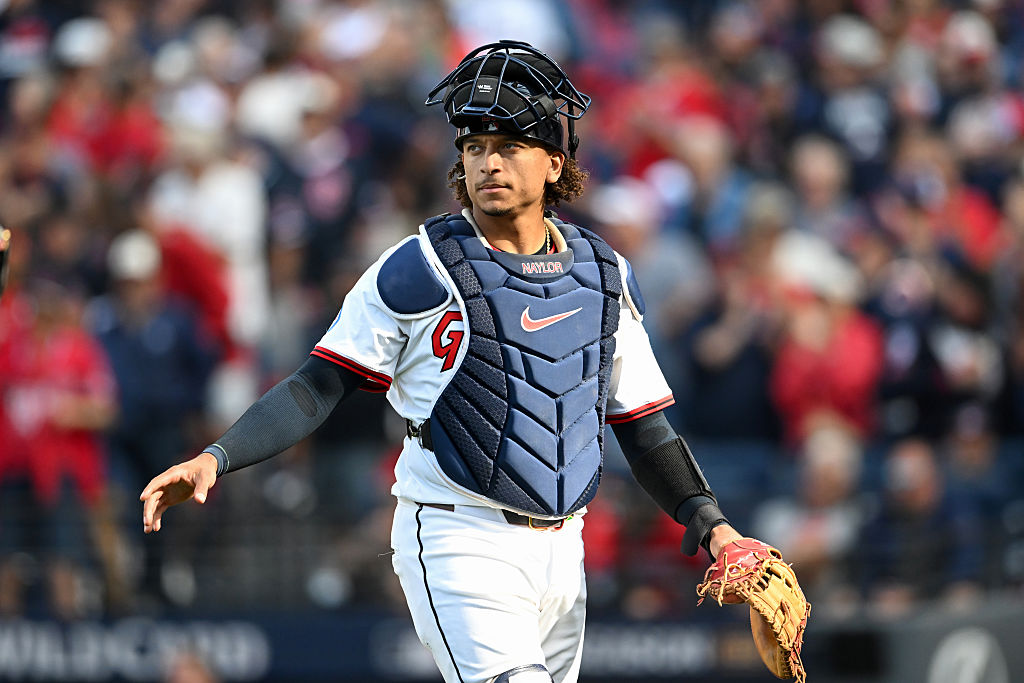
C Bo Naylor, Guardians | NFBC ADP: 335.4
Your use for a deep sleeper at the catcher position will obviously vary depending on your league format, but if you are someone in a two-catcher setting, Bo Naylor might just be a gift from heaven in 2026. Now, that’s relatively high praise for a backstop that owned a first percentile expected batting average last season (.201), yet there have surely been some positive signs about Naylor’s offensive profile since September.
Mostly notably, Naylor introduced a toe-tap late in 2025 and almost immediately saw his results at the dish improve drastically. In 69 plate appearances in the final month of the regular season, Naylor slashed .290/.324/.548 with a .258 ISO. It was reminiscent of the run the former first-round pick had in his rookie campaign in 2023, when Naylor mashed 11 home runs and posted a 123 wRC+ in 230 PAs. He’s always had the potential for 20-plus long balls, this might simply be a case of a young catcher finally being comfortable with his other game-calling duties, and now having the time to focus on hitting adjustments. He wouldn’t be the first catcher we’ve seen struggle with the transition from top catching prospect to MLB. Alejandro Kirk, Adley Rutschman and Francisco Alvarez all spring to mind.
Naylor’s also in the midst of a very nice camp. Not only is the 26-year-old 8-for-22 (.364) with four doubles in Spring Training, but Naylor was one of Canada’s best players in its run to the quarterfinals at the World Baseball Classic. Naylor finished up the tournament with a .941 OPS and a loooooooong home run off Mariners’ lefty Gabe Speier.
Again, there’s no shortage of power in his bat. Naylor’s extreme fly ball tendencies mean he’s never going to be a guy who flirts with batting .300, yet any amount of normalization on a .222 BABIP will help the catcher find his way back to an acceptable batting average in a 5×5 format — and that was easily the lowest BABIP of any player with at least 400 plate appearances in 2025. I’ll bank on positive regression and raw talent, especially at this cheap a price tag.
OF Jordan Walker, Cardinals | NFBC ADP: 358.5
You’ve heard about a post-hype breakout. How about a post-post-hype breakout?
It feels like forever ago when a 20-year-old Jordan Walker made the Cardinals’ Opening Day roster, despite having only been drafted in 2020, and only having suited up for 119 games in Double-A the year prior. The outfielder’s rookie campaign was actually quite solid, even with a brief demotion to Triple-A mid-season. In 465 plate appearances, Walker hit 16 home runs and slashed .276/.342/.445 with a 116 wRC+. The natural ability had overcome the age gap and the learning of a new position on the fly. Walker was 16% better than a league-average hitter in his first taste of MLB action. Surely this was an All-Star in the making, right? …Right?!
Needless to say, things have not panned out like Walker or St. Louis had hoped. That’s why he’ll still usually be on the board past pick 350 in your fantasy league drafts. Walker’s strikeout rate has ballooned and he’s split the past two seasons between the big leagues and the minors. However, if there were ever a year where the Cardinals were just going to throw the soon-to-be 24-year-old out there for 160 games to see what they have — it’s 2026. This is a clear rebuilding phase for St. Louis. There shouldn’t be anyone coming for Walker’s at-bats. This also might be his last shot to prove to this new Cardinals’ front office that he’s a part of this franchise’s long-term future.
So, why is there any reason for optimism? Well, aside from a seemingly set-in-stone everyday role — Steamer 600 has Walker pegged for 18 home runs, 11 steals and a 100 wRC+ — there’s the always the impressive data from under the hood. Walker remains an advanced stat darling, with 99th percentile bat speed (78.1), 96th percentile arm strength (93.3) and 84th percentile sprint speed (28.7). In fact, the only two men with a higher average bat speed than Walker in 2025 were Oneil Cruz and Junior Caminero. A more realistic comp might be Jo Adell, who sat fourth in average bat speed, and shares Walker’s underwhelming bat-to-ball skills. Adell remains a highly flawed fantasy asset, but he also hit 37 long balls in 2025. That’s the type of potential we’re talking about with these metrics. This late in drafts? You might as well dream big.
3B Coby Mayo, Orioles | NFBC ADP: 398.5
Another former top prospect in his mid-20s? I guess I have a type.
Coby Mayo was one of the few people in the Baltimore organization to benefit from last year’s disastrous season, as the hulking corner infielder was one of the only healthy bats remaining for the Orioles following a very eventful trade deadline. Mayo’s final stat line for the 2025 campaign wasn’t amazing, a 28.6% strikeout rate and a .287 expected wOBA don’t exactly scream future fantasy stud, but the 24-year-old finally had his opportunity for every day at-bats in the big leagues, and by September, that prolonged opening appeared to pay off.
Mayo closed out the regular season by slashing .301/.393/.548 with a 165 wRC+ in his final 84 plate appearances. The man who had dominated Triple-A in 2023, 2024 and 2025 was actually beginning to translate his 83rd percentile bat speed (74.7) to real, tangible results at the highest level. All Mayo needed now was that same opportunity in 2026, which lead many to believe that the former fourth-round pick would be on the block this winter. Baltimore had a glut of young positional talent, while it desperately needed pitching. It made all the sense in the world that Mayo could be carrot to lure in a top-line starter.
However, that’s not what happened. The Orioles didn’t trade for Freddy Peralta or MacKenzie Gore or Edward Cabrera. Instead, they acquired Shane Baz from the Rays in a deal that did not involve Mayo. He remained on the 40-man roster, and it’s a good thing he did, because with yet another injury to Jordan Westburg (elbow), it seems like the third base job in Baltimore is now Mayo’s to lose. I doubt a Spring Training where he’s managed to hit .389 with a .639 slugging percentage has hurt Mayo’s standing with the coaching staff, either. Mayo’s going to have an every day role in a lineup that could be among the best in baseball. You don’t have to squint too hard to see the value here — particularly with eligibility at a third base position that falls off a cliff after the top 10 names.