
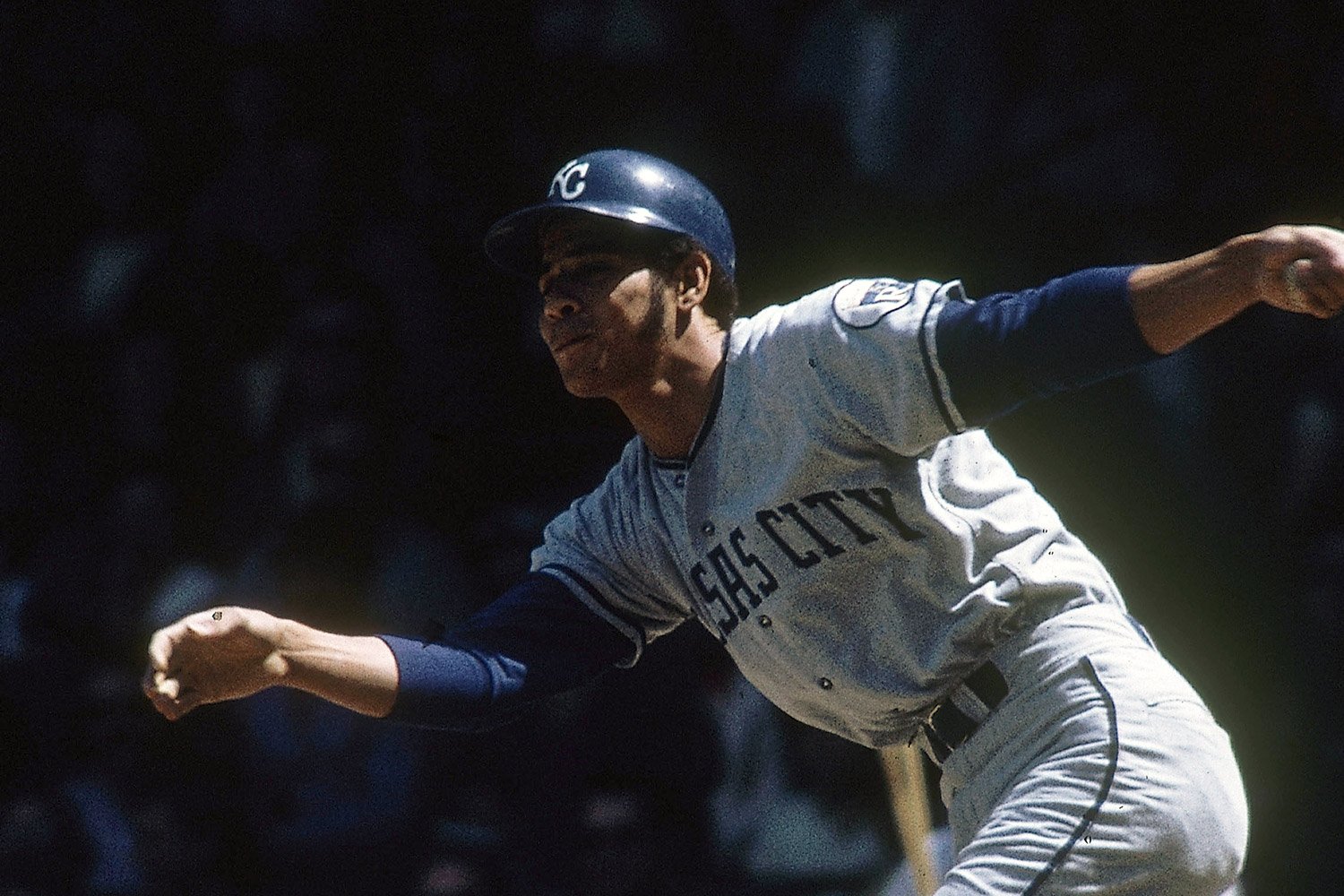
The Kansas City Royals, a team striving to rebound from the disappointment of missing the playoffs last year after a stunning return to postseason play in 2024, open their 2026 campaign against the Braves in Atlanta Friday night. Featuring as it will the two clubs’ respective aces — Cole Ragans for the Royals and Chris Sale for the Braves — the 6:15 p.m. CDT tilt at Truist Field sizes up as one not to be missed.
And the first game of the year for both teams will also snap a trend to which Kansas City has become so accustomed. After opening at home for five straight seasons and nine of the past 11, the Royals are set to launch their newest pursuit of October baseball on the road. Ominously, the club lost its two most recent openers away from Kauffman Stadium — 7-1 at Minnesota in 2017, and 2-0 at Cleveland in 2020 — and hasn’t beaten an Opening Day host since edging Detroit 5-4 in 2008.
How, though, did the Royals fare in their first-ever road opener? Answering that question requires turning the baseball clock back 55 years.
The Royals Started on the Road for the First Time in 1971
After kicking off their inaugural 1969 campaign by beating the Twins at Kansas City’s old Municipal Stadium, and then losing the 1970 opener to Oakland at home, the Royals headed West to take on the then-California Angels on Opening Day in 1971.
And things went well. The Royals won 4-1 to post the first victory of their third season.
Leading the way was starter Dick Drago, an original Royal who went the distance and limited California to six scattered singles; although he struck out only two, he didn’t walk anyone, retired 12 of the first 13 batters he faced, and put the Angels down in order five times. The only run he surrendered came on a fifth-inning passed ball.
Drago won 16 more games that season, a total that would today challenge for the big league lead, but significantly trailed major league leader Mickey Lolich’s 25 in 1971. And in another sign of a bygone era, Drago’s 2.98 ERA wasn’t good enough to crack the majors’ top 10. He won at least 11 games in four of his five KC seasons and retired after the 1981 campaign following stops in Boston, California, and Seattle.
Most responsible for giving Drago the offensive support he needed were second baseman Cookie Rojas and left fielder Lou Piniella. Piniella opened the top of the second with a single off California starter Clyde Wright, went to third on Bob Oliver’s single, and scored when Rojas beat out an infield single that gave KC its first run of the season and a 1-0 lead.
Two batters later, Rojas scored what proved to be the winning run on Buck Martinez’s sacrifice fly to Tony Conigliaro in right.
Piniella and Rojas struck again in the fourth. Piniella opened the frame with a double and, after Oliver bunted him to third, came home on Rojas’ sacrifice fly to left fielder Alex Johnson.
Kansas City scored once more when third baseman Paul Schaal drove in Amos Otis with a single.
Otis and Rojas went on to make the American League All-Star team that year.
The Game Featured Three Future Royals Club Hall of Famers
KC’s 1971 Opening Day lineup included Rojas, Otis, and shortstop Freddie Patek, all of whom also later became members of the team’s Hall of Fame. Rojas spent half of his 16-year big league career with the Royals before retiring after the 1977 season. Patek played nine of his 14 big league campaigns in Kansas City and didn’t play after 1981 with the Angels, and Otis, a Royal for all but three of his 17 major league seasons, played for the last time in 1984 with Pittsburgh.
How Did the Royals Fare the Rest of the 1971 Season?
It was a historic campaign — the Royals went 85-76 to notch the first winning season in franchise history. But the A’s, whose departure from Kansas City after the 1967 season paved the way for the Royals to bring baseball back to Municipal Stadium in 1969, were simply too good and finished 16 games ahead of second-place KC in the AL West. The season was the Royals’ best until 1973, when they won 88 times but again ended up second to Oakland in the West. Kansas City didn’t clinch its first division title and playoff berth until 1976.