
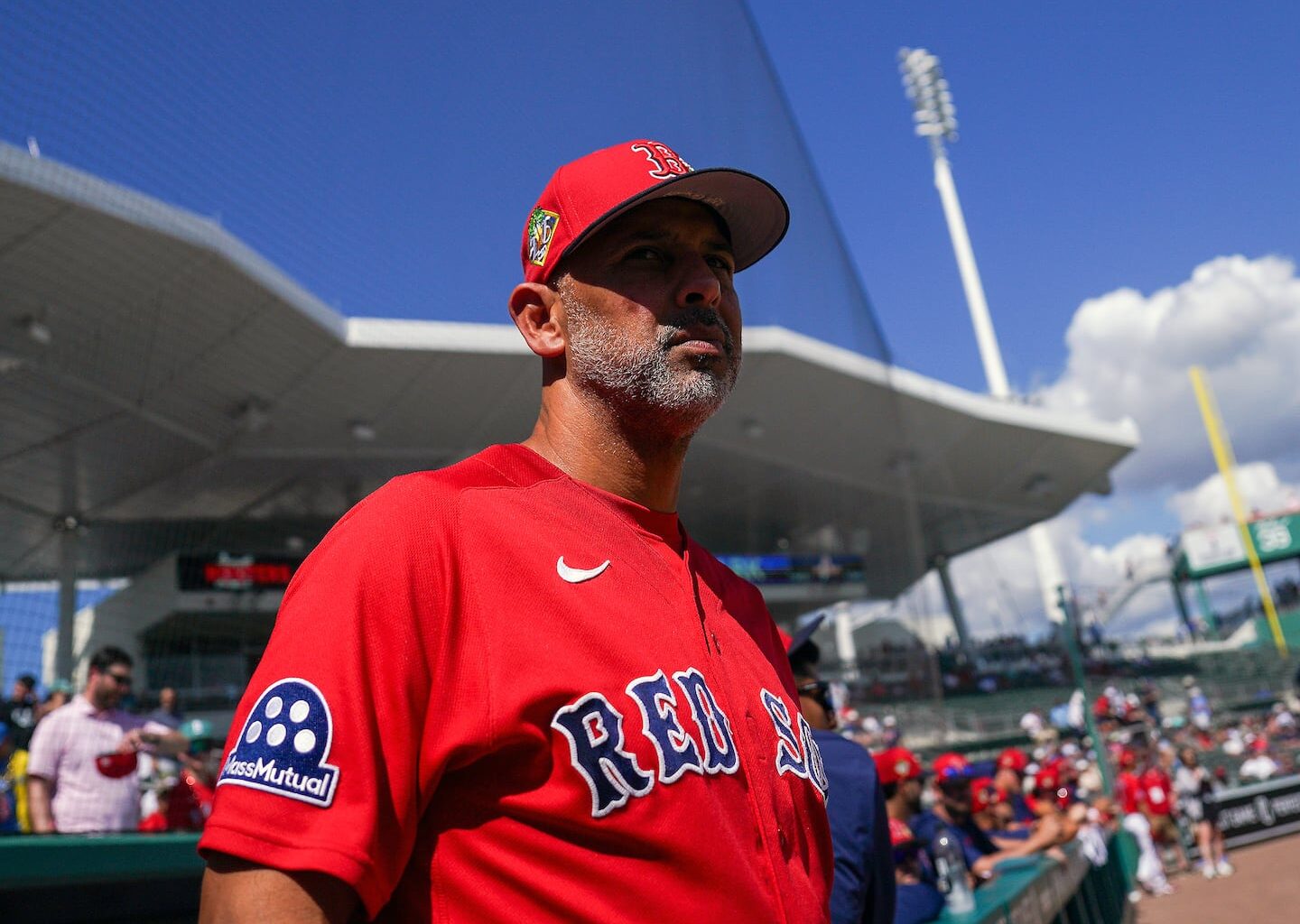
That’s me with the Alex Cora Athletic Club (ACAC) of 2026.
And, like many of you, I have my doubts.
I like ’em because robotic president of baseball ops Craig Breslow did a nifty job assembling what looks like one of the better starting rotations in baseball. In December of ’24, Brez traded four minor leaguers for the services of a 24-year-old indomitable lefthanded ace, Garrett Crochet. Months later, Breslow extended Crochet’s contract through 2031, then watched him go 18-5 with a 2.59 ERA and 255 strikeouts — good for second in AL Cy Young voting. Last October, Crochet stuffed the Yankees in a locker, beating the Bombers with 11 strikeouts and no walks in 7⅔ masterful innings.
Get Starting Point
A guide through the most important stories of the morning, delivered Monday through Friday.
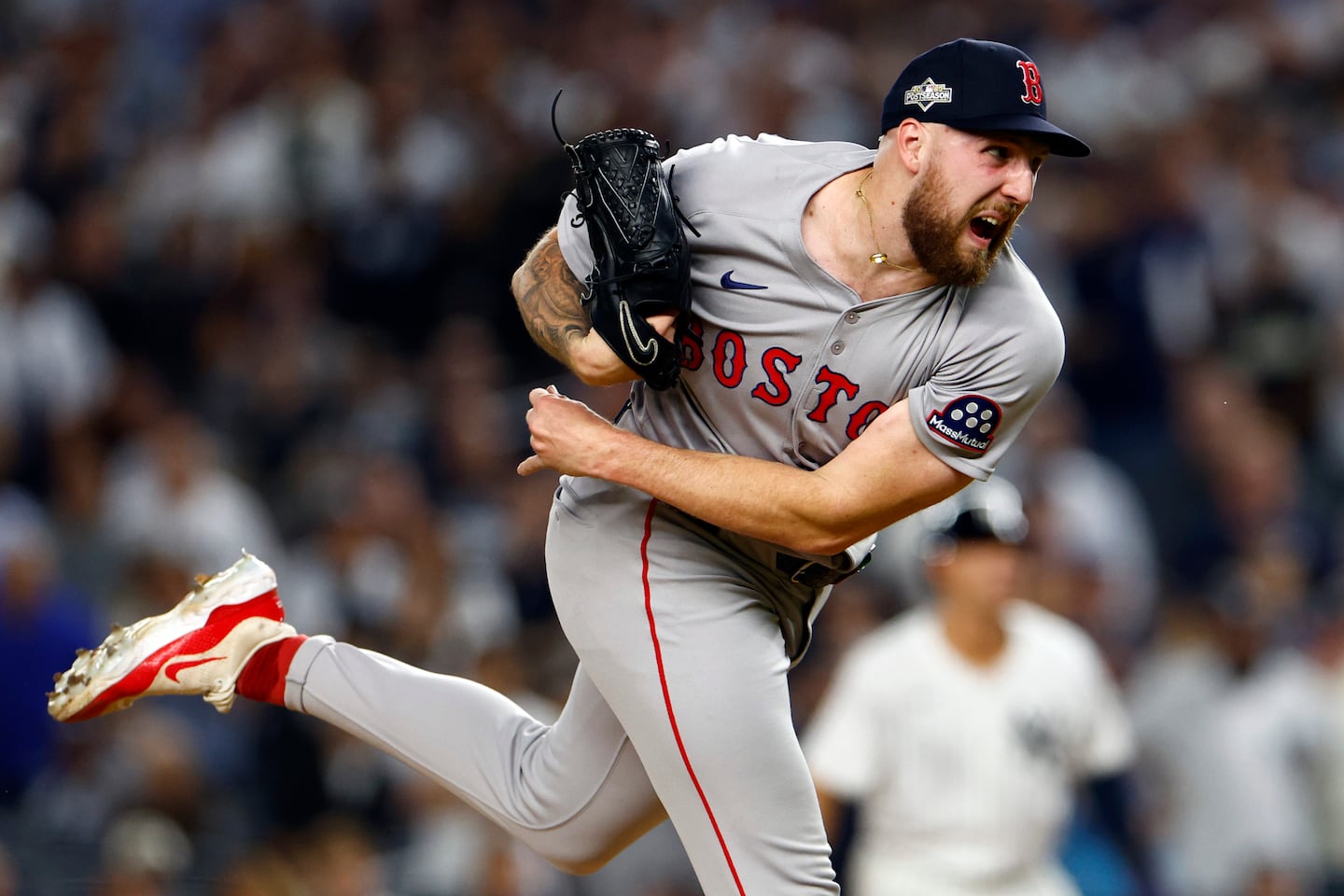 Yes, Red Sox fans, this is what a true rotation ace looks like — and Garrett Crochet will take the ball to start the 2026 campaign Thursday in Cincinnati.Danielle Parhizkaran/Globe Staff
This is what an ace looks like, people. Barring injury (always a biggie with young starters), the Crochet deal has a chance to be one of the best in franchise history. He gets the ball in Thursday afternoon’s 126th Red Sox opener, a matchup against Terry Francona’s Cincinnati Reds — who were a one-and-done in the 2025 playoffs, just like your Red Sox.
Following Crochet, the Sox rotation features former Phillies lefty Ranger Suarez, former ace Sonny Gray (both possibly fading), Brayan Bello, and rookie lefty Connelly Early, while gigantic Johan Oviedo starts the season in the bullpen. Rookie Payton Tolle and Kutter Crawford (still recovering from wrist surgery) provide depth at Triple-A Worcester.
That’s a lot of capable starters.
I also like the Sox because they are loaded with potentially great young outfielders. Roman Anthony, Jarren Duran, and Wilyer Abreu showed off their considerable skills in the World Baseball Classic. Center fielder Ceddanne Rafaela still swings at everything, but gives you Gold Glove defense and some timely hitting from the No. 9 spot.
While we are discussing Sox strengths, let’s not forget Aroldis Chapman (career year in ’25) and Garrett Whitlock coming out of the bullpen. Carlos Narváez is a solid, everyday catcher. Trevor Story is coming off his best Sox season, and Breslow improved a shaky infield by acquiring veteran first baseman Willson Contreras (who might hit a lot of homers) and 5-foot-6-inch third baseman Caleb Durbin, who had a nice rookie season in Milwaukee.
So there. All this says the Red Sox could be a 95-100 win team, even in the super competitive American League East.
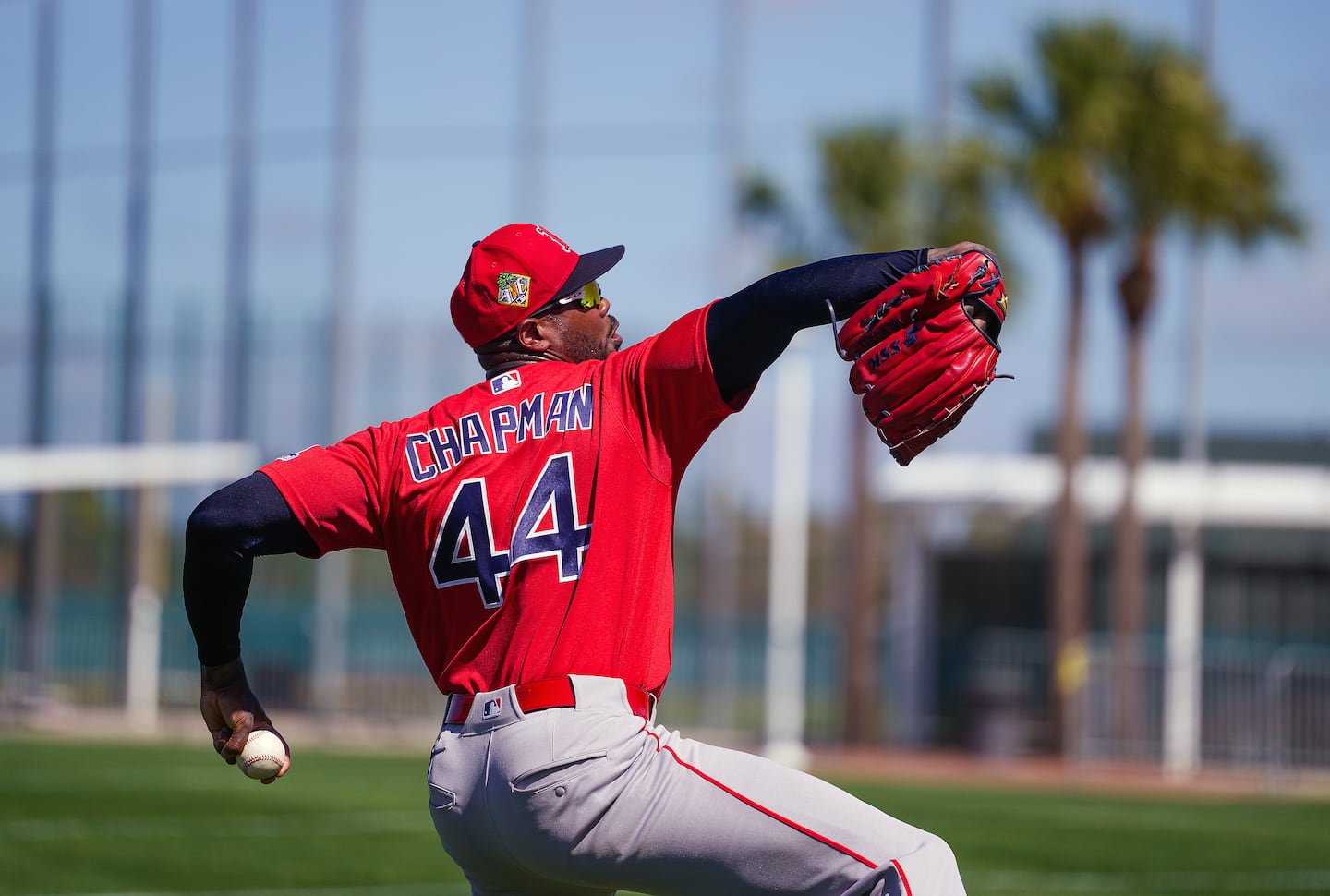 Fire-balling closer Aroldis Chapman is coming off arguably his finest season yet, and doesn’t look like he’s slowing down at all entering his 17th big league season at age 38.Barry Chin/Globe Staff
But a lot of things have to go right for that to happen, and this is where my cynical, old eyeballs tell me that the Sox may pay a price for cheaping out on a big bat, and promoting this ’26 edition as a team built on pitching and defense.
The Sox scored six runs over 27 innings of three playoff games last year. In Games 1 and 2 against the Yanks, Boston’s 4-5-6 hitters were Romy Gonzalez, Narváez, and Nate Eaton. When the Sox were blanked by rookie Cam Schlitter in the Game 3 finale, the 4-5-6 hitters were Masataka Yoshida, Rafaela, and Nathaniel Lowe. Nick Sogard and Gonzalez were Boston’s second basemen. Conversely, the Yankees featured former league MVPs in the first four spots of their Game 1 batting order (Paul Goldschmidt, Aaron Judge, Cody Bellinger, and Giancarlo Stanton).
It was clear the Sox needed to add punch, but after losing Alex Bregman to free agency, Brez whiffed on big bats Pete Alonso and Kyle Schwarber, then acquired Contreras, Durbin, and Isiah Kiner-Falefa.
Overall, there’s way too much pressure on 21-year-old Anthony. Wednesday’s New York Times print sports featured a full-page layout with an Anthony photo under the headline, “The Next A.L. M.V.P.” Yowza. The No-Star Sox need big things from a kid who’s played 71 games in the majors.
A year ago, the Sox had power bats Rafael Devers and Bregman. Today they have neither, nor do they have any baseball talent in exchange for the two — just oodles of coveted salary relief. When I asked Breslow about this at the start of spring training, he said that “leaning into pitching and defense” was another way to win more games.
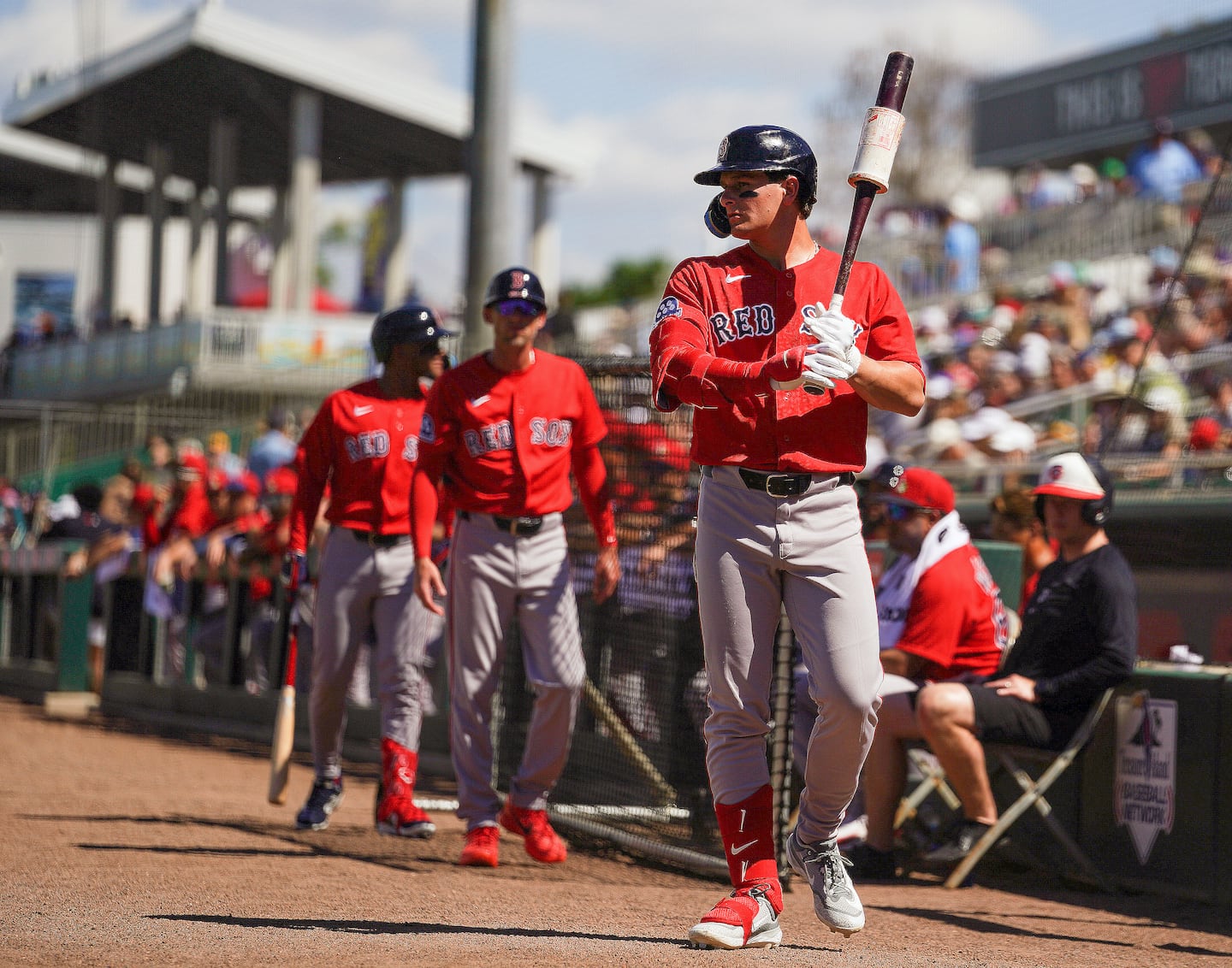 There is a ton of pressure on outfielder Roman Anthony to power the Red Sox attack, and he hasn’t even played a full season in the big leagues yet. Barry Chin/Globe Staff
Boston’s defense is improved, but has a long way to go. As written by the Globe’s Alex Speier, “Since 2020, the Red Sox have had the worst infield defense in the big leagues, and it’s not particularly close. The club has been graded [by Statcast] as converting 141 fewer infield outs than an average defensive team over that six-year run.”
Does Durbin at third, Marcelo Mayer at second, and Contreras at first make that much difference?
We’ll see. If Cora insists on platooning and moving his players all over the field on a daily basis, how much will the defense improve?
Boston’s long, snowy winter was hardly a Hot Stove/Full Throttle Disaster like some others since management’s big pivot to big profit after 2019. Breslow’s certainly committed new dollars and made significant moves to improve team weaknesses, but it still feels like the Sox are satisfied with 85-89 wins and the illusion of contention in a sport in which 12 of 30 teams make the playoffs.
When you make as much money as the Red Sox, finishing in the top 40 percent of the league is a low bar. It’s hardly cause for chest-bumping and victory laps, an FSG specialty after ending a three-year playoff drought in 2025.
The ACAC needs to be better.
And I like their chances for a good start, with Crochet on the mound against Tito’s Reds in Game 1 of the 2026 season.
More Red Sox 2026 season preview coverage:
Dan Shaughnessy is a Globe columnist. He can be reached at daniel.shaughnessy@globe.com. Follow him @dan_shaughnessy.