
The Miami Marlins surprised pretty much everybody in 2025, placing third in the National League East division despite an extremely inexperienced and inexpensive roster. Will they take another step forward this season, stagnate or regress?
On the eve of Opening Day, Fish On First staffers were invited to answer five of my burning questions about the state of the franchise.
Thanks to Louis Addeo-Weiss, Isaac Azout, Kevin Barral, Alex Carver, Jeremiah Geiger, Sean McCormack, Daniel Rodriguez and Hector Rodriguez for their participation in the following roundtable.
1. What do you think was the most interesting move that the Marlins made during the 2025-26 offseason?
Ely Sussman: I did not expect the Marlins to pay up for a “Proven Closer” like Pete Fairbanks. His $13 million guarantee nearly matches what every other major league free agent signing of the Peter Bendix era has combined to receive. Even accounting for the pre-existing relationship that Fairbanks and Bendix have with each other, it’s a strange way to allocate the club’s limited resources. For this contract to yield any surplus value for the Marlins, the 32-year-old must be healthy and even better than his 2025 form.
Louis Addeo-Weiss: Depends on how you define interesting? It’s “interesting” that the team signed a marquee reliever in Fairbanks, but also “interesting” decision to sign Paddack for different reasons.
Isaac Azout: “Most interesting” would have to be the Ryan Weathers trade. While I don’t disagree with the premise, I found the timing of the move peculiar. Sure, Weathers could get hurt early yet again and the organization would be left with nothing but their dick in their hand, but it seemed to me his upside was more valuable to Miami than whatever he could return on the market at the time. Still, Peter Bendix was able to acquire four relatively decent pieces for a high-upside yet unknown quantity in Weathers. However, if Weathers performs the way we know he’s capable of in just the first half, he’d be one of the most valuable trade chips in the league. I didn’t loathe the move, but it was by far the most interesting one.
Kevin Barral: John King was a solid signing. He isn’t talked about a lot because of the strong spring other pitchers are having, but King has been good and will be used quite a bit as one of two left-handed pitchers in the bullpen.
Alex Carver: Chris Paddack. The Marlins put a ton of confidence in Paddack to regain the form they thought they had when they drafted him in 2015 by giving him $4 million and all but guaranteeing him a rotation spot. He came back to Miami after one of his worst career seasons, but the Marlins believed in their ability to get the most out of what has become their prototype pitcher: large frame with a deep arsenal. Paddack bought in to what the Marlins are doing developmentally, including calling pitches from the dugout and the work they are doing with pitch design and had a fantastic spring training campaign, holding down a sub-1.00 ERA and 12/3 K/BB. The 30-year-old enters the season with all gears turning. He could wind up being a steal.
Jeremiah Geiger: Signing Christopher Morel to a one-year, $2 million contract. This is a true boom-or-bust signing. The Marlins hope that Morel can return his 2023 form—when he hit 26 HR with the Cubs—and solve the organization’s first base issue. If he doesn’t work out, the Marlins could easily cut ties.
Sean McCormack: Trading Edward Cabrera for Owen Caissie and prospects.
Daniel Rodriguez: The most interesting move to me was Ryan Weathers since he had the lefty upside in the rotation and trading him came a bit out of left field.
Hector Rodriguez: Trading Ryan Weathers to the Yankees for four prospects. I’m a fan of Weathers’ upside, but I understand that the injury history is a concern. It’ll be interesting to see what the Marlins pitching staff looks like without him and Edward Cabrera.
2. Any players returning from the 2025 Marlins who you believe will be significantly improved this season?
Ely: The no-brainer pick here is Sandy Alcantara. He allowed 107 runs last season—the most by a Marlins pitcher since 2011—but his command improved and luck evened out during the second half of the season. Conservatively, he should be a strong No. 3-caliber starter this year. The case for Eury Pérez is also pretty obvious given the fantastic quality of his stuff. My bolder pick is Agustín Ramírez. I think he’ll be the best offensive player on the team.
Louis: Otto Lopez. I can’t imagine he’ll produce as feebly against LHP the way he did in 2025.
Isaac: Sandy Alcantara is my first and most obvious choice, so I’ll go in a different direction. Eury Pérez returned from Tommy John surgery last season, and while the surface stats weren’t magnificent, the stuff certainly was. I not only think Pérez will be the best pitcher on this roster, but I also think he has an outside chance to be a National League Cy Young Award candidate.
Kevin: I think a full season of Xavier Edwards at second base can be very exciting. He mentioned how that move to second in the middle of the season allowed him to focus more on the offensive side of things. Edwards was a Gold Glove finalist and I think with a full season under his belt at the position, you can see him have a career year.
Alex: Sandy Alcantara. After his lost 2024 season, evaluators didn’t expect Sandy to post another Cy Young-caliber campaign last season, but it would’ve been hard to expect him to struggle as much as he did. Sandy’s 2025 was downright ugly as he posted a 5.36 ERA, more than a full run higher than his 2023 totals. His FIP weighed in at 4.28, though. Much of Sandy’s troubles could be attributed to him being unable to command the bottom half of the zone, leading to 46.5% ground ball rate, the lowest he’s posted since 2019. Cutting the usage of his staple slider in favor of a curveball proved to be a disadvantageous change. Back to his norms this spring and during the World Baseball Classic, Sandy posted a 16/2 K/BB and held down a 2.63 FIP in Grapefruit League action. Fully healthy and back to his roots, I expect the Sandy of old will be back in 2026.
Jeremiah: It’s no secret that Sandy Alcantara struggled during the first half of last season, posting a ghastly 7.22 ERA before the All-Star break. But he finished strong, with 3.33 ERA in his last 13 starts. I expect him to have a much more consistent 2026.
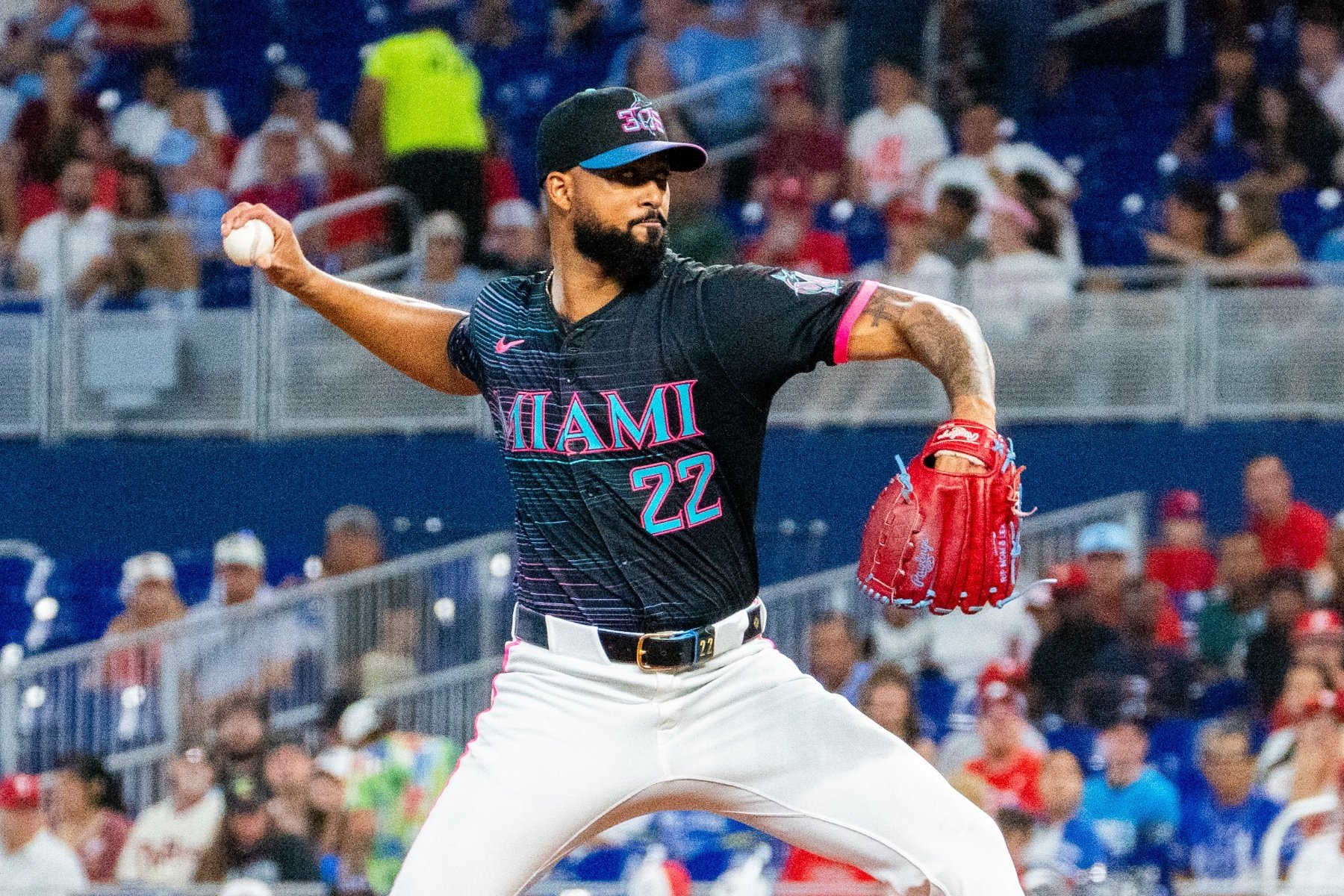
Sean: Otto Lopez.
Daniel: Jakob Marsee. He will be the best player on the Marlins with improved offense and defense as the team’s everyday center fielder.
Hector: Otto Lopez. His glove is already very good, but I want to see his offense take another step in the right direction. He played well in the World Baseball Classic and spring training. I think we could see him have a breakout season.
3. If you ran the Marlins front office, which player would you be most focused on signing to a long-term contract extension?
Ely: Joe Mack. There is hardly any precedent for signing pre-arb catchers to extensions, much less ones who haven’t even debuted, and that should keep the price down relative to other positions. Mack is a defensive savant who is capable of hitting at an above-average level at his peak. A modest guarantee between $35-45 million with multiple club options could give the Marlins control of him for nearly a decade. In general, it’s ridiculous that the Fish have gone this long without extending anybody. Most other low-revenue franchises have gotten the memo that these investments are vital to sustainable winning.
Louis: Jakob Marsee.
Isaac: Have to double down here. Eury Pérez’s combination of youth, stuff, control, and size makes him a prime extension candidate for any front office.
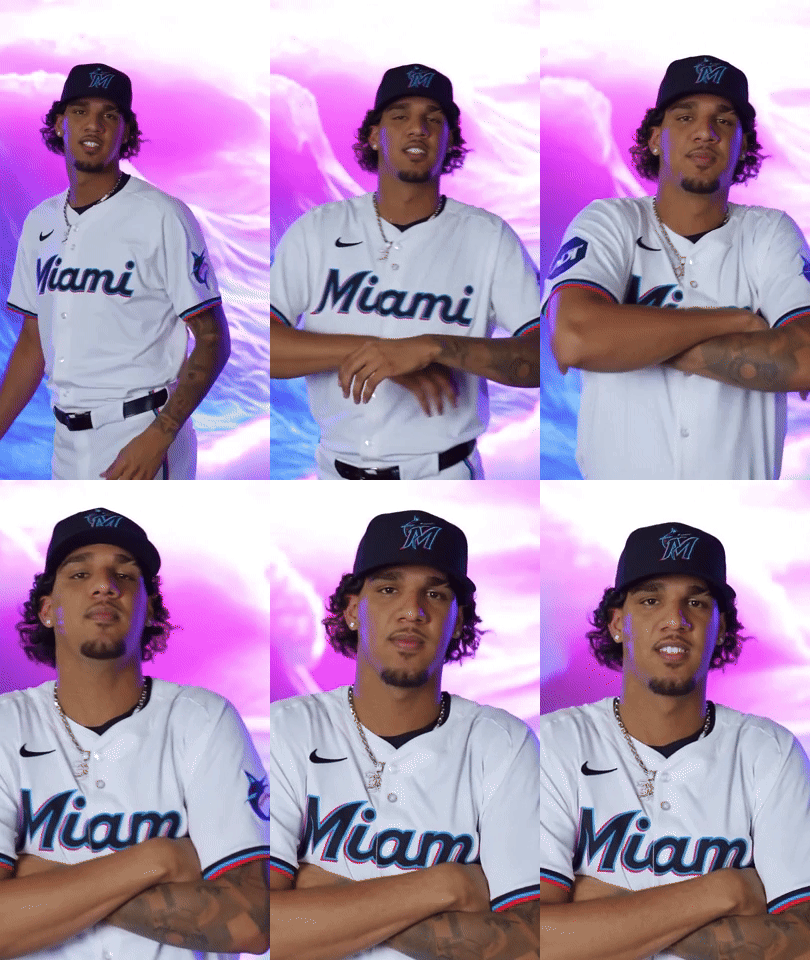 Kevin: Eury Pérez. He will be worth a lot of money if he has a breakout season. The Marlins extension rumors we heard during the offseason haven’t resulted in anything during the spring. It could’ve been all smoke, but Pérez needs to be locked up.
Alex: The Marlins have found a way to work magic with left-handed-hitting outfielders. Jakob Marsee was no exception. After earning his way onto the roster thanks to a breakout showing in Triple-A, Marsee matriculated about as best as he possibly could’ve when he slashed .292/.363/.478 in his first 55 MLB games. With a patient, balanced approach, good speed, and the ability to hold down all three outfield spots, he’s looking like a real threat for annual 20/20 campaigns. He’s also four years younger than teammate Kyle Stowers, while being cut from the same cloth that awarded Stowers All-Star honors last season. With another good showing during the first half this year, it would behoove the Marlins to get Marsee on paper.
Jeremiah: I would be focused on signing Jakob Marsee to an extension. The outfielder can do it all, offensively and defensively, and was a revelation after making his debut last season. His plate discipline is among the best in baseball.
Sean: Robby Snelling.
Daniel: Eury Pérez without a doubt.
Hector: Eury Pérez. With his talent and youth, I would like to lock him into a team-friendly deal and try to keep him in a Marlins uniform for his prime seasons.
4. Entering the 2026 season, what is this team’s biggest strength and biggest weakness?
Ely: For the first time in forever, the Marlins should have elite plate discipline. The team made a leap from worst chase rate in MLB during the 2024 season to a top-10 mark in 2025. Kudos to the player development department on that. Specifically, increased playing time for Jakob Marsee, Griffin Conine and Graham Pauley will boost their collective walk rate. Miami’s biggest weakness is first base. This is going to be a trainwreck.
Louis: Strength—rotation and corresponding depth. Weakness—lack of power throughout, only magnified by the Kyle Stowers injury.
Isaac: I would have said the lineup as the team’s biggest weakness, but the organization has proven its ability to mix and match hitters to put them in the best position to succeed. Instead, I’ll narrow it down to the corner-infield spots. First base was a disaster all spring long on both sides of the ball, and I’m still not fully convinced on Connor Norby at third. I expect Graham Pauley to ultimately win the job sometime in late April. The strength looks like the bullpen. I thought it was a strength last season, and they added two quality arms in Pete Fairbanks and John King, one from each side. Along with Calvin Faucher, Tyler Phillips, and some potential high-leverage options waiting in Jacksonville, they could shorten games for this team in a very real way.
Kevin: Biggest strength remains the starting pitching and the depth that follows it. Having a rotation of Sandy Alcantara, Eury Pérez, Chris Paddack, Max Meyer and Janson Junk is up there for the best in the NL. Having depth pieces such as Braxton Garrett, Ryan Gusto and Bradley Blalock who can come up if needed are always great to have. Then you have Robby Snelling and Thomas White who are on the cusp of a big league debut. The biggest weakness is at first base. Christopher Morel’s spring training was disappointing despite looking good early on. The first base options behind Morel aren’t bad—there’s just a lot of questions regarding their defensive ability at the position.
Alex: In multiple ways, the strength of the organization is starting pitching. With an already solid rotation anchored by a former Cy Young winner and a kid who made his starting pitching debut at 18, the Marlins also have two top-100 prospects knocking on the door. Behind them, multiple more young arms litter Miami’s organizational top 30 prospects. The biggest weakness of the organization is corner infield talent. The Marlins will enter the year with a rotation of players who have barely, if at all, played first base. Connor Norby will begin the year as primarily a third baseman, but he may eventually move off the spot if stark improvements are not made. The upper levels of the minors provide little answers for these issues. Deyvison De Los Santos is much more of a bat than a first baseman and will need to bounce back in a big way after a very disappointing 2025. Finding a formidable starting MLB third baseman in the MiLB ranks is a tough exercise; the first name that comes to mind is Aiva Arquette, who has a long way to grow. These are positions and depth the Marlins will need to upgrade drastically.
Jeremiah: The strength for the Marlins is their young offensive core. Agustín Ramírez, Jakob Marsee, and Kyle Stowers will all be looking to improve upon good offensive years. Top prospect Owen Caissie will be getting plenty of playing time as well. The weakness is the back half of the rotation. Can Chris Paddack rebound after an awful 2025? Will Max Meyer prove he can stick as a starter? Time will tell.
Sean: Biggest strength is the upcoming Triple-A talent, such as Joe Mack, Snelling, White, and Kemp Alderman, with the biggest weakness being the corner infield talent at the major leagues and minor leagues.
Daniel: Strength—the outfield with around 4-5 players who realistically could play the position. The bullpen stands out as a clear weakness for Miami. When a team makes the largest bullpen signing in franchise history, it’s usually a direct response to instability in that area. Rather than adding depth to an already strong unit, the move signals that the team is trying to fix a problem.
Hector: I think Miami’s biggest strength is their speed. They have a lot of good baserunners who can swipe bags and cause havoc on the base paths. As for their weakness, I think it’s depth in their starting rotation. Sandy and Eury can be an excellent 1-2 punch, but I have less faith in the rest of the rotation. It’ll be interesting to see how Robby Snelling and Thomas White perform if they get their shot in The Show this season.
5. Predict the Marlins’ win-loss record and team MVP
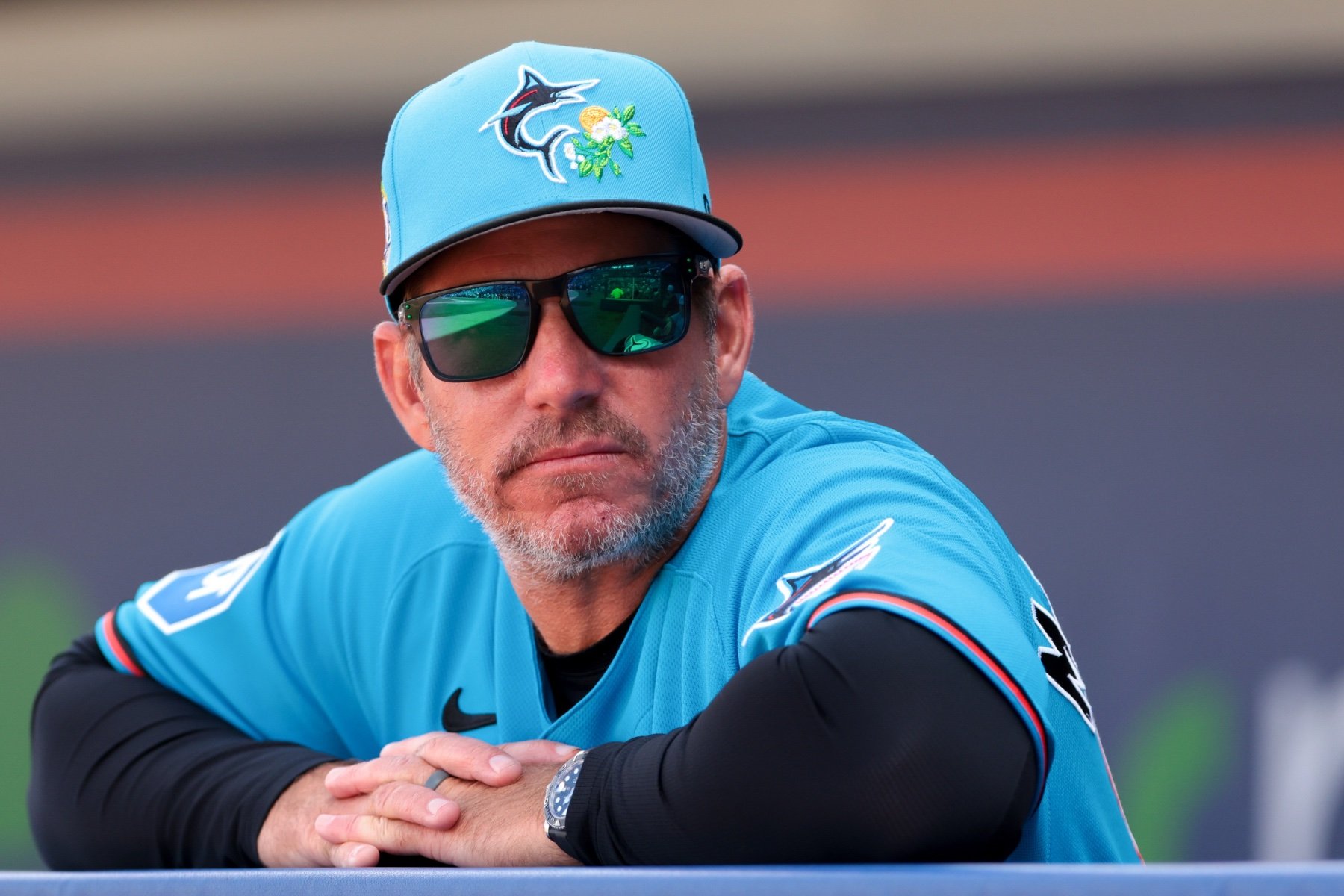
Ely: The Marlins will finish 78-84. Better run differential than last season, but slightly worse overall record, and they won’t be mathematically alive for a postseason berth quite so deep into September. My team MVP is Eury Pérez. We have seen him look utterly unhittable at times; in 2026, he’ll be doing that much more consistently.
Louis: 74-88. Marsee.
Isaac: The Marlins will go 80–82. I have Eury Pérez as their MVP, but I’ll go with Otto Lopez here. A Gold Glove–caliber shortstop, I think he’ll break out even more with the bat and find himself regularly hitting at the top of the lineup going forward.
Kevin: 82-80 and the MVP will be Jakob Marsee.
Alex: With several of their top prospects very close to making their MLB debuts and having exercised good strategy to fill in around what worked well for them last season, the Marlins are looking like a scrappy and potentially surprising team in 2026 as their competitive window starts to fully open. Health permitting, I have the Marlins playing meaningful games once again in September and looking good doing it. 83-79.
Jeremiah: I predict the Marlins to finish 82-80, and Kyle Stowers to be the Marlins MVP.
Sean: 75-87 and team MVP is Sandy Alcantara.
Daniel: 84-78. MVP Jakob Marsee.
Hector: 83-79. My team MVP is Otto Lopez. He might not be the Marlins All-Star, but I think he’ll finish the season with the highest WAR on the roster.